|
Getting your Trinity Audio player ready...
|
Two separate calls for scrutiny of Nigeria’s oil sector landed on the same weekend, and they have been widely reported together. Former Vice President Atiku Abubakar, now the presidential candidate of the African Democratic Congress (ADC), has asked the Tinubu administration to explain ₦11.2 trillion that the Nigerian National Petroleum Company Limited (NNPC) recorded as receivables from the Federation. At the same time, the Socio-Economic Rights and Accountability Project (SERAP) has urged President Bola Tinubu to order an investigation into more than ₦94.4 billion that the Auditor-General says was unremitted or unaccounted for at two petroleum-sector bodies. The two matters involve different institutions and different sums, but both ask the same question of government: where did the money go, and who can show the paperwork?
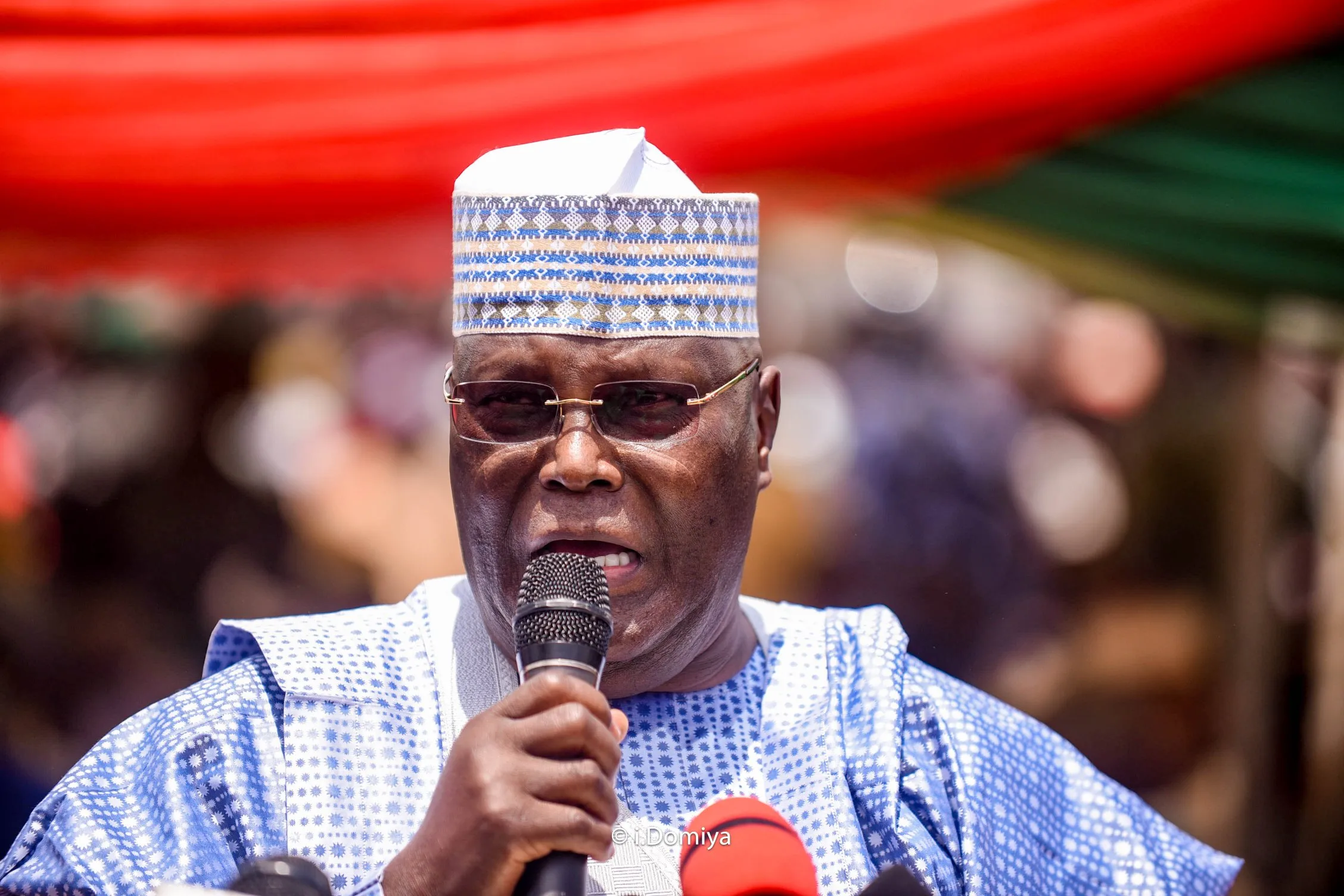
Atiku’s statement, issued on Sunday through Phrank Shaibu, director of strategic communication for the ADC presidential campaign council, centers on NNPC’s 2025 audited accounts. Those accounts show about ₦11.2 trillion under “other receivables from the Federation,” a line that covers advances and costs the company says the government owes it. Atiku asked how much of that sum went to pipeline surveillance, which firms and individuals were paid, and what results the spending produced. In a line quoted by The Guardian Nigeria, he asked simply where the results are. He also called on the government to publish contract documents, bidding procedures, evaluation records and payment details so the public can review how the awards were made. The full account of his demand is in The Guardian Nigeria.
It helps to be precise about what the figure represents, because some headlines have described it as money spent on protecting oil assets. A receivable is an amount a company says it is owed, not cash it has paid out. Reporting that examined the accounts says NNPC recorded ₦11.201 trillion in 2025 under this heading, up about 27 percent from ₦8.84 trillion a year earlier. In 2024, the company’s total claims on the Federation were about ₦17.5 trillion, made up of roughly ₦8.67 trillion in energy security costs and ₦8.84 trillion in other receivables. The same analysis says the notes to the accounts state that no new energy security expense was recognized in 2025, which means the ₦11.2 trillion sits in a different line from the earlier security costs. The accounts do not break out how much relates to pipeline protection, and that missing breakdown is the heart of Atiku’s argument.
To underline the scale, Atiku compared the receivables with the roughly ₦3.1 trillion allocated to the Ministry of Defence in 2025, noting that NNPC’s figure is more than three times larger. He acknowledged in the same statement that the two numbers belong to different accounting categories, which is an important caveat. A receivable and a budget allocation measure different things, so the comparison is better read as a political point about priorities than as a like-for-like cost comparison. Atiku also asked whether contractors handling federal projects have supported President Tinubu’s 2027 re-election effort, and he questioned the procurement process behind a major highway contract. Those are political allegations and questions, and the reports reviewed here include no evidence presented to back them up, nor a response to them from the Presidency specifically on that point.
On the broader accounting question, the Presidency has previously defended its reform record. According to one report, officials have said the country has stopped spending money it does not have and that the reforms were necessary. Neither NNPC nor the Presidency had published a detailed breakdown of the ₦11.2 trillion in the coverage reviewed for this article, so the questions Atiku has raised remain open.
SERAP’s demand concerns a different set of books. The organisation wrote to President Tinubu asking him to direct the Midstream and Downstream Gas Infrastructure Fund (MDGIF) and the Nigerian Upstream Petroleum Regulatory Commission (NUPRC) to account for more than ₦94.4 billion in public funds that were reportedly diverted, unremitted, unaccounted for or irregularly spent. SERAP says its claims come from the Auditor-General’s 2024 annual report, Volume 2, published on August 7, 2026. Tribune Online carried the details of the findings.
According to SERAP’s account of the audit, the MDGIF failed to remit ₦26.549 billion in revenue from the sale of petroleum products between January 2022 and December 2024, and the Auditor-General raised a concern that the money may have been diverted. The fund also failed to remit and report ₦12.48 billion in gas-flaring penalties for 2023. The NUPRC, for its part, allegedly failed to remit ₦38.61 billion in gas-flaring penalties that it had collected and that were due to the fund. SERAP also cited ₦12.94 billion in 2024 natural gas sales revenue that was allegedly not collected and accounted for, and ₦3.518 billion paid to a consultant to recover flaring penalties without the President’s approval. The Auditor-General pointed to the Petroleum Industry Act 2021, which requires the regulator’s net gas-flaring revenue to be paid into the fund.
The auditor’s warning goes beyond bookkeeping. Gas-flaring penalties are meant to support environmental remediation, and unremitted penalties could leave too little money to clean up hazards in affected communities, which the audit said could add to the risk of civil unrest. SERAP asked the President to have the MDGIF publish audited financial statements for 2022, 2023 and 2024 and send them to the Public Accounts Committees of the National Assembly, as the Auditor-General recommended. It also asked for a published schedule of amounts due, collected, remitted and recovered, with dates and the officials or institutions responsible. If anything unlawful is found, SERAP wants the anti-corruption agencies to prosecute those responsible and recover the money.
SERAP gave the President seven days to respond and said it would consider legal action to compel compliance if it did not hear back. At the time of reporting, the MDGIF and the NUPRC had not publicly replied to the allegations. It is worth stating plainly that these are audit findings and allegations summarized by an advocacy group, not court findings, and the institutions named have the right to explain their records, which the Auditor-General’s process also contemplates.
For readers trying to sort out the two stories, a few distinctions matter. The ₦11.2 trillion belongs to NNPC and is a receivable, an amount the company says the Federation owes it, while the ₦94.4 billion relates to the MDGIF and the NUPRC and comes from audit queries about unremitted revenue. Atiku is a candidate in the 2027 election, so his demand is both a transparency request and a campaign message, while SERAP’s letters are part of a long-running series of accountability requests to the presidency. Each, however, rests on public documents, namely audited accounts and the Auditor-General’s report, which means the claims can be checked by anyone willing to read them.
What happens next is uncertain. Government agencies often take time to respond to audit queries, and many of the Auditor-General’s recommendations require action from the National Assembly’s Public Accounts Committees, which can summon officials and request records. If the MDGIF publishes its overdue statements and NNPC clarifies the composition of its receivables, much of the speculation would settle. If not, the pressure from opposition politicians and civil society groups is likely to continue through the election season.
Readers who follow Nigeria’s oil sector, public finance and business accountability can find more coverage at BusinessTech Nigeria.