|
Getting your Trinity Audio player ready...
|
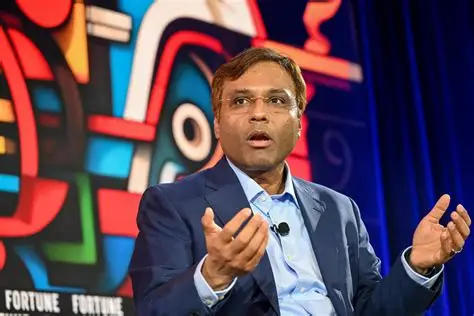
Boston Dynamics announced on October 6 that Rohit Prasad, formerly Amazon’s senior vice president and head scientist for Alexa and artificial general intelligence, becomes its chief executive on October 7, 2026. When a company famous for robots that do backflips picks an artificial intelligence scientist to run it, the hire is a statement of direction. The appointment ends a leadership gap that began in February and puts a software-first mind in charge of one of the best-known hardware brands in robotics.
Start with how the seat came open. Robert Playter, who had led the company since 2020, left the CEO role in February, and Chief Financial Officer Amanda McMaster covered as interim chief, according to The Robot Report. That means the search ran for close to nine months, a long time for a company operating in a field where rivals announce new machines almost monthly. Prasad is only the third person to hold the title in the firm’s history, after founder Marc Raibert and Playter, which tells you how rare and consequential this succession is.
The appointment came with the usual statements, but the wording is revealing. In the company’s press release, Prasad said Boston Dynamics is uniquely positioned to advance physical AI through its robotics expertise. Hyundai Motor Group vice chair Jaehoon Chang, who also chairs the Boston Dynamics board, pointed to three assets coming together: the company’s robots, Prasad’s record of turning AI into products at global scale, and Hyundai’s manufacturing, logistics and mobility operations. Notice what is missing. Neither statement names a product, a launch date or a financial target, so the public has a direction but not yet a plan.
Prasad’s résumé explains why the board looked where it did. According to The Robot Report, he spent almost 14 years at Raytheon BBN Technologies, a research lab in the Boston area, before moving to Amazon. There he oversaw work across conversational AI, generative AI and multimodal systems, as well as the company’s push toward artificial general intelligence. Seoul Economic Daily, citing Boston Dynamics, described him as a leader in both developing and commercializing those technologies. The through line is an ability to take research out of the lab and into products used by very large numbers of people.
That ability is the point of the hire. Boston Dynamics has spent decades solving the physical problems of robotics: balance, strength, agility, durability. Its machines are widely seen as technical leaders. What has been harder is turning impressive demonstrations into steady commercial demand. A robot that wins admiration in a video must still earn its keep on a warehouse floor, where uptime, safety certification, maintenance and price per hour decide whether a customer buys a second unit. Prasad’s task, as the company frames it, is to commercialize intelligent machines at scale, which is a business challenge as much as an engineering one.
Intelligence is the other half of the equation. The industry’s bet is that robots become far more useful when they can interpret instructions, perceive cluttered surroundings and adapt on the fly, instead of repeating scripted routines. Large AI models have shown they can do some of this in software, and many companies are trying to bring those abilities into machines that move. A leader who has spent years at the center of that research, and who has shipped consumer AI products, brings a different instinct from a mechanical engineer. How well that instinct translates to hardware is the open question. Software can be fixed with an overnight update, while a robot with a flaw in the field may need a technician and a truck.
The ownership structure shapes the stakes. Boston Dynamics is a private company under Hyundai Motor Group, and Silicon Republic reported that Hyundai is moving to acquire SoftBank’s remaining stake in the business to secure full ownership. That detail is described as a report, and the companies have not confirmed terms in the coverage reviewed. If it proves accurate, Hyundai would have complete control, which would simplify decisions about investment and long-term strategy. Whalesbook also linked the leadership change to Hyundai’s plan to deploy humanoid robots in its factories by 2028, a characterization from that outlet rather than a statement in the official release. Hyundai’s plants are a natural proving ground, because the parent can test machines in real production settings and supply a reference customer when courting others.
Talent may be the most immediate battleground. The company said it intends to use the academic and technology network Prasad has built over many years in the Boston area to recruit AI and robotics specialists, develop partnerships and expand globally. The region is crowded with universities, research labs and well-funded start-ups, and hiring the best engineers is a daily contest. Having a chief executive with deep ties to local institutions can open doors that a conventional recruiting drive cannot. The AI Insider added that Prasad is expected to join the company’s board, subject to the required approval process, a step that would place him in both the management and governance structure.
It would be wise to keep expectations measured. A new chief executive does not change a company’s trajectory in a week, and robotics projects run on timelines of years. Boston Dynamics has not disclosed how many robots it has sold, what it earns or how much it spends, because it is privately held. The announcement does not discuss layoffs, reorganization or product cancellations either, so any prediction about the near-term effect is speculation. What can be said is that the board has chosen an executive whose strengths lie in AI and product scale, and that choice sets priorities even before specific plans are shared.
For competitors, the hire is a signal. Humanoid and general-purpose robot developers have drawn heavy investor attention in the past two years, and many are racing to prove their machines can handle real work. Boston Dynamics brings brand recognition, long experience and a parent with factories and logistics networks. Rivals bring speed, fresh funding and, in some cases, tighter integration of AI models into their robots. The new CEO will have to show that the older company can move quickly enough to hold its lead.
For people outside the technology industry, the practical effect will arrive gradually. Industrial robots usually spread first in factories, distribution centers and inspection tasks, and only later in consumer settings if at all. Questions about worker safety, retraining and the pace of automation will follow the same path, since the company’s own language emphasizes safety, productivity and efficiency in industrial and commercial environments. Those are goals, not guarantees, and they will be judged on outcomes.
What to watch from here is concrete. Listen for Prasad’s first public remarks on priorities, changes to the leadership team, announcements of pilot programs inside Hyundai or with outside customers, and any confirmation of the stake purchase. The company’s official updates appear on the Boston Dynamics website, and the full announcement is on Business Wire.
Readers who follow the global technology and business stories that shape Africa’s digital economy can find more coverage at BusinessTech Nigeria. For Boston Dynamics, the next chapter starts with a simple question: can a leader who made software smarter do the same for machines that move?