|
Getting your Trinity Audio player ready...
|
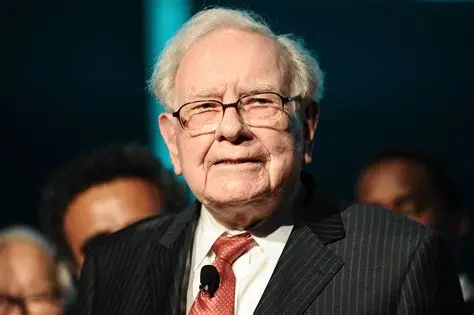
Warren Buffett, the longtime leader of Berkshire Hathaway and one of the best-known investors in history, wrote this sentence in his 2008 shareholder letter. He did not claim it as his own. He told readers that his teacher, Benjamin Graham, taught him long ago that “Price is what you pay; value is what you get.” Buffett added that, whether the subject is socks or stocks, he likes to buy quality merchandise when it is marked down.
The timing gave the line extra force. Berkshire’s net worth fell by $11.5 billion in 2008, and its per-share book value dropped 9.6% as markets collapsed during the financial crisis. Buffett did not respond with panic. He wrote that falling prices did not bother him and his partner Charlie Munger, and that they welcomed them when they had cash available to buy more. Falling prices handed them better deals on businesses whose worth had not changed.
“Price Is What You Pay; Value Is What You Get” – Warren Buffett
The sentence separates two things that people often treat as one. Price is a number on a tag, a quote on a screen or an invoice on a desk. Value is what you receive in return over time, such as earnings from a business, years of service from a machine or growth from a hire. The two can move in opposite directions. A price can fall while the value stays the same, which creates opportunity, and a price can rise far above the value, which creates risk.
Many people think a bargain means the lowest price. Buffett’s point is more precise. A bargain means a gap between what you pay and what you receive. A cheap item that fails in six months costs more than a pricier one that lasts for ten years, and an expensive acquisition can still be a bargain if it earns far more than it costs.
Consider a company choosing between two software providers. The first charges half as much, but its system crashes often, lacks support and forces staff to rework tasks by hand. The second costs more, yet it saves each employee an hour a day and rarely fails. Over a year, the cheaper option drains more money through lost time and errors than the higher price ever saved. The company that compared only the price tags paid more in the end.
Judge purchases by what they return
The most practical lesson from the quote is to change the question you ask before spending money. Instead of asking what something costs, ask what value it will deliver. Equipment should improve output and reduce downtime. A new hire should generate revenue or reduce costs. A marketing campaign should attract paying customers, not just generate impressions.
Writing the expected return next to the cost forces a more honest comparison. If you cannot describe the value you expect, you probably do not understand the purchase well enough yet.
Falling prices can be an opportunity, not only a threat
Buffett’s 2008 reaction offers a lesson for business owners during downturns. When prices fall across a market, supplies, equipment, property and talent often get cheaper. A company with spare cash can strengthen its position while competitors retreat. That only works when you can judge value accurately, which is why Buffett stressed buying quality. A low price on a poor business remains a poor purchase.
It also explains why he keeps cash on hand. Without it, a falling market forces you to watch bargains pass by.
The same idea applies when you sell
The quote also works from the seller’s side. Customers do not pay for your cost of production. They pay for what your product does for them. A business that competes only on being cheap leaves little room to improve, while one that shows clear value can charge fairly and keep customers who stay. If a customer questions your price, the better response is often to explain the result, not to cut the number.
Where the idea comes from
Buffett built his career on the teachings of Graham, who taught that every business has an underlying worth separate from its daily market price. Graham urged investors to buy only when the price sat comfortably below that worth and to ignore short-term swings in sentiment. Buffett called Graham the greatest teacher in the history of finance, and this sentence is one of the clearest summaries of what he learned.
Why this advice still holds true today
Prices now flash on every phone, from stocks to cryptocurrencies to subscription deals, and it is easy to confuse a moving number with real worth. Buffett’s sentence cuts through that noise with a simple test. Before you buy a share, a service or a company, ask what you will actually get and whether it is worth the cost. Whenever the price tempts you more than the value does, the sentence suggests you slow down.