|
Getting your Trinity Audio player ready...
|
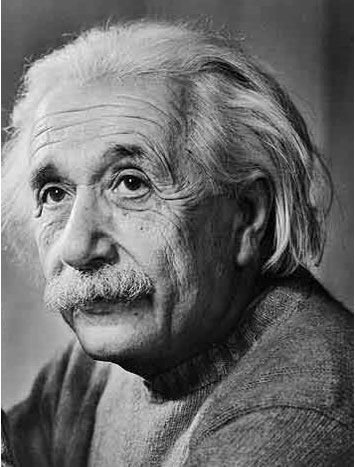
Albert Einstein on Why Mistakes Are Proof of Effort
Most people treat a mistake-free record as something to be proud of. Einstein’s line quietly argues the opposite. If a person has genuinely never made a mistake, the more likely explanation is not skill. It is caution. This quote reframes error not as a sign of weakness but as the natural fingerprint of someone who has actually stepped into unfamiliar territory, rather than staying safely inside what they already know how to do.
The story behind the quote
Unlike Einstein’s writings on physics, this remark does not come from a paper or a formal lecture. Quote researchers who have traced its history note that versions of this idea circulated long before Einstein’s lifetime, with similar lines appearing from public figures across the nineteenth and early twentieth centuries, each making the same basic point in their own words. Somewhere along the way, the phrasing settled into the version now widely attributed to Einstein, and it stuck to him more than to anyone else, likely because it fit so naturally with how he was known to think and work.
That fit is not a coincidence. Einstein’s own career was built on discarding ideas that did not hold up, revising theories in public, and openly admitting when an approach had failed. Whether or not he was the very first person to phrase the idea this way, the sentiment matches the way he actually operated, treating error as raw material for better questions rather than as something to hide.
What the quote actually means
The quote draws a line between two very different reasons a person might avoid mistakes. One reason is genuine mastery, doing something so well that failure becomes rare. The other reason, far more common, is simply never attempting anything uncertain in the first place. Einstein’s point is that a spotless record, on its own, tells you almost nothing about ability. It only tells you where someone chose not to take a risk.
Turned around, the idea becomes something more useful. If mistakes are the byproduct of attempting something new, then the presence of mistakes in someone’s work is actually a reasonable signal that real effort and real risk-taking are happening. Absence of failure is not evidence of excellence. It can just as easily be evidence of standing still.
Why this idea matters in business today
In workplaces and startups across Nigeria, mistakes are often treated as something to be punished quickly and quietly, which pushes people toward the safest possible choices rather than the most useful ones. A team that fears every error will naturally gravitate toward familiar routines, repeat what has worked before, and avoid anything that has not already been tested elsewhere. Over time, this produces a business that looks stable on paper but rarely produces anything genuinely new.
The companies that end up defining a market are rarely the ones with the cleanest track record early on. They are usually the ones that tried several approaches that did not work before finding the one that did. A founder who has never had a failed product launch, a failed hire, or a pricing decision that had to be reversed has probably not pushed the business very far outside its comfort zone. The goal is not to chase failure for its own sake, but to stop treating every mistake as proof that something has gone wrong with the person who made it.
Applying the lesson without excusing carelessness
There is an important boundary here. This quote is not a defence of sloppiness, and it does not apply to situations where the cost of an error is severe or where basic diligence was simply skipped. It applies specifically to the honest mistakes that come from attempting something genuinely uncertain.
Separate mistakes of effort from mistakes of neglect
A pricing experiment that does not convert as expected is different from a report sent out riddled with errors because no one checked it. The first is the kind of mistake this quote defends. The second is not, and treating them the same way teaches people the wrong lesson.
Build a habit of reviewing, not just reacting
When something goes wrong, the more useful question is what it revealed, not simply who is responsible. Teams that debrief on failures calmly tend to keep experimenting. Teams that punish every failure quickly tend to stop trying anything uncertain at all.
Give new ideas room to fail small
Large, risky mistakes are expensive. Small, early ones are cheap and often just as informative. Testing a new idea on a limited scale before committing fully allows a business to make its mistakes while they are still affordable.
Watch for teams that have gone quiet on mistakes
If a department has not reported an error in months, that is not automatically good news. It can mean the work has become too routine, and that routine is exactly where growth tends to stall.
Other lesser-known Einstein Quotes
- “The measure of intelligence is the ability to change.”
- “A clever person solves a problem. A wise person avoids it.”
- “In the middle of difficulty lies opportunity.”
- “We cannot solve our problems with the same thinking we used when we created them.”
The bigger picture
Einstein’s quote is ultimately an argument against using a clean record as the standard for judging effort or ability. Mistakes made while genuinely trying something new are not a stain on a person’s or a business’s reputation. They are closer to evidence that real work is actually happening. The businesses and professionals worth paying attention to are rarely the ones with a flawless history. They are the ones who kept trying long enough to eventually get something right.