|
Getting your Trinity Audio player ready...
|
Dangote Refinery Reports $4.73 Billion Net Profit on $22.48 Billion Revenue for the First Nine Months of 2026
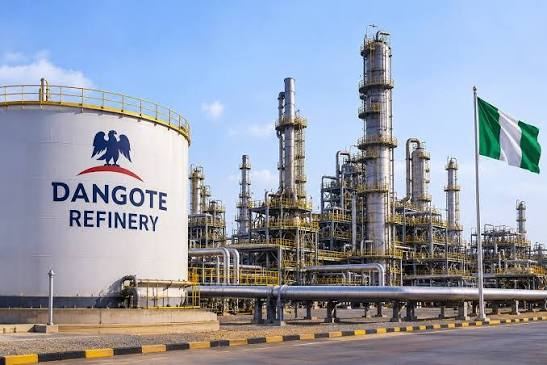
Dangote Petroleum Refinery and Petrochemicals has turned a loss into one of the largest profits in Nigerian corporate history within a year. The company reported on Tuesday that it earned a net profit of $4.73 billion on revenue of $22.48 billion for the nine months ended September 30, 2026, according to unaudited results released in Lagos.
A year earlier, the same period produced a net loss of $117.2 million. Revenue rose 144 percent from $9.19 billion, and earnings before interest, tax, depreciation and amortisation, known as EBITDA, jumped to $5.52 billion from $627.6 million. Operating cash flow climbed to $3.68 billion from $364.7 million, and the plant ended September holding $6.69 billion in cash. Its balance sheet moved from a net debt position of $1.73 billion a year ago to net cash of $650.8 million. By simple division, the net profit equals about 21 percent of revenue and EBITDA about 25 percent, calculations based on the reported totals.
Chief executive David Bird attributed the results to higher throughput, improved operational reliability and stronger gross refining margins. The 700,000-barrel-a-day plant processes more crude than a year ago, when it was still absorbing commissioning costs, and has pushed products such as petrol, diesel and jet fuel into both Nigerian and regional markets, displacing cargoes that once came from Europe, the Middle East and the United States, as Oilprice noted in its coverage.
Quarterly figures, derived from the six-month results announced earlier, show where the improvement came from. Revenue was $13.91 billion at the end of June, so the third quarter alone contributed about $8.57 billion. Net profit was $1.82 billion at the half year, which implies roughly $2.90 billion in the third quarter, more than the whole first half. Those quarterly numbers are inferred from cumulative totals rather than separately reported.
Some context is needed. Refining margins this year were lifted by global fuel shortages tied to the war involving Iran, which damaged Middle Eastern refining capacity and made diesel and jet fuel scarce, a condition that helped plants with spare capacity earn unusually wide margins. If supply normalises, the profit rate may not hold. The results are also unaudited, so figures could change when audited accounts are published, and they cover a company that is still partly financed by debt as it plans a large expansion.
The timing is deliberate. The refinery is selling shares in what would be Africa’s largest initial public offering, seeking about $1.6 billion by offering 4.1 billion shares at ₦525 each. A report published Tuesday says the offer now runs until October 27, extended from the earlier schedule, though I could not confirm the revised timetable from a company statement. Prospective investors will weigh the headline profit against the plan to double capacity to 1.4 million barrels a day by 2028 to early 2029, which management says requires about $14.3 billion.
What should investors and readers take from the numbers? The swing shows the plant can generate large cash flows when run near capacity in a favourable market, and the move to net cash reduces financial risk. Against that, one year of strong margins does not prove a lasting level of earnings, the audited statements are still to come, and refining profits tend to fall when global supply recovers. Anyone considering the share offer should read the prospectus and treat this article as general information rather than investment advice.