|
Getting your Trinity Audio player ready...
|
Nigeria’s Oil Output Rises 2.34% to 1.72 Million Barrels a Day in September, With a One-Day Peak of 1.84 Million
Nigeria pumped more oil in September than in any of the last few months, and it did so while staying above its OPEC allocation for a fifth month in a row. The Nigerian Upstream Petroleum Regulatory Commission said in a statement on Tuesday that combined crude oil and condensate production averaged 1,717,030 barrels a day, up 2.34 percent from 1,677,770 barrels a day in August.
Output moved within a fairly tight daily range. The best single day reached 1.84 million barrels, and the weakest was 1.68 million, according to the regulator, which noted that the peak reinforces Nigeria’s position as Africa’s largest crude producer. The statement, issued by the commission’s head of media and corporate communications, Eniola Akinkuotu, credited operators and industry stakeholders for improving operational efficiency, asset integrity and production reliability, and said better uptime and crude evacuation helped lift volumes.
The headline figure includes condensate, a lighter hydrocarbon that does not count toward OPEC limits. Strip it out and the picture is the one the cartel measures: Nigeria produced an average of 1.53 million barrels a day of crude in September, equal to 102 percent of its 1.5 million barrel quota, or 30,000 barrels a day above the allocation. That keeps the country at or above quota since May. The monthly crude-only figures supplied by the commission are 1.53 million in May, 1.55 million in June, 1.51 million in July, 1.50 million in August and 1.53 million in September, a stretch that contrasts with earlier years when theft, pipeline damage and shutdowns kept Nigeria well below its allowance.
By terminal, Forcados had the highest average daily volume at 320,320 barrels, followed by Bonny at 303,270 barrels, according to the NUPRC data.
How does this sit against other numbers in circulation? Oil Minister Heineken Lokpobiri and the Finance Minister have recently cited about 1.8 million barrels a day, which refers to a weekly reading including condensate rather than a monthly average, so the September average of 1.72 million barrels is the more conservative, audited figure. Even the one-day peak of 1.84 million is a single-day reading, not a sustained level. A longer view shows the scale of recovery: in September 2023, crude output excluding condensate hit what was then described as an all-time high of 1.35 million barrels a day, so this September’s 1.53 million is roughly 14 percent higher on that basis, a comparison drawn from NUPRC figures reported at the time.
The gap to official ambitions remains large. ThisDay calculated that September’s crude-only average is about 470,000 barrels a day short of the 2 million barrel target and 1.47 million barrels below the government’s 3 million barrel goal for 2030. Those comparisons mix crude with targets that include condensate, so they overstate the gap somewhat, but they make the point that reaching the next milestones needs a step change rather than steady drift. Condensate gives the government room to raise total output while staying inside the OPEC crude quota, which is why the combined figure of 1.72 million matters for revenue even as the quota number stays near 1.5 million.
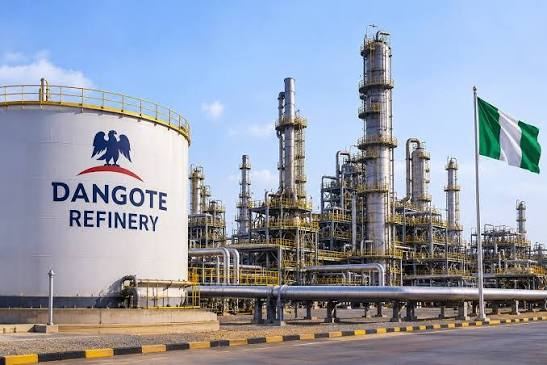
For households and businesses, the practical stakes are about oil revenue and foreign exchange. Higher volumes support federal receipts and dollar inflows, which feed into the naira and the budget, and they give domestic refiners such as Dangote more local crude, though officials say much of the output is already committed under production-sharing and cost-recovery arrangements. Challenges persist: the regulator itself acknowledges the sector’s long-running problems with theft, vandalism, interruptions and evacuation from fields, and monthly output can drop when a terminal or pipeline has trouble, as happened earlier this year.
What to watch next is whether October holds above 1.7 million barrels a day, whether crude alone keeps meeting the quota, and whether new field developments and the dormant-acreage enforcement lead to extra barrels. For now, the regulator’s data shows steady but modest progress rather than a breakthrough.