|
Getting your Trinity Audio player ready...
|
Nigeria’s CNG Supply Could Soon Overtake Petrol Availability
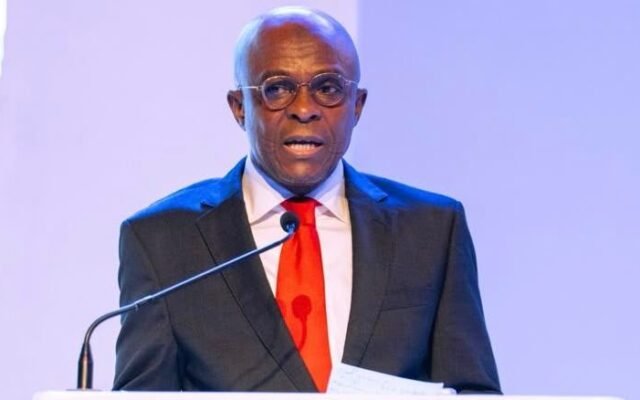
Nigeria’s compressed natural gas supply network is expanding fast enough that it could soon outpace the availability of petrol itself, according to the man leading the federal government’s push to get more vehicles running on the alternative fuel.
Ismaeel Ahmed, Chairman and Chief Executive Officer of the Presidential Initiative on Compressed Natural Gas and Electric Vehicles, made the claim during a courtesy visit by members of the CNG/EV Users Forum to his office in Abuja, remarks later reported by the News Agency of Nigeria. Very soon, he said, Nigeria is going to be a country where CNG availability actually outpaces petrol, a bold prediction given how dominant petrol still remains across the country’s transport sector.
Ahmed backed up that claim by pointing to how quickly the program has scaled since it began in earnest. Back in 2023, Nigeria had fewer than 10 CNG refuelling stations, roughly five vehicle conversion centres, and just over 100 vehicles that had actually been converted to run on the fuel. Three years on, the government says roughly 120,000 vehicles have now been converted, with infrastructure continuing to expand nationwide. Ahmed argued that pace of growth puts Nigeria among the countries experiencing the fastest CNG adoption anywhere right now, a claim that, even allowing for some promotional framing from the man running the initiative, reflects a genuinely large jump from where the sector stood just a few years ago.
Scale, rather than any single metric, is what Ahmed says his team is prioritizing at this stage. Our focus right now, he said, is scale, repeating the point for emphasis. That focus extends well beyond simply converting more vehicles. Ahmed explained that building out CNG infrastructure requires an extensive web of supporting facilities, including gas sourcing, pipeline networks and compression stations, the kind of backend infrastructure that doesn’t get as much public attention as the refuelling stations and converted vehicles themselves but that determines whether the whole system can actually function reliably at a larger scale.
Ahmed used the moment to make a broader case for shifting Nigeria’s transport sector away from petrol and diesel altogether, arguing that natural gas and electric vehicles together offer a cleaner and potentially cheaper path forward, while also reducing how exposed Nigeria’s economy is to swings in international oil prices. Natural gas, he said, should be the country’s fuel of choice. He framed the economic logic in a way that ties directly into Nigeria’s broader oil strategy, suggesting the country could export more of its crude oil to international buyers while relying on its own domestic natural gas reserves to power transportation at home, rather than burning crude-derived petrol domestically while simultaneously exporting gas that could be put to more direct local use.
Despite the ambitious prediction about CNG eventually overtaking petrol, Ahmed was careful to stress that the initiative isn’t designed to eliminate petrol and diesel from Nigeria’s roads anytime soon. He described a future where Nigeria runs on a mixture of energy sources, CNG, electric vehicles, petrol and diesel all coexisting, rather than one completely replacing the others in the near term.
Earlier remarks from the same forum visit, made on September 8, laid out the thinking behind why availability matters as much as price when it comes to winning over Nigerian drivers. Ahmed said affordability cannot be separated from availability, arguing that a cheaper fuel that’s genuinely difficult to access ends up losing its economic advantage in practice, regardless of how low the per-unit price looks on paper. He illustrated the potential savings with a specific example: a vehicle owner traveling the Kano to Karai route who previously spent roughly ₦300,000 a week on petrol now spends about ₦22,000 a week on CNG after converting, a reduction of well over 90 percent in weekly fuel costs for that particular driver.
That kind of savings potential explains much of the government’s enthusiasm for the program, but adoption still faces real resistance on the ground. Public misconceptions about CNG cylinder safety, including fears around the risk of explosions, remain a significant barrier slowing wider uptake, according to Ahmed, even as the government continues pushing CNG as a cheaper transportation alternative and working to attract investment across its supply and distribution chain. He noted that CNG itself isn’t new technology by any measure, having existed globally for more than two decades and in Nigeria for over ten years, but said its development had largely been left to private sector initiative until now, operating in a limited and fragmented way rather than as a coordinated national effort. According to Ahmed, the current administration has provided the kind of political backing needed to turn CNG into a genuine national project, arguing Nigeria already has the resources and technical capability required to build out the industry, provided the country can simultaneously grow demand while making sure supply keeps pace with it.
The push for CNG adoption is unfolding against a backdrop of real public frustration over petrol prices more broadly. Public sector unions under the Joint National Public Service Negotiating Council have recently threatened a nationwide strike over fuel costs, with the council proposing petrol prices be brought down to ₦200 a litre, a demand that follows an earlier call for prices as low as ₦500 a litre. That pressure underscores exactly the kind of economic strain the CNG program is positioned to help ease, assuming the infrastructure buildout Ahmed described can keep expanding at the pace he’s projecting, and assuming lingering safety concerns among potential adopters can be addressed quickly enough to match the government’s own ambitions for the program.