|
Getting your Trinity Audio player ready...
|
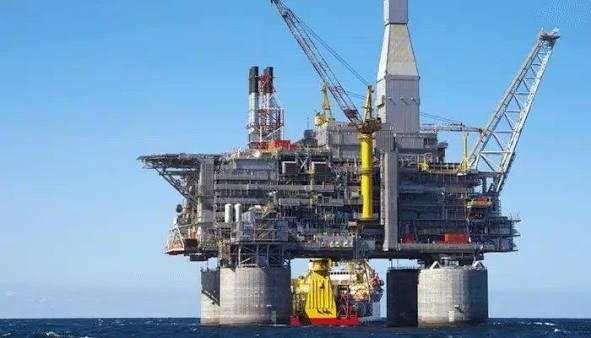
Nigeria’s oil minister says the country’s drilling activity has rebounded dramatically since 2023, with the number of active oil rigs climbing from roughly 14 to more than 60 under President Bola Tinubu’s administration, a shift he credits for pushing crude output past 1.7 million barrels a day.
Heineken Lokpobiri, Minister of State for Petroleum Resources, made the disclosure at the inaugural Petroleum Technology Development Fund Journal Summit in Abuja, delivered through his Technical Adviser on Downstream, Emmanuel Sinime. According to the minister, Nigeria has also attracted more than $10 billion in foreign direct investment in recent years, and indigenous operators now account for more than half of the country’s total crude oil production, a notable shift for a sector that international oil companies dominated for decades.
Rig count might sound like a narrow technical statistic, but it functions as one of the clearest early indicators of how much capital is actually flowing into a country’s oil sector before that investment shows up in production figures months or years later. Lokpobiri has made that connection explicit in previous remarks, saying plainly that a rig isn’t merely a number, since the rig working today is what delivers production tomorrow. A rising rig count signals that operators are committing real money to exploration and field development rather than simply maintaining existing wells, which is why the jump from 14 to over 60 carries more weight than the crude output figures alone.
That recovery looks considerably more dramatic against where Nigeria’s upstream sector stood when Tinubu took office in 2023. Lokpobiri has described that starting point bluntly in other recent appearances, pointing to declining investment, crude production hovering around just one million barrels a day, stalled divestment transactions sitting unresolved for years, and generally weak drilling activity across the Niger Delta. From that baseline, production has climbed to between 1.7 and 1.8 million barrels a day, with output reportedly pushing above that figure at various points through 2026.
Several structural changes appear to be behind the turnaround. Lokpobiri has pointed to the Petroleum Industry Act as providing the stable fiscal framework investors had been asking for, alongside what he’s described as some of the most transparent and credible licensing rounds in Nigeria’s history. The government has also pushed through a series of previously stalled divestment deals that handed onshore and shallow-water assets from international oil majors over to Nigerian companies, transactions Lokpobiri says added roughly 200,000 barrels a day to national output on their own. The most prominent of these include Renaissance’s acquisition of Shell’s onshore assets, Seplat’s purchase of ExxonMobil’s Nigerian operations, and Oando’s takeover of the Nigerian Agip Oil Company, deals that together have shifted a meaningful share of the country’s production base into local hands. Lokpobiri has also credited Renaissance and its joint venture partners for a significant offshore discovery in block OML-74, evidence he says shows renewed exploration activity isn’t limited to existing fields alone.
Investment commitments have followed a similar upward trajectory. Nigeria has secured more than $8 billion in major upstream Final Investment Decisions since 2023, according to Lokpobiri, anchored by projects including the $5 billion Bonga North development, the $550 million Ubeta project and the $2 billion Shell HI initiative. Those figures sit alongside the broader $10 billion-plus foreign direct investment total cited at this week’s summit, giving a picture of capital returning to Nigeria’s upstream sector across both large single projects and a wider base of smaller investments.
Lokpobiri was careful to frame the production and drilling gains as only part of the story Nigeria still needs to finish writing. He told the summit that rising output and expanding drilling activity have to be matched by adequate infrastructure, efficient transportation and storage systems, expanded refining capacity, and a market structure competitive enough to actually deliver value to both consumers and investors rather than just boosting headline barrel counts. That caveat echoes a point the government has made repeatedly this year: production growth alone doesn’t automatically translate into cheaper fuel or a more resilient domestic energy system unless the supporting infrastructure keeps pace alongside it.
The government’s ambitions extend well beyond current output levels. President Tinubu has renewed a target of reaching 3 million barrels a day in crude production by 2030, a goal that would require output to nearly double from where it currently stands. Lokpobiri has separately cited an intermediate target of 2.5 million barrels a day, stressing that sustained investment and expanded exploration activity remain essential to both hitting that number and genuinely growing Nigeria’s proven reserves rather than simply extracting faster from existing fields. He’s noted that Nigeria has developed only a fraction of its roughly 37 billion barrels of crude oil reserves, alongside substantial undeveloped gas deposits, arguing the country still has considerable room to grow production if the investment climate continues improving.
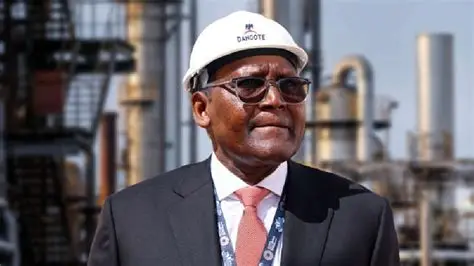
Separately, Lokpobiri pointed to the removal of fuel subsidies as a factor that has helped stabilize product availability across Nigeria’s downstream market while encouraging private capital to flow into refining and related infrastructure, a shift that’s coincided with the continued ramp-up of domestic refining capacity led by the Dangote refinery and other newer entrants to the sector.
Whether Nigeria can sustain this pace of drilling and investment growth through to 2030, and whether the broader infrastructure Lokpobiri says still needs to catch up actually does so in time, will likely determine whether the jump from 14 to 60 active rigs ends up as the opening chapter of a much larger recovery, or simply the easiest phase of a longer, harder climb toward the government’s stated production targets.