|
Getting your Trinity Audio player ready...
|
President Donald Trump acknowledged Wednesday that banning diesel exports, an idea he’s been floating as a fix for record fuel prices, could actually backfire by pushing gasoline costs higher, even as he declined to take the proposal off the table. Speaking to reporters in the Oval Office, Trump said the administration discusses the pros and cons of a diesel export ban every day, adding that it just seems like such a move would have a negative impact on gasoline, a notably more cautious tone than the one he struck just days earlier when he said he was “thinking very seriously” about imposing one.
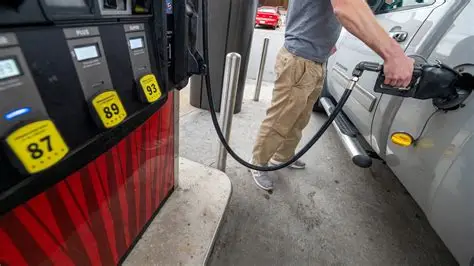
The backdrop driving this debate is a genuine affordability crisis at the pump. Retail diesel prices hit $6 per gallon nationally for the first time ever last month, then climbed further to $6.50, and more recent figures cited by Benzinga put the national average at a record $6.53. Gasoline prices have climbed alongside diesel to reach record highs for this time of year, even as overall fuel demand eases following the end of the peak summer driving season, a combination that points to supply-side pressure rather than simple seasonal demand driving costs upward. Diesel prices specifically have surged across multiple major economies, driven largely by refinery constraints in the Middle East and Russia that refineries elsewhere, including in the United States, can’t fully offset even when running at maximum capacity.
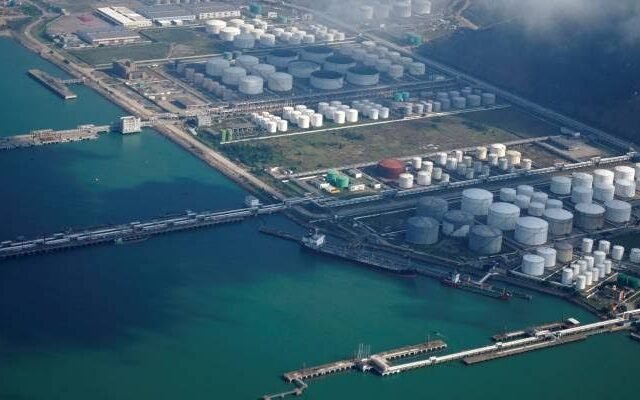
The mechanics behind why a diesel export ban carries this risk come down to how refineries actually work. Gasoline and diesel are both produced from the same crude oil during the refining process, meaning a change in how much diesel a refinery sends toward one output inevitably affects how much capacity remains for the other. Trump described the tradeoff himself fairly plainly, saying gasoline “would go up a little bit and diesel would come down a little bit” under a ban, a summary that captures the basic physics of the situation even if it understates how significant that gasoline increase could end up being according to outside analysts.
Those outside estimates paint a considerably starker picture than Trump’s “little bit” framing suggests. Commodity analysts at Goldman Sachs projected that a diesel export ban would initially push prices down, but only until domestic diesel storage filled up, at which point the policy would reverse course and start putting upward pressure on gasoline prices instead, with the bank estimating increases of roughly $0.30 per week as the dynamic played out. Other reporting citing Goldman’s analysis put the cumulative gasoline impact at around 30 cents per gallon over time, a meaningful hit for American drivers already dealing with record costs at the pump heading into the November midterms.
Energy Secretary Chris Wright has staked out a notably more skeptical position than his boss on the specific question of a full ban, publicly stating last week that nobody actually wants a complete blanket prohibition on diesel exports. Wright has instead pushed for voluntary export curbs negotiated directly with refiners rather than a mandatory restriction, arguing that across-the-board bans risk triggering exactly the higher gasoline prices the administration is trying to avoid. Interior Secretary Doug Burgum offered his own note of caution earlier in September, saying a diesel export ban wouldn’t meaningfully lower prices over the long run regardless of its short-term effects. Wright struck a somewhat more optimistic note on Wednesday specifically, saying European allies would soon announce new supply commitments capable of meaningfully pushing diesel prices down without requiring any export restriction at all.
Major business groups have weighed in forcefully against the proposal as well. The Chamber of Commerce, Business Roundtable, National Association of Manufacturers, and American Petroleum Institute jointly warned that an export ban would lead to less fuel production, tighter supplies, and rising costs specifically for American families, farmers, and truckers, a coalition spanning some of the country’s most influential business lobbying groups united in opposition to the idea. Those warnings echo a broader concern that diesel’s economic footprint extends well beyond the relatively small share of American vehicles that actually run on it directly. Diesel powers the trucking industry that moves the vast majority of goods across the country, meaning higher diesel costs tend to ripple through to the price of nearly everything shipped by truck, a dynamic that makes diesel prices matter economically even to consumers who never fill up with it themselves.
There’s also a meaningful political dimension to the diesel conversation specifically, given how directly it touches a traditionally reliable Republican voting bloc. Farm producers depend heavily on diesel to run tractors, harvesters, and other agricultural equipment, and sustained high diesel costs could squeeze farm economics badly enough to affect turnout or support among rural voters ahead of the midterms, a political risk that adds pressure on the administration to find some kind of visible response even as the specific export ban option keeps drawing warnings from its own energy officials.
Trump has pointed to one specific source of optimism that doesn’t involve restricting exports at all, improving petroleum flows through the Strait of Hormuz, a chokepoint that has been a major source of regional supply disruption amid the broader US-Iran conflict. He told reporters that oil prices are expected to start coming down as flows through the strait improve, framing that development as a more promising path toward relief than an export restriction carrying genuine risk of making things worse rather than better. It’s also worth noting the administration has separately ruled out a different, more dramatic export restriction, confirming that crude oil export bans specifically are not under consideration, with officials citing structural reasons including the US refining system’s inability to absorb all domestic crude output and the risk of tightening global supply in ways that would ultimately feed back into higher US fuel costs rather than lowering them.
For now, the diesel export ban remains exactly where Trump described it Wednesday, a policy still under active daily discussion inside the administration rather than a settled decision, with the president’s own public comments suggesting he’s grown somewhat less convinced of its merits even as he continues declining to rule it out entirely. Whether the administration ultimately settles on Wright’s preferred voluntary approach, a formal mandatory ban, or simply waits for the hoped-for relief from improving Hormuz Strait flows, American drivers and truckers are likely to keep watching diesel and gasoline prices closely in the weeks ahead as the policy debate plays out.
Further detail on US energy policy is available through the Department of Energy’s official announcements. For more coverage of energy markets and economic policy, visit Business Tech.