|
Getting your Trinity Audio player ready...
|
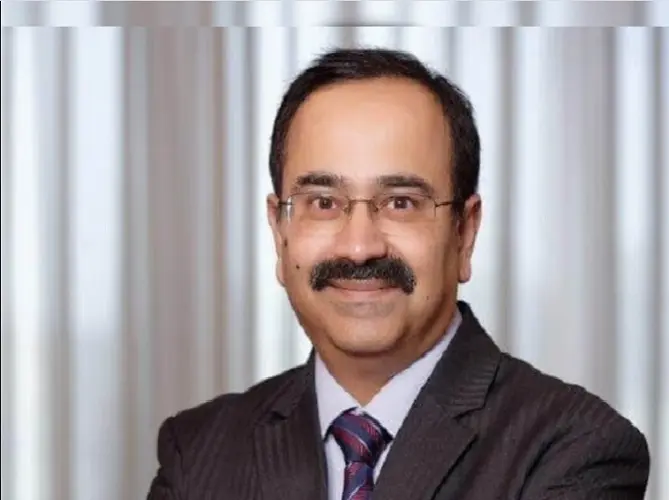
Anup Bagchi formally assumed the role of Managing Director and Chief Executive Officer of HDFC Bank on Tuesday, marking a significant shift in the leadership of India’s largest private sector lender. The appointment, effective from 27 October 2026, follows the completion of Sashidhar Jagdishan’s tenure the previous day and represents the first time an external candidate has taken the top executive position in the bank’s more than three-decade history.
Bagchi, a seasoned financial services professional with deep roots in the ICICI Group, steps into the position after receiving approval from the Reserve Bank of India for a three-year term running until 26 October 2029. In a regulatory filing, HDFC Bank confirmed that Jagdishan vacated the office at the close of business hours on 26 October upon the natural conclusion of his term. The bank placed on record its appreciation for Jagdishan’s contributions, noting his role in strengthening performance, organisational culture and customer focus while guiding the institution through one of the largest mergers in corporate India.
The transition comes at a moment when the bank continues to navigate a complex operating environment. Core income growth and net interest margins have faced pressure in recent quarters, leaving some investors cautious about near-term trajectories. In the second quarter of the financial year, the bank reported a net profit of Rs 19,610 crore, reflecting modest year-on-year growth that fell short of certain market expectations. Deposit mobilisation and the full integration of the earlier merger with the housing finance parent remain areas of ongoing attention. Bagchi has already signalled an intention to engage closely with stakeholders, including regulators, customers and shareholders, to refine priorities and ensure disciplined execution.
Bagchi’s career trajectory offers a clear indication of the experience he brings. An engineer by training from the Indian Institute of Technology Kanpur and a management graduate from the Indian Institute of Management Bangalore, he joined the ICICI Group in 1992. Over the subsequent decades he held a series of senior roles spanning retail banking, wholesale banking, treasury, capital markets and insurance. He served as Managing Director and Chief Executive Officer of ICICI Securities and later as Executive Director at ICICI Bank, where he oversaw retail, business and rural banking before moving to wholesale operations. Most recently he led ICICI Prudential Life Insurance as its Managing Director and Chief Executive Officer, during which the insurer achieved notable milestones in premium growth and profitability.
His arrival as an external leader breaks a long internal succession pattern at HDFC Bank. Previous chief executives had risen through the organisation’s ranks. The decision to appoint Bagchi followed a formal process in which the board considered candidates and secured the necessary regulatory clearance. Alongside the change at the top, the bank updated its list of key managerial personnel authorised to determine material events and make disclosures. Bagchi now heads that list, joined by Kaizad Bharucha as Deputy Managing Director, V. Srinivasa Rangan as Executive Director, Srinivasan Vaidyanathan as Chief Financial Officer and Ajay Agarwal as Company Secretary.
Industry observers note that the timing of the leadership change coincides with broader shifts in the banking landscape. Private sector banks face evolving funding costs, competitive pressure on margins and the need to balance growth with asset quality. Digital transformation and the responsible adoption of new technologies also feature prominently in strategic discussions across the sector. Coverage of these developments can be followed through specialised platforms such as Business Tech, which tracks how financial institutions are adapting to technological change.
Bagchi has indicated that his immediate focus will include completing remaining aspects of the earlier merger integration and deepening his understanding of the franchise through direct engagement. In early comments he expressed appreciation for the existing leadership team and emphasised the importance of governance, trust and sustainable value creation for shareholders, employees and clients. He has spoken of pursuing opportunities arising from macroeconomic shifts and advances in digital infrastructure while maintaining prudence in capital deployment and risk management.
The bank’s official communications have underscored continuity alongside the change. The institutional strengths built over years of consistent performance, extensive branch network and customer relationships provide a solid foundation. At the same time, the appointment of an external chief executive is expected to bring a fresh perspective on operational efficiency, product innovation and competitive positioning. Markets will watch closely for signals on deposit strategy, loan growth priorities and margin management in the coming quarters.
Bagchi’s three-year mandate offers a defined window in which to shape the next phase of the bank’s evolution. The Reserve Bank of India’s approval of both the appointment and the associated remuneration package under the relevant provisions of the Banking Regulation Act provides the regulatory framework for the transition. Shareholders will have the opportunity to formalise related board appointments in due course.
As the new Managing Director and Chief Executive Officer begins his tenure, attention turns to how the bank balances growth ambitions with the realities of a tighter liquidity environment and heightened scrutiny on governance standards. The combination of institutional depth and external leadership experience positions the organisation to address these priorities with a renewed sense of direction. Further clarity on specific strategic initiatives is expected as Bagchi completes his initial round of stakeholder consultations and outlines the path ahead.
The development reinforces the dynamic nature of leadership in India’s banking sector, where regulatory oversight, market expectations and institutional legacy intersect. For HDFC Bank, the formal handover on 27 October marks both the close of one chapter and the opening of another under a chief executive whose career has been defined by business building across multiple segments of financial services. Official details of the appointment and related disclosures remain available through the bank’s communications with the stock exchanges and its corporate website at HDFC Bank.