|
Getting your Trinity Audio player ready...
|
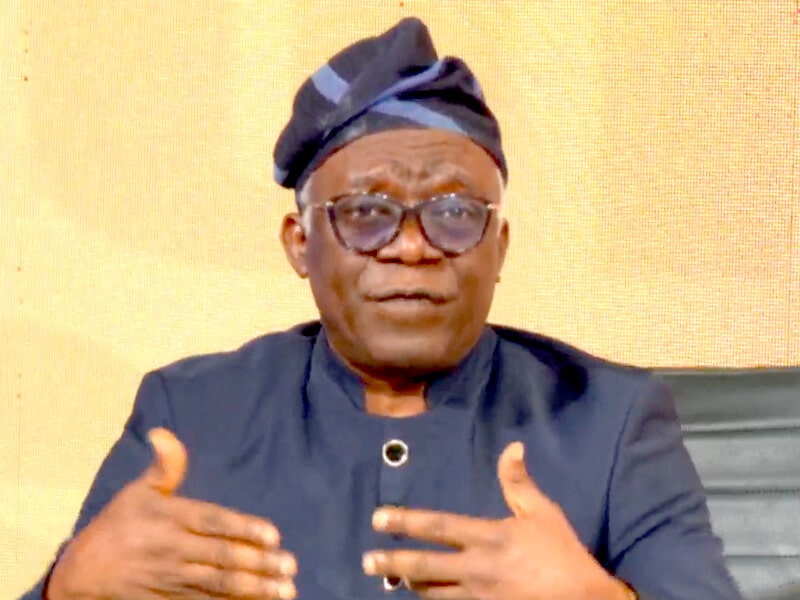
Human rights lawyer Femi Falana, SAN, has put the National Assembly on a clock over one of the largest sums ever attached to Nigeria’s oil sector. In a letter dated October 28, 2026, addressed to Senate President Godswill Akpabio and copied to the Speaker of the House of Representatives, Falana asked lawmakers to compel the recovery of $123.17 billion and ₦66.4 billion that he alleges are owed to the Federation Account by the Nigerian National Petroleum Company Limited (NNPCL), international oil companies and indigenous producers, according to ThisDay and other outlets that reported the letter this week. He gave the Senate President 14 days from receipt to begin the process, warning that otherwise his firm would go to the Federal High Court to compel him to discharge his constitutional duties, as The Nigerian Voice reported.
These are allegations by a lawyer and campaigner, not findings by a court or an audit, and the reports reviewed do not include responses from NNPCL, the oil companies, the Senate or the Attorney-General. That context matters, because the headline figure is built from several different claims with very different levels of official backing.
The largest component is $62 billion in unpaid oil royalties allegedly owed by international oil companies. Falana said a committee set up by the Office of the Attorney-General of the Federation established that the companies owed that sum, and that it went uncollected over 18 years because authorities failed to implement the relevant law, according to Naija News. A second component is $23.1 billion in alleged unremitted dividends from Nigeria LNG Limited, as The Punch reported. A third is about $29 billion linked to alleged crude oil theft and undeclared oil and gas exports. Within that figure, the letter says the committee confirmed that $17 billion worth of oil and liquefied natural gas was exported without proper records, with the cargoes discharged at the ports of Houston and Lake Charles in the United States, according to ThisDay’s account.
The smallest component is the only one that comes from a published audit. Falana cited the 2022/2023 Independent Oil and Gas Industry Report of the Nigeria Extractive Industries Transparency Initiative (NEITI), which disclosed on September 27, 2024 that outstanding collectable revenues due to the federal government as of June 2024 stood at $6.071 billion and ₦66.4 billion, ThisDay reported. He wants the National Assembly to help NEITI recover that sum without further delay. The letter also points to $2.98 billion spent on refinery rehabilitation contracts where the facilities allegedly failed soon after completion, according to News Central TV. Adding the reported components, $62 billion, $23.1 billion, about $29 billion, $6.071 billion and $2.98 billion, gives roughly $123.15 billion, close to the headline figure, though that is my arithmetic and rounding may explain the small gap. Platform Times noted that the concluding paragraph of the letter reportedly gives a different total of $118.67 billion, so the figures in the document are not entirely consistent.
Falana’s legal argument rests on the constitution. He said the alleged failure to remit the money violates Section 162 of the 1999 Constitution, as amended, which provides for the payment of public revenues into the Federation Account, according to Naija News. He also told lawmakers that his lawyers submitted their findings to the Attorney-General’s office and then filed nine civil cases at the Federal High Court in Abuja and Lagos to recover the value of the alleged stolen crude oil and gas, The Punch reported, and that the federal government has yet to comply with the judgments, as Platform Times put it. The reports reviewed do not give the outcome or status of those suits, so readers should treat the claim of compliance failures as Falana’s account.
The ultimatum is directed at the Senate President, which is unusual. The letter asks the National Assembly to use its oversight powers to compel the executive branch and state-owned entities to pursue the money, and it recalls that former Senate President Ahmad Lawan said an amendment to the law would increase Nigeria’s revenue by at least $1.5 billion annually, according to The Nigerian Voice. By addressing Akpabio rather than only the Attorney-General, Falana is trying to put political responsibility on the legislature. Whether the Senate will respond is not known, and Akpabio had made no public statement in the reports reviewed.
Falana framed the stakes in terms of public debt. He said that if the money is recovered, the federal and state governments will cease to incur more external loans to the detriment of the national economy, according to ThisDay. That claim is a political argument, and it should be weighed against the scale of public finances. $123 billion is more than the roughly $55 billion in gross foreign reserves the central bank reported this month, and it far exceeds the amounts typically involved in audits, but whether it is collectable is the central question. Royalty arrears, disputed assessments and contested ownership of cargoes often take years to resolve, and recovered sums can be much smaller than the headline claims.
There is context from other recent stories. This month, the Socio-Economic Rights and Accountability Project (SERAP) asked President Bola Tinubu to investigate more than ₦94.4 billion allegedly unremitted or unaccounted for at two petroleum sector bodies, based on the Auditor-General’s report, and former Vice President Atiku Abubakar has asked the government to explain the ₦11.2 trillion NNPC recorded as receivables from the Federation. The question of who owes what to the Federation Account is therefore on the public agenda from several directions, and it is increasingly entangled with the 2027 election campaign, in which the president has said there will be no return to the fuel subsidy and opponents are criticising the cost of living. Falana, a veteran activist who frequently takes the government to court, is not a candidate, but his demands feed the same debate.
For readers trying to judge the claims, a few questions are useful. Which figures come from audits or official findings, and which from committees or lawyers’ calculations? Have the companies disputed the assessments, and in which forums? Are the royalties calculated on the basis of laws and agreements that were in force at the time? And what mechanisms exist to recover the sums if they are confirmed? NEITI, which publishes its reports on its NEITI website, provides the most official data in the set, and its numbers are far smaller than the headline. ThisDay has the main account of the letter in its report.
What happens next will unfold over two weeks. If the Senate President does not act within the 14 days, Falana says he will go to court, and a Federal High Court case could take months or years. The more immediate test is whether the National Assembly, the Attorney-General’s office or NNPCL respond publicly, and whether any of the claims are formally contested. Journalists and civil society groups are likely to press for answers, since the sums involved, if even partly valid, would be significant for public finances.
Readers who follow Nigeria’s economy, energy and business stories can find more coverage at BusinessTech Nigeria. For now, the letter is a demand backed by a deadline, and the next move belongs to the people it was addressed to.