|
Getting your Trinity Audio player ready...
|
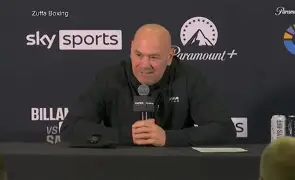
Dana White, the chief executive of the Ultimate Fighting Championship, stepped up to the lectern in the White House briefing room on Monday and told reporters he had no interest in becoming the next White House press secretary. The offer had come from President Donald Trump, who announced it on social media on Saturday, then said a day later that he had only been kidding. The episode played out over about 48 hours and gave Washington an unusual mix of political theatre and sports-business celebrity.
The sequence began on Saturday, November 7. Trump made the offer on Truth Social and later clarified that he was joking. He was at his golf club in Florida when he posted it, and the position has been vacant since Katie Zacharia was removed in October. The speed of the exchange left many people unsure how seriously to take it. One White House aide described the announcement as a joke, while a person familiar with the situation told CNN that White had declined. White himself had not directly confirmed any rejection at that point.
By Sunday the story had gained its own momentum. White confirmed that he would meet Trump at the White House on Monday to discuss the press secretary job. That meeting turned into a public event. Trump brought White out to the podium in the James S. Brady Press Briefing Room, where he asked whether White wanted to be press secretary of the United States or preferred to stay with the UFC. White answered plainly. He thanked the president for the offer and said he did not want to be in politics.
The tone in the room was light. White joked that he had always wanted to stand at that lectern and asked who had the first question, then quickly added that he had no political aspirations. He told reporters that the previous 24 hours had been wild. Asked to confirm he had said no, he replied that he does not tell the president no to anything, and that he had held back from saying anything publicly until Trump spoke first. The remark offered a glimpse of how he managed a delicate public moment: he turned down the job without appearing to embarrass the man who offered it.
Trump, for his part, kept the mood playful. He said he had been having a little fun, called White a great guy, and joked that White would talk for a while and then beat up the reporters. He then left the room with a mock lament about being devastated. After White left the lectern, Trump took questions on weightier matters, including the wars involving Iran and Ukraine and the possible impeachment of Pentagon chief Pete Hegseth. The contrast between the comic opening and the serious agenda that followed was hard to miss.
The vacancy gives the story its real news value. AFP reported that the press secretary post has been empty since Zacharia left on October 16 after a very short time in the role, and that her predecessor, Karoline Leavitt, left in August after a year and a half in the job. Two departures in a matter of months leave one of the most visible jobs in the administration without a permanent occupant. The press secretary is the person who stands before the cameras and defends the president’s positions on a daily basis, so a long gap has practical consequences for how the White House communicates with the public.
Part of the speculation after Saturday’s post concerned the political climate. AFP noted that the announcement had prompted talk that Trump was preparing a more aggressive stance after the Republican Party’s stunning defeat in the midterm elections, though some people were skeptical, and Trump later said he had been joking. That context is worth keeping in view, but it should be read as commentary and not as confirmed intent. Nothing in the public record from the weekend says the president was seriously weighing White for the role.
White’s connections to the president are well established. He is a long-time friend of Trump and helped host a large UFC event on the White House lawn earlier this year. Those ties help explain why the offer, joking or not, attracted so much attention and why White was willing to show up in person. Public figures who are close to a president are often drawn into moments like this, and the way White handled it suggests he understood the risks. A flat refusal could have looked ungracious, while a hesitant answer might have kept speculation alive for days.
From a business perspective, the decision is easy to understand, though it is an interpretation and not something White spelled out. He runs a global sports organisation, the UFC, and his public profile is closely tied to that role. Taking on a politically exposed job in the White House would have meant giving up a position he built over many years in exchange for one defined by daily scrutiny and rapid turnover. His own words on Monday pointed in the same direction. He repeated that politics was not for him and that he had no aspirations in that area.
The briefing room itself is also part of the story. It is typically a place of formal exchanges between reporters and officials, and the sight of a cage-fighting executive at the lectern, wearing a black t-shirt and jacket, was a reminder of how far the presidency’s communications style has moved from convention. Supporters of the president may see it as a sign of an accessible, entertaining White House. Critics may see it as a distraction from the serious subjects that followed in the same room. Both reactions can be held at once, and neither changes the basic facts of what was said.
The more practical question now is who will fill the job. Reports reviewed for this article do not name a new candidate or say when a permanent press secretary might be announced. Until that happens, the question of how the administration handles its daily briefings stays open. Reporters, advisers and the public will be watching to see whether the next appointment is someone with traditional communications experience or another figure from outside politics.
For now, the facts are straightforward. The president made an offer on social media, retreated from it within a day, and then staged a lighthearted public exchange in which Dana White said no. The vacancy remains, and so do the larger issues of the week. What the episode shows is how quickly a social media post can become a public event, and how a person in White’s position can step into the spotlight, answer a direct question with a smile and step out again with his reputation and his job intact.