|
Getting your Trinity Audio player ready...
|
Kano State could double its earnings from sesame seed and hibiscus exports to $700 million by 2027 if ongoing Federal Government efforts to simplify export documentation and remove trade bottlenecks deliver the expected results.
The projection was disclosed by Yusuf Ahmed, the State Coordinator of the Nigerian Export Promotion Council (NEPC), during a National Single Window Phase Two sensitisation and stakeholders’ engagement forum held in Kano on Monday, November 16, 2026.
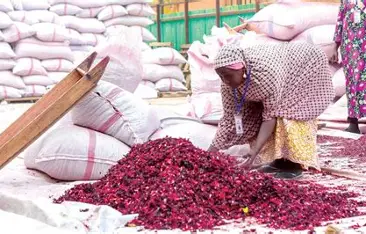
Ahmed said Kano exported sesame seeds and hibiscus flowers worth more than $350 million in 2025, making the two agricultural commodities significant contributors to the state’s non-oil export earnings. He expressed confidence that the figure could reach $700 million within two years if exporters experience fewer administrative delays and a more efficient documentation process. Head Topics+1
The target places renewed attention on Kano’s agricultural export sector, particularly its ability to convert production capacity and established trading networks into higher foreign exchange earnings. Sesame and hibiscus are among the commodities that have helped northern Nigeria maintain a presence in international agricultural markets.
Ahmed attributed part of the expected growth to the National Single Window project, a Federal Government initiative designed to simplify international trade procedures through a centralised electronic platform. The system is expected to reduce the need for exporters to visit multiple government offices to obtain permits, licences, certificates and other documents required for international shipments.
The NEPC coordinator said the project was expected to begin operations in December 2026, creating an opportunity to improve the process of exporting agricultural products from Kano and other parts of the country.
The National Single Window is intended to address one of the longstanding challenges facing Nigerian exporters: the difficulty of completing documentation requirements across several regulatory institutions. Under the existing process, businesses may have to deal separately with agencies responsible for product inspection, quality certification, food safety, export registration and other approvals.
For agricultural exporters, these procedures can involve repeated visits, multiple charges and delays that affect the cost and timing of shipments. Amina Abdulmalik, NEPC’s North-West Regional Coordinator, identified these challenges during the Kano forum, saying exporters in the region continued to experience delays, multiple payments and repeated physical examinations at different government agency offices.
She described Kano as a major commercial centre in northern Nigeria, accounting for more than 40 per cent of the region’s non-oil exports. Among the products contributing to the region’s export trade are sesame seeds, hibiscus flowers, ginger, groundnuts, onions, cowpeas, chilli peppers and leather. Head Topics+1
The Federal Government has scheduled December 14, 2026, for the first rollout of the export component of the National Single Window. The second phase will be introduced in batches, with the initial group covering agencies involved in issuing export permits and certificates. Further integration, including processes involving the Central Bank of Nigeria and other institutions, is expected in the first quarter of 2027.
The project director, Tola Fakolade, previously explained that the platform would allow exporters to submit documentation through a single digital system rather than visiting each agency separately. Relevant institutions would then access the submitted information electronically and handle their respective regulatory responsibilities.
Agencies expected to participate in the first batch include the Nigerian Export Promotion Council, Standards Organisation of Nigeria, National Agency for Food and Drug Administration and Control, Nigeria Agricultural Quarantine Service and Federal Produce Inspection Service. The National Single Window Secretariat has also said the existing Trade Monitoring System and the Form NXP export documentation process are expected to be integrated into the platform. Punch Newspapers+2
The planned digital reform could make a difference for businesses handling large volumes of agricultural commodities, particularly those that depend on timely certification and shipment arrangements. If exporters can complete documentation more efficiently, they may spend less time navigating administrative processes and have greater certainty when organising deliveries to international buyers.
However, the platform’s success will depend on how effectively the participating agencies coordinate their operations. Digital submission alone will not automatically eliminate delays if inspections, certification decisions and approvals continue to take longer than expected. Exporters will also need reliable access to the platform, clear information about documentation requirements and adequate support during the transition.
Abdulmalik urged exporters to participate actively in the sensitisation exercise by asking questions and sharing their experiences. The engagement was organised to help stakeholders understand the project’s objectives and prepare businesses for the changes expected under the new system.
She said the initiative represented the Federal Government’s response to the administrative difficulties affecting exporters. For Kano’s agricultural businesses, the expected benefits include fewer repeated submissions, better coordination between regulatory agencies and a more transparent process for securing export approvals.
The $700 million target is also significant because it focuses on two commodities that already have an established place in Kano’s international trade. Sesame seeds are used in food production and oil processing, while hibiscus flowers are traded for use in beverages, food products and other commercial applications.
Both commodities provide income opportunities for farmers, aggregators, processors, traders and logistics operators. Higher export activity could therefore benefit businesses beyond those directly involved in international shipments, provided increased demand is supported by reliable production and market access.
Kano’s agricultural potential extends beyond sesame and hibiscus. The state government has also been pursuing investments in irrigation, storage, processing and other agricultural value chains. In November 2026, the Guardian reported that the state was expanding efforts to support food processing and packaging for export, alongside investments in irrigation infrastructure and agricultural facilities. The Guardian Nigeria+1
Such investments matter because export growth requires more than access to international buyers. Farmers and exporters must be able to supply sufficient quantities, maintain consistent quality, store produce properly and meet the standards required by destination markets.
For sesame and hibiscus exporters, product quality and compliance with importing countries’ regulations are particularly important. Agricultural commodities may be rejected or face delays if they fail to meet applicable inspection, safety, packaging or certification requirements. The National Single Window can simplify the administrative side of compliance, but it does not remove the responsibility of exporters to meet the standards required by overseas buyers.
The National Trade Intelligence Portal’s export guidance outlines several requirements for businesses exporting goods from Nigeria. These include appropriate exporter registration, product classification, relevant permits and certificates, customs documentation and compliance with the import requirements of destination countries. NTIP
This means Kano’s ambition will require cooperation between government agencies and private businesses. Farmers must have access to quality seeds, appropriate farming support and markets, while aggregators and exporters need dependable transportation, storage and processing arrangements. Regulatory agencies must also ensure that inspection and certification procedures are efficient without weakening quality controls.
Another important consideration is whether the projected increase in export earnings will translate into stronger returns for farmers. Higher international sales do not automatically mean that smallholder producers receive better prices. The distribution of value across the supply chain, access to buyers, production costs and the bargaining position of farmers will influence how much of the growth reaches agricultural communities.
The NEPC’s projection nevertheless provides an indication of the opportunities available to Kano’s non-oil export sector. Moving from more than $350 million in sesame and hibiscus exports in 2025 to $700 million by 2027 would require a substantial increase in export value within a relatively short period.
Ahmed’s comments suggest that the National Single Window is expected to play a central role in achieving that ambition by addressing documentation problems that make international trade more difficult and expensive.
The December 14 rollout will therefore be an important test of the Federal Government’s efforts to modernise export procedures. If the system works as planned and participating agencies provide timely approvals, Kano’s exporters could benefit from a more predictable process for reaching international markets.
For now, the $700 million figure remains a target rather than a confirmed projection of future earnings. Achieving it will depend on the effectiveness of the digital reforms, the ability of farmers and businesses to increase supply, and Kano’s capacity to maintain the quality and competitiveness of its sesame and hibiscus exports.