|
Getting your Trinity Audio player ready...
|
The NDC presidential candidate says the slogan targets electoral malpractice, while insisting that Kwankwasiyya supporters have not used their sticks to hurt anyone.
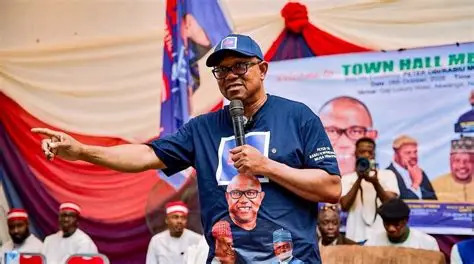
Presidential candidate of the Nigeria Democratic Congress (NDC), Peter Obi, has defended the controversial “rig and die” slogan ahead of the 2027 general elections, insisting that it represents opposition to electoral manipulation rather than a threat of violence.
Obi also defended supporters of his running mate, Rabiu Kwankwaso, over their practice of carrying sticks to political gatherings. He said members of the Kwankwasiyya movement had a longstanding tradition of appearing at rallies with sticks but maintained that he had not witnessed them using the objects to harm anyone.
The former Anambra State governor made the remarks during an interview with Channels Television on Tuesday evening, November 24, in Jalingo, Taraba State, following an Obi-Kwankwaso town hall meeting.
His comments came amid growing concerns about political violence ahead of the 2027 elections, including an attack on the campaign team of NDC senatorial candidate Ovie Omo-Agege in Delta State that reportedly killed several supporters.
Obi Says ‘Rig and Die’ Does Not Mean ‘Campaign and Die’
Obi said critics had misunderstood the slogan by interpreting it as a call for violence against political opponents or participants in election campaigns.
He explained that the expression was intended to warn against electoral malpractice, particularly attempts to manipulate election results.
“They said we said ‘rig and die’. We didn’t say ‘campaign and die’. What we, people said is that they don’t want rigging this time. They didn’t say they don’t want campaign this time. If anything, they want campaign this time,” he said.
The NDC candidate argued that political parties and their supporters should remain free to campaign without intimidation, provided they respect the law and the rights of others.
His explanation followed criticism of the slogan by political figures and electoral stakeholders who have expressed concern that aggressive political language could encourage violence during campaigns and elections.
The controversy has also drawn attention to the responsibility of political leaders to communicate their positions without creating an atmosphere of hostility among supporters.
Obi Defends Kwankwasiyya Supporters Carrying Sticks
Obi also addressed concerns about the presence of sticks and other potentially dangerous objects at political gatherings involving supporters of Kwankwaso.
He said the practice was associated with the Kwankwasiyya movement in Kano and had existed for years. According to him, carrying sticks at political events did not necessarily mean supporters intended to attack other people.
“Everybody who had followed the Kwankwasiyya group in Kano know that they come out with such sticks and everything, but they’ve never used it to harm anybody,” Obi said.
He added that his association with the movement had not exposed him to an incident in which supporters used the sticks to injure anyone.
“I’ve been part of that family for a while, and I’ve never seen one day, maybe behind me, that anybody was harmed because they were carrying such items,” he said.
However, his defence represents his personal observation of the movement. The presence of sticks or other potentially dangerous objects at political gatherings remains a security concern, particularly when tensions rise between rival groups.
Obi appealed to security agencies and other authorities to ensure that political activities did not result in injuries or deaths.
“So we’re pleading with the authorities. Please, we cannot kill people, harm people, because we want to be political leaders,” he added.
Comments Follow Deadly Attack on Omo-Agege’s Campaign Team
Obi’s remarks came a day after gunmen attacked a campaign gathering organised by Omo-Agege, the NDC candidate for Delta Central Senatorial District, in Uduere community, Ughelli North Local Government Area of Delta State.
The attack reportedly killed six supporters and left four others critically injured. Omo-Agege, a former Deputy President of the Senate, escaped without injury.
According to a statement by his media adviser, Sunny Areh, the attackers struck while the campaign team was conducting political activities in the community.
The incident raised fresh concerns about the safety of opposition politicians, campaign workers and supporters as political parties increase their activities ahead of the 2027 elections.
Obi condemned the violence and called on authorities to protect political participants. He maintained that disagreements over political leadership should not result in the loss of lives.
The attack also intensified debate over the language politicians use during campaigns and whether inflammatory statements could contribute to an environment in which political violence becomes more likely.
Omo-Agege Defends the Slogan Amid Criticism
Omo-Agege had earlier defended the “rig and die” expression, describing it as a warning against electoral manipulation rather than a threat against political opponents.
Speaking on Channels Television’s Politics Today on Monday, November 23, he argued that people who had no intention of rigging elections should not interpret the slogan as a threat.
His explanation followed criticism from Minister of Aviation and Aerospace Development Festus Keyamo, who had called for the controversial rhetoric to be withdrawn.
Keyamo warned that political leaders should not encourage supporters to attack or kill other citizens. He also argued that only law enforcement agencies had the authority to deal with electoral offenders.
The disagreement has placed the slogan at the centre of a wider discussion about political communication, electoral integrity and public safety.
Earlier Attack on Kwankwaso’s Convoy Raises Security Concerns
The latest incident in Delta State followed an earlier attack on Kwankwaso’s convoy in Bichi Local Government Area of Kano State on November 15.
The attack reportedly left several people injured and vehicles damaged. Obi condemned the incident, arguing that political disagreements should not be settled through violence.
Kwankwaso, a former governor of Kano State and the NDC vice-presidential candidate, leads the Kwankwasiyya political movement. His supporters have maintained a distinctive presence at political gatherings, often wearing the movement’s red caps and carrying sticks.
Obi and Kwankwaso have been holding town hall meetings across the country as part of their political engagements ahead of the 2027 elections.
The recent attacks have increased attention on the security arrangements surrounding their activities and those of other opposition candidates.
Political Parties Face Pressure to Protect Campaign Activities
The incidents involving Omo-Agege’s campaign team and Kwankwaso’s convoy highlight the security challenges facing political activities ahead of the next general elections.
Political parties must organise campaigns in an environment where supporters can participate without fear of attacks. Security agencies also face pressure to investigate reported incidents, identify those responsible and prevent further violence.
Obi’s latest comments seek to distinguish his campaign’s opposition to electoral manipulation from threats against political participants. His defence of Kwankwasiyya supporters also places emphasis on their conduct rather than the objects they carry.
As preparations for the 2027 elections continue, the debate over the slogan and the recent attacks will keep attention on the relationship between political rhetoric, campaign security and the protection of citizens.