
|
Getting your Trinity Audio player ready...
|
The attacks killed at least four civilians and injured nine others, while Sudan’s military accused Ethiopia of providing a launch point for the drones.
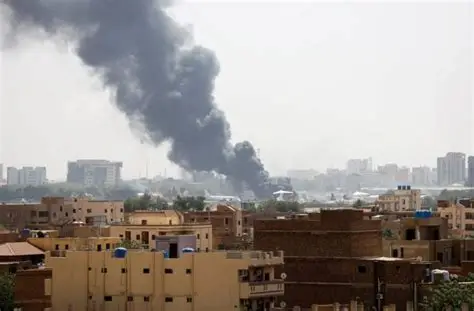
Drone strikes hit residential neighbourhoods and a United Nations facility in Khartoum, Sudan, early Sunday, November 22, killing at least four civilians and injuring nine others, according to local reports. The attacks damaged homes and endangered UN personnel working inside a facility in a civilian neighbourhood.
Explosions rang out around Khartoum International Airport and other parts of the capital between approximately 2:00 am and 4:30 am. Sudanese air defences attempted to intercept the drones as they approached areas around the airport and other reported targets.
The attacks have renewed concerns about civilian safety as Sudan’s military conflict increasingly relies on drone warfare. The paramilitary Rapid Support Forces (RSF) have been blamed for the strikes, although responsibility has not been independently established.
Drone Strikes Kill Civilians in Khartoum and Omdurman
The attacks affected several locations in and around the Sudanese capital, including residential areas in Omdurman and Jebel Aulia.
In north-western Omdurman, a drone struck a family home, killing three members of the same family and injuring several others. Residents rushed to the damaged property to search for survivors and recover people trapped beneath the rubble.
A separate attack in Jebel Aulia, south of Khartoum, reportedly killed a 10-year-old child. A witness said the drone struck the home of a local mosque official, prompting residents to search through the debris for trapped family members.
The destruction extended beyond the reported casualties. Witnesses described a house completely reduced to rubble, with household belongings scattered around the damaged property.
Al-Nour Adam, a resident who entered one of the affected homes, described finding a wounded person with injuries to the arm, chest and head. Another resident, Yasser Hassan, said the occupants had only recently moved into the house after struggling to find shelter.
Their accounts illustrate the growing insecurity facing civilians who have returned to Khartoum or continue to seek accommodation in the capital.
UN Confirms Damage to Facility With Staff Inside
The United Nations confirmed that a facility in a residential neighbourhood of Khartoum sustained damage during Sunday’s drone attacks. UN personnel were inside the building when the incident occurred.
Denise Brown, the UN Resident and Humanitarian Coordinator in Sudan, condemned the danger facing humanitarian workers. She stressed that civilians are not legitimate targets during armed conflict and said UN personnel were in the country to provide assistance wherever people needed support.
The UN Office for the Coordination of Humanitarian Affairs also described the exposure of its personnel to such risks as unacceptable.
The incident raises serious concerns about the protection of humanitarian facilities in Sudan. International humanitarian law protects humanitarian personnel and civilian objects, while parties to a conflict must distinguish between military targets and civilian locations.
Damage to aid facilities can also disrupt relief operations in a country where millions of people depend on humanitarian assistance.
Sudan Accuses Ethiopia of Providing Drone Launch Site
Sudan’s military accused neighbouring Ethiopia of allowing the drones to launch from its territory. A Sudanese military source told Agence France-Presse that the aircraft took off from Bahir Dar airport in Ethiopia.
The source described the operation as a continuation of what Sudan considers Ethiopian aggression against its territory.
However, the allegation has not been independently verified. Ethiopia has previously denied Sudanese accusations that it allows attacks against Sudan to originate from its territory.
The latest accusation adds to tensions between the two countries. Sudan has also raised concerns about alleged drone operations originating from Ethiopian territory with the United Nations Security Council and the African Union.
The dispute carries wider regional implications because Sudan’s conflict already involves competing military interests and allegations of external support for the rival forces.
Drone Warfare Intensifies Sudan’s Humanitarian Crisis
Sudan’s war began in April 2023 following a power struggle between the Sudanese Armed Forces, led by General Abdel Fattah al-Burhan, and the Rapid Support Forces, commanded by Mohamed Hamdan Dagalo.
The conflict has devastated communities, displaced millions and disrupted access to food, healthcare and other essential services. The United Nations continues to describe Sudan as one of the world’s most severe humanitarian emergencies.
Drone warfare has become a major feature of the fighting. Both the Sudanese army and the RSF increasingly use unmanned aircraft to attack targets over long distances, including infrastructure and locations far from conventional front lines.
A UN Human Rights Office report found that drone attacks killed more than 1,630 civilians in Sudan between January and the end of October 2026. The United Nations has also warned about the heavy toll of drone strikes on children.
The army recaptured Khartoum in May 2025, allowing some residents to return and international activity to resume gradually. However, Sunday’s attacks demonstrate that military control of the capital has not eliminated the threat to civilians.
The latest strikes have also highlighted the difficulty of protecting residential communities and humanitarian facilities as both sides expand their use of long-range weapons.
International Calls for Civilian Protection
The damage to homes and the UN facility has drawn renewed attention to the need to protect civilians and humanitarian workers. Saudi Arabia and Egypt condemned the attacks, adding to international concern over the continuing violence.
For aid organisations, the immediate priority remains the safety of personnel and the ability to reach communities affected by the war. Continued attacks in populated areas could further restrict humanitarian operations and make it harder for displaced families to return safely.
Sunday’s incident reinforces the wider danger of drone warfare in Sudan. As the conflict continues, residential neighbourhoods, public infrastructure and humanitarian facilities remain exposed to attacks that can cause significant civilian casualties.