|
Getting your Trinity Audio player ready...
|
The agreement targets lower trade costs, easier food exports and youth mobility as both sides seek to rebuild economic ties a decade after Brexit.
The United Kingdom and the European Union have concluded negotiations on a new agreement to reset their relationship, securing deals on food trade, youth mobility and carbon markets at a summit in Brussels on Friday, November 20, 2026.
British Prime Minister Andy Burnham’s office confirmed that both sides had agreed on implementation timelines for the measures. The package marks a significant step towards closer economic cooperation after years of trade friction following Britain’s departure from the European Union.
The agreements aim to reduce administrative barriers for businesses, improve access to work and study opportunities for young people, and strengthen cooperation on climate policy. However, the deal does not reverse Brexit or restore Britain’s membership of the EU single market.
Food Trade Agreement Targets Post-Brexit Costs
The food and agricultural trade agreement represents one of the most commercially significant parts of the new arrangement.
Under the proposed framework, British and European businesses will face fewer checks and certification requirements when trading animals, plants and related food products across their shared borders. The changes will reduce some of the paperwork and inspection procedures introduced after Brexit.
British authorities estimate that removing these barriers could generate up to £5.1 billion in annual economic benefits for the UK.
The agreement requires Britain to align more closely with EU sanitary and phytosanitary standards covering food safety, animal health and plant health. This alignment will allow businesses to trade more easily, although it also means Britain will need to follow relevant European rules in the areas covered by the arrangement.
For food producers, exporters, retailers and agricultural businesses, reduced border procedures could lower operating costs and improve the movement of goods between the two markets.
UK and EU Agree Youth Mobility Scheme
The summit also produced an agreement on youth mobility, allowing young people from Britain and EU countries to live, work or study on the other side of the Channel for a limited period.
The proposed scheme will allow participants to stay for up to three years. European diplomats said Britain had agreed to a limit of 100,000 places, a higher figure than its initial proposal.
The arrangement is expected to cover young people aged 18 to 32, although implementation will depend on the agreed national procedures.
The scheme will create opportunities for young workers, students and other participants to gain international experience. It will also give employers access to a wider pool of temporary workers and help businesses attract people with relevant skills.
However, the arrangement will not restore the unrestricted freedom of movement that existed when Britain was an EU member. The new system will operate through a controlled mobility framework.
Carbon Market Link Could Reduce Costs for Exporters
Britain and the EU also agreed to link their emissions trading systems, which became separate after Brexit.
Emissions trading systems require companies in covered industries to hold allowances for the greenhouse gases they produce. Linking the two markets could reduce differences in carbon pricing and make it easier for businesses operating across both jurisdictions to manage their compliance obligations.
The arrangement also aims to prevent British and European goods from facing additional carbon costs under each other’s border measures. Steel and other energy-intensive products stand to benefit from closer coordination.
The agreement matters to manufacturers and exporters because carbon-related charges can increase production expenses and reduce competitiveness in international markets.
However, businesses should not assume that the agreement will immediately remove every carbon-related trade cost. The two sides still need to complete the implementation process, and British exporters may continue to face certain EU carbon border charges before the new arrangements take effect.
University Tuition Fees and Other Disagreements Remain
Despite the progress in Brussels, the agreement does not resolve every issue affecting UK-EU relations.
University tuition fees remain a sensitive area. European governments have pushed for more favourable fees for EU students attending British universities, while the UK government has resisted extending the same domestic fee arrangements automatically to European students.
The two sides have continued discussions on a possible compromise, with a six-month period identified for further work on the issue.
Another outstanding question concerns Britain’s participation in the EU’s proposed Made in Europe framework. The arrangement could affect access to European industrial programmes and manufacturing opportunities, particularly in sectors competing with Chinese producers.
Britain wants a stronger role in shaping rules that affect its businesses. However, the EU has made clear that closer access to its industrial framework could require the UK to align with relevant European trade and investment policies.
These unresolved questions show that the reset agreement is a starting point for further negotiations rather than a complete settlement of post-Brexit economic differences.
Burnham Pushes for Closer Economic Cooperation
Burnham has argued that Britain’s existing relationship with the EU has limited economic opportunities and increased costs for businesses. He has described closer cooperation as a practical way to improve trade, support economic growth and reduce pressure on consumers.
The prime minister has also said Britain should remain open to discussing its long-term relationship with the bloc, including the possibility of rejoining the EU. However, he has not presented membership as an immediate policy objective.
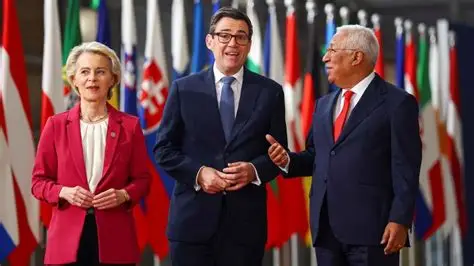
European Commission President Ursula von der Leyen and European Council President António Costa have also supported stronger cooperation between the two sides, particularly on economic security, trade and opportunities for young people.
The summit reflects wider strategic pressures on Europe. Russia’s war in Ukraine, changing global trade conditions, US tariffs and competition over critical supply chains have increased the importance of cooperation between Britain and its European neighbours.
What the Agreement Means for Businesses
The reset deal could improve conditions for companies that depend on trade between Britain and the EU. Food exporters may benefit from fewer inspections, manufacturers could gain from closer carbon market coordination, and employers may have access to a wider pool of young workers.
The scale of the economic benefits will depend on implementation. Businesses will need clarity on the final rules, compliance requirements and effective dates before they can fully assess the changes.
The agreement also leaves important differences unresolved, particularly around university fees, industrial policy and Britain’s relationship with EU regulations.
For now, the Brussels summit has delivered a practical package of measures to reduce some of the commercial barriers created by Brexit. Its longer-term significance will depend on whether both sides can turn the political agreement into workable arrangements that support trade, investment and economic growth.