
|
Getting your Trinity Audio player ready...
|
The Works Minister says government loans are funding national infrastructure projects designed to improve connectivity, attract private investment and generate revenue.
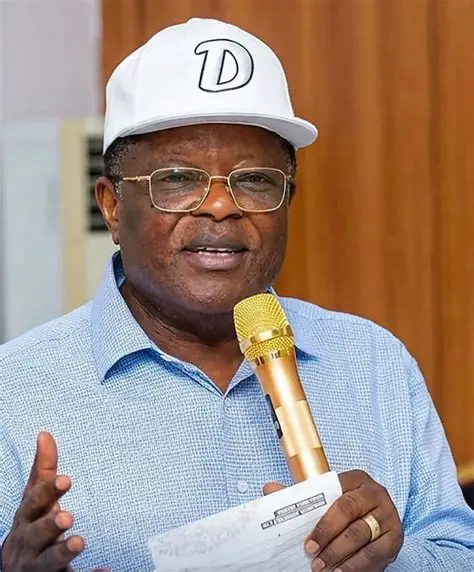
Minister of Works David Umahi has defended the Federal Government’s borrowing, saying funds obtained through external loans are being invested in roads, bridges and other infrastructure projects expected to deliver long-term economic benefits.
Umahi made the remarks on Sunday, November 22, 2026, while inspecting bridges along the Lagos-Calabar Coastal Highway. He argued that the administration’s borrowing programme supports productive investments rather than spending without economic returns.
The minister’s comments come as President Bola Tinubu seeks approval from the House of Representatives to access $7.71 billion in external loans, equivalent to approximately ₦10.79 trillion, already captured in the 2026 Appropriation Act. The proposed borrowing is expected to help finance the budget deficit and projects across several sectors, including transportation, agriculture, power, education, health and defence.
Umahi Says Borrowed Funds Are Supporting Infrastructure Development
Umahi maintained that the Federal Government directs borrowed funds towards infrastructure capable of improving economic activity and creating opportunities for future revenue generation.
Defending the administration’s borrowing, he said the projects underway across the country represent investments in national development.
“When you ask about the monies which are being borrowed. They are being used for infrastructure. They are being used for investment in infrastructure,” the minister said during the inspection.
He also described the Lagos-Calabar Coastal Highway as a major infrastructure project that could improve transportation along Nigeria’s coastline.
According to Umahi, the government wants to develop the highway beyond a conventional road corridor by incorporating facilities that could support tourism, industrial activity and other commercial ventures.
Lagos-Calabar Coastal Highway Records Construction Progress
During the inspection, Umahi highlighted progress on the coastal highway, describing the pace and scale of construction as significant.
He said the first section had been completed about six months earlier, while another section measuring approximately 53 kilometres had also been completed.
The minister identified several features incorporated into the road infrastructure, including solar-powered streetlights, underground drainage systems and pedestrian walkways.
He also claimed that more than 200 kilometres of road infrastructure had been delivered within two and a half years.
Umahi expressed confidence in the project’s construction quality and praised President Tinubu for supporting its development. However, the eventual economic value of the highway will depend on its completion, effective maintenance, traffic demand and the commercial arrangements surrounding its operation.
Government Considers Private Investment and Highway Tolling
Umahi disclosed that private investors had expressed interest in recovering the government’s expenditure on the Lagos-Calabar Coastal Highway in exchange for opportunities to operate tolling facilities.
The proposals suggest that the Federal Government is considering private-sector participation as a way to recover infrastructure costs and generate revenue from the completed highway.
However, Umahi said the government was still considering the proposals and working on additional facilities that could increase the project’s commercial potential.
These include CCTV systems, rental accommodation, tourism facilities, industrial sites and other supporting developments along the coastal corridor.
The minister’s comments indicate that the government wants to develop commercial activities around the highway rather than depend exclusively on toll revenue.
Such arrangements could create opportunities for private investors, but their financial viability will depend on traffic volumes, toll charges, operating costs, investment terms and the level of demand for supporting facilities.
Government Links Other Highway Projects to Economic Development
Umahi also highlighted other major road projects under the Federal Government’s infrastructure programme.
He said the 1,068-kilometre Sokoto-Badagry Superhighway had reached approximately 30 per cent technical completion, while the 465-kilometre Trans-Sahara Road had attained about 20 per cent completion.
Construction is also progressing on the Akwanga-Jos-Bauchi-Gombe-Biu-Maiduguri Road.
The minister argued that these projects could support economic activities by improving access between regions, facilitating the movement of goods and connecting businesses to markets.
He also outlined opportunities for energy and agricultural development along some highway corridors. According to him, the Sokoto-Badagry route contains more than 67 dams that could support electricity generation and irrigation.
Umahi further identified opportunities for wind energy development along the coastal corridor and carbon credit benefits from the use of concrete and solar-powered infrastructure.
These proposals form part of the government’s broader plan to generate economic opportunities around major transport investments.
Tinubu Seeks Approval for Additional External Borrowing
The minister’s defence of government borrowing comes as the Tinubu administration pursues legislative approval to access $7.71 billion in external financing.
President Tinubu’s request was communicated to the House of Representatives in a letter read during plenary by Speaker Tajudeen Abbas.
The proposed financing forms part of the external borrowing already included in the 2026 Appropriation Act. The government expects the funds to support its budget deficit and finance projects across critical sectors.
A Eurobond issuance is expected to serve as a major financing option.
The borrowing request has renewed attention on how the Federal Government allocates loan proceeds, manages public debt and ensures that infrastructure spending produces measurable economic benefits.
Umahi’s comments provide the government’s infrastructure-based justification for borrowing. However, the long-term value of the projects will depend on completion, transparent financing arrangements, maintenance and the revenue they eventually generate.
Infrastructure Returns Will Depend on Project Delivery
The Lagos-Calabar Coastal Highway illustrates the government’s strategy of combining public infrastructure spending with potential private investment and commercial revenue.
For businesses, the project could improve transport connections, support logistics operations and create opportunities around tourism, manufacturing and other activities along the coastal corridor.
The proposed tolling arrangements could also introduce private-sector participation in the operation and maintenance of major road infrastructure.
Nevertheless, infrastructure investment does not automatically guarantee financial returns. The government will need to demonstrate that completed projects deliver the expected economic benefits while managing borrowing costs and future repayment obligations.
Umahi has maintained that the administration is investing borrowed funds in infrastructure intended to support national development. Whether these investments deliver sustainable returns will depend on how effectively the government completes, operates and maintains the projects.