|
Getting your Trinity Audio player ready...
|
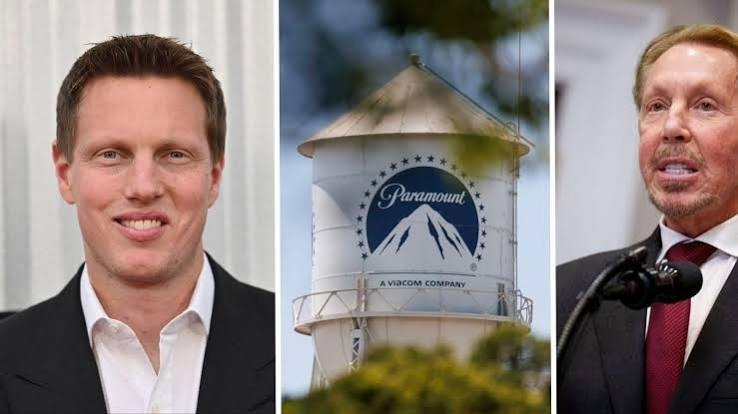
Paramount Skydance CEO David Ellison has spent nearly a year fighting to acquire Warner Bros. Discovery, and after clearing rejections, a hostile tender offer, a bidding war against Netflix, and approval from regulators in dozens of countries, he now finds himself stuck at what might be the toughest obstacle yet: a coalition of state attorneys general determined to block the deal in court.
The path to this point has been unusually dramatic even by Hollywood merger standards. Ellison’s pursuit began last September with three unsolicited bids aimed at taking over Warner Bros. Discovery, the company behind the legendary film studio, a wide portfolio of pay TV networks, and the HBO Max streaming service. Those early bids pushed WBD into a formal sale process that ultimately scrapped the company’s original plan to split into two separate businesses. When Warner Bros. Discovery initially chose Netflix as the winner of that bidding war, Ellison responded by going hostile, promising WBD shareholders a better deal than what Netflix was offering.
That strategy eventually worked. In February, Netflix walked away from its pending agreement, and Paramount signed a formal deal to acquire the entirety of Warner Bros. Discovery for $31 per share in an all-cash transaction, a price WBD’s own board unanimously determined represented a superior proposal compared to the Netflix agreement it had previously accepted. Getting to that signed agreement wasn’t simple either. Paramount had to work through a series of objections WBD’s board raised throughout the negotiation, ultimately securing an irrevocable personal guarantee from Larry Ellison, David’s father and the billionaire co-founder of Oracle, covering the equity portion of the deal’s financing to satisfy lingering concerns about certainty of funding.
Since the agreement was finalized, the deal has cleared an extraordinary amount of regulatory scrutiny. Paramount has stated that regulatory bodies representing at least 68 countries have either approved the merger or declined to challenge it after review, including the Antitrust Division of the U.S. Department of Justice. For a transaction of this size, roughly $110 billion, that level of global regulatory clearance is significant, and it left Ellison with what appeared to be a genuinely clear runway toward closing.
Then, in mid-July, California Attorney General Rob Bonta led a coalition of a dozen states in filing suit to block the merger, arguing that combining Paramount and Warner Bros. Discovery would concentrate an outsized share of American film and television production and distribution in a single company’s hands, raising the kind of competitive concerns antitrust law has scrutinized for roughly six decades. The Writers Guild of America has separately filed its own legal challenge against the deal, adding another layer of opposition beyond the state attorneys general.
The legal fight has already reshaped the deal’s timeline in costly ways. In late July, Paramount agreed to pause the acquisition until either five days after a trial verdict or June 1, 2027, whichever comes first, effectively canceling a planned injunction hearing and handing significant control over the calendar to the states opposing the deal. The real fight now centers on when that trial will actually happen. The states are pushing for a start date in 2027, with some reporting suggesting they want April 2027 specifically, while Paramount is pushing hard for a much earlier date, targeting November 2026 in some filings and a fall 2026 window more broadly. Every additional month of delay carries real financial weight, since Paramount is contractually obligated to pay WBD shareholders a so-called ticking fee of $7 million per day if the merger doesn’t close by September 30. If the case drags out toward a March 2027 trial date and concludes with final legal briefs in April, Paramount estimates it will have paid WBD shareholders more than $1.3 billion in unrecoverable fees by that point alone.
Ellison has responded to the mounting cost pressure with an unusually aggressive set of countermoves. Paramount has asked a federal judge to require the states challenging the deal to post a $1.88 billion bond to cover the costs associated with the delay, arguing the states should bear some financial responsibility for holding up a transaction that’s already cleared dozens of international regulators. In a more pointed move, Ellison told his senior leadership team that Paramount would begin relocating operations out of California starting October 1 if Attorney General Bonta doesn’t agree to negotiate a settlement before then, framing the relocation as a necessary cost-cutting measure once the ticking fee obligations to WBD shareholders begin accruing. Whether that threat translates into an actual operational shift or functions primarily as leverage in ongoing settlement discussions remains to be seen.
Ellison has also tried to project confidence internally throughout the legal uncertainty. In a company wide memo sent to employees, he acknowledged that the additional delay has been challenging for staff but stated plainly that he believes the facts and the law are on Paramount’s side, urging patience while the legal process plays out. Paramount’s lead trial attorney, Jeffrey Kessler, similarly told CNBC in July that the company was fully prepared to take the matter to trial if a settlement couldn’t be reached, signaling that Paramount isn’t necessarily counting on a quick resolution outside the courtroom.
The stakes extend well beyond just closing the deal on favorable terms. Paramount’s own free cash flow has been reported at a relatively modest $96 million, a figure that makes an extended, expensive legal battle over a $110 billion acquisition considerably harder to absorb without financial strain. Leading Paramount’s legal defense is chief legal officer Makan Delrahim, who, in a notable twist, previously served as the Justice Department’s antitrust chief under the first Trump administration and in that role sued to block AT&T’s acquisition of Time Warner, the last major transaction involving these same Warner media assets. Delrahim now finds himself arguing the opposite position, defending the largest media merger in history as beneficial for competition rather than harmful to it.
For David Ellison, who has led Paramount Skydance for just over a year, the Warner Bros. Discovery pursuit has effectively defined his tenure so far. He’s cleared eight rejections, a hostile tender offer, a Delaware lawsuit, and international regulatory review across dozens of countries to get this far. Whether he can now clear the final legal hurdle posed by a determined group of state attorneys general, without the cost of delay eating too deeply into the value of the deal itself, will likely determine not just the fate of this acquisition but the broader competitive landscape of American film and television for years to come. For continued coverage of major media and entertainment industry developments, readers can follow ongoing reporting on Techchora.
Additional filings and regulatory documentation related to the Paramount-Warner Bros. Discovery merger are available through the U.S. Securities and Exchange Commission’s public filing database, and updates on the antitrust litigation can be tracked through the California Attorney General’s official press releases.