|
Getting your Trinity Audio player ready...
|
Xiaomi has just given the clearest signal yet that it wants to be judged as a chipmaker, not just a phone assembler. The company officially unveiled its Xring O3 processor at a dedicated chip technology event in China, alongside two companion
chips built for AI acceleration and autonomous driving, marking one of the most ambitious in-house silicon pushes any smartphone brand outside Apple and Samsung has attempted in years.
The headline number is hard to miss. Xiaomi says the Xring O3 posted an AnTuTu benchmark score of 5.22 million,
making it the first mobile chip to cross the 5 million mark on that test. The chip uses a ten-core CPU design built entirely
from large, high-performance cores, and its multi-core Geekbench result reportedly topped 15,000 for the first time on a
mobile processor, representing roughly a 60 percent performance jump over its predecessor. Those are the kinds of figures
that used to be the exclusive territory of Qualcomm’s Snapdragon and Apple’s A-series chips, and Xiaomi is clearly aware of
the statement it’s making by putting them front and center.
On the manufacturing side, the Xring O3 is built on TSMC’s 3nm process and packs more than 24 billion transistors, a 26 percent increase over the previous Xring O2 chip. That density increase matters because it’s what allows Xiaomi to cram in more cores and cache without ballooning power draw. Xiaomi has reportedly spent 459 days developing the chip, a figure the company is using to underline just how much engineering effort goes into building a modern flagship processor from the ground up rather than licensing someone else’s design.
Graphics performance got just as much attention as the CPU. The new 16-core G2-Ultra NX GPU is claimed to deliver up to 85 percent higher graphics performance than the outgoing chip while cutting power consumption by 64 percent, a combination that, if it holds up in independent testing, would be a genuinely impressive efficiency leap rather than just a raw speed bump. On the memory front, the Xring O3 is Xiaomi’s first mobile chip to support LPDDR6 memory, offering bandwidth of up to 113.8GB/s, which Huawei Central separately reported as roughly 48 percent faster than what the original Xring O1 offered.
AI has become the battleground every chipmaker wants to own right now, and Xiaomi didn’t skip that part of the pitch either. The chip’s NPU is rated at 200 TOPS of tensor computing power and 3.13 TFLOPS of vector computing power, which Xiaomi says translates to a 45 percent improvement in on-device AI performance over the previous generation. Rather than concentrating all of that AI workload in a single dedicated block, Xiaomi has spread acceleration across the CPU, GPU, image signal processor, display processing unit and audio DSP, with static latency rated at 82 nanoseconds.
Clock speed is where things get especially interesting, and where Xiaomi appears to be chasing a genuine first. Ahead of the official unveiling, Lu Weibing, president of Xiaomi’s smartphone division, had already confirmed that the chip’s prime core would clock above 4GHz, a speed no production mobile processor has previously reached. Leaked figures circulating before launch put the prime core around 4.05GHz, with performance cores at roughly 3.42GHz and even the efficiency cores pushed up to 3.02GHz, a substantial jump from the 1.79GHz efficiency cores on the original Xring O1.
The Xring O3 isn’t traveling alone. Xiaomi used the same event to introduce two sibling chips that round out what it’s calling a tri-chip strategy. The Xring O100 is a 6nm AI acceleration chip built around what Xiaomi describes as a near-memory architecture, stacking compute and memory vertically to hit bandwidth of up to 1.22 terabits per second, aimed at on-device AI tasks spanning phones, cars and robotics. The Xring D100, meanwhile, is pitched as China’s first homegrown 3nm chip built specifically for intelligent driving, with a 20-core CPU and 16-core NPU capable of supporting up to 160GB of unified memory for running large AI models locally in vehicles.
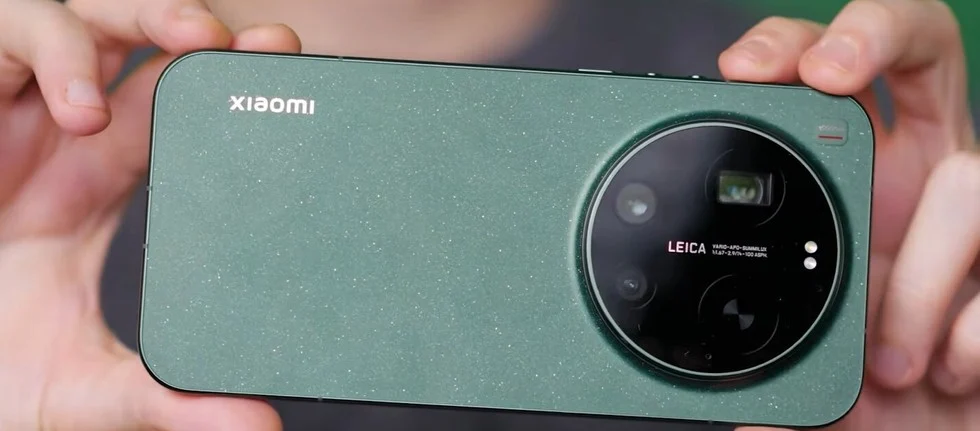
Where the Xring O3 actually lands first is notable too. Xiaomi has confirmed the chip will debut inside the Xiaomi 18 Fold, a wide-format foldable phone expected to compete directly with devices like Samsung’s Galaxy Z Fold line, alongside the Xiaomi Pad 9 Pro Max. Both products are scheduled to launch in China next month, with pre-orders for the 18 Fold already open.
It’s worth putting Xiaomi’s progress here in context against the rest of the Chinese smartphone industry, because the contrast is stark. Oppo shut down its in-house ZEKU chip division back in 2023 after reportedly sinking close to a billion dollars into the effort. Vivo has stayed mostly on the sidelines of standalone chip development, limiting its custom silicon work to imaging co-processors rather than full application processors. Huawei still designs its own Kirin chips through HiSilicon, but continues to face serious manufacturing constraints tied to U.S. export restrictions that limit its access to leading-edge fabrication. Against that backdrop, Xiaomi is currently the only Chinese phone maker with a credible, actively shipping flagship-class chip program, and the Xring O3 pushes that lead further.
None of this means Xiaomi is walking away from Qualcomm. The company’s mainline Xiaomi 18 flagship is still expected to ship with Snapdragon 8 Elite Gen 6 silicon, and the Xring O3 is being positioned as a complementary option for select devices rather than an outright replacement across the entire lineup. That’s a sensible hedge given how much validation, driver support and carrier certification work goes into scaling a new chip architecture across a global product range. But the direction of travel is clear. If the Xring O3 performs the way Xiaomi is claiming once independent reviewers get their hands on retail units, it strengthens the case for pushing custom silicon into more flagship devices going forward, rather than keeping it confined to niche foldables and tablets.
For a company that entered the chip business with a fairly modest first attempt just a year ago, jumping to a
3nm process, LPDDR6 support and clock speeds that beat everything currently shipping is a big leap in a short window.
lass=”yoast-text-mark” />>Whether the Xring O3 can match those benchmark numbers in real-world use, particularly around sustained performance
and thermal management inside a folding phone, is the question actual reviews will need to answer. ef="https://businesstech.ng/">Techora will be tracking
how the Xiaomi 18 Fold performs once it reaches reviewers, and whether Xiaomi’s custom silicon ambitions extend to markets outside China. In the meantime, more detail on the chip and the devices built around it is available directly through Xiaomi’s official global site.