|
Getting your Trinity Audio player ready...
|
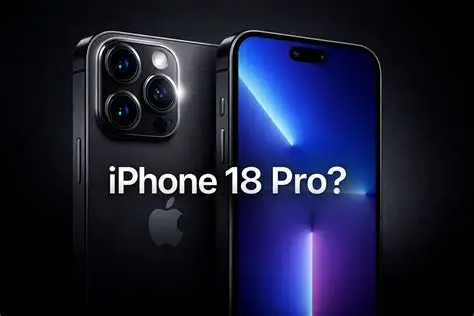
Apple’s September event is closing in fast, and the rumor pipeline for the iPhone 18 Pro and iPhone 18 Pro Max has settled into something close to a final shape. The two phones are expected to look nearly identical to last year’s iPhone 17 Pro models from a distance, keeping the same 6.3-inch and 6.9-inch displays and the triple-camera “plateau” housing on the back. But underneath that familiar shell, this year’s Pro lineup is shaping up to be one of the more substantial internal overhauls Apple has shipped in a while, with a new chip node, a redesigned camera system, and Apple’s own custom silicon taking on a bigger role than ever.
Reports point to a launch event in early September, with the devices going on sale later that month, and Apple reportedly sticking to its usual pattern of debuting Pro models ahead of the standard iPhone 18, which isn’t expected until spring 2027. Here’s what’s rumored to be changing, feature by feature.
1. A Smaller Dynamic Island
Smaller Dynamic Island tops most of the leaked feature lists this cycle. The change is reportedly made possible by moving Face ID’s flood illuminator underneath the display itself, freeing up space in the pill-shaped cutout at the top of the screen. It’s a cosmetic tweak on paper, but it’s also the first visible sign that Apple is finally starting to shrink the notch-turned-island that’s defined its Face ID hardware since 2017.
Apple is reportedly moving the Face ID flood illuminator beneath the display on the iPhone 18 Pro and Pro Max.
The flood illuminator projects infrared light onto your face so the TrueDepth system can identify you in different lighting conditions. Moving that component under the OLED panel would allow Apple to reduce the amount of visible hardware at the top of the screen.
This does not mean the Dynamic Island will disappear.
Current reports suggest the front camera and other Face ID hardware will remain visible, producing a smaller central cutout rather than a completely uninterrupted display.
2. A More Efficient LTPO+ Display
More efficient LTPO+ display technology is expected to arrive alongside that smaller cutout. While the panel sizes themselves aren’t changing, the underlying display tech is reportedly getting an upgrade that should help stretch battery life a bit further without altering how the screen looks or feels day to day.
Both Pro models are expected to retain their current sizes:
6.3 inches on the iPhone 18 Pro, 6.9 inches on the iPhone 18 Pro Max
The larger change should happen inside the display panel. Reports point to LTPO+ OLED technology, an updated form of the backplane system used to control individual pixels and refresh rates.
Apple already uses LTPO-based ProMotion displays that can alter their refresh rate depending on what is happening onscreen. A static image requires fewer refreshes than a fast-scrolling page or game, allowing the phone to save energy when 120Hz isn’t needed. LTPO+ should make that process more efficient.
If Apple keeps the same resolution, brightness and 120Hz ProMotion behaviour, most people won’t look at the iPhone 18 Pro and immediately see a better panel. They may notice that it consumes less power during ordinary use.
3. A Variable-Aperture 48MP Main Camera
Variable-aperture main camera is one of the more genuinely new additions being talked about. The 48-megapixel Fusion camera on both Pro models is rumored to gain a variable aperture, letting the lens physically adjust how much light reaches the sensor. That would give photographers more control over depth of field, similar to what you’d get on a proper camera, though it’s worth noting that smartphone sensors are small enough that the real-world impact might be more modest than the spec sounds.
The biggest camera rumour concerns a variable aperture for the 48MP Fusion camera.
Every recent iPhone has used a fixed physical aperture. The opening inside the lens remains the same size, while exposure is controlled through shutter speed, sensor sensitivity and software processing.
A variable aperture can physically widen or narrow that opening.
When open wider, the lens admits more light. When narrowed, it admits less light and can keep more of the scene acceptably sharp.
This has the potential to be one of the generation’s best upgrades, but only if Apple uses the hardware well and does not bury it beneath automatic processing.
You can follow all reported sensor and lens changes in our iPhone 18 camera guide.
4. The 2nm A20 Pro Chip
2nm A20 Pro processor represents the biggest under-the-hood shift of the bunch. Apple is expected to move to TSMC’s first-generation 2-nanometer manufacturing process for the A20 Pro, a jump from the 3nm node used in the current A19 Pro. Smaller transistors generally mean better performance per watt, and this shift is expected to bring meaningful gains in both raw speed and energy efficiency. The iPhone 18 Pro range is expected to use Apple’s A20 Pro processor, manufactured on TSMC’s first-generation 2nm N2 process.
The A19 Pro uses a 3nm process. Moving to 2nm lets TSMC fit more transistors into a given area while cutting power use or raising performance.
TSMC says its N2 process can provide, compared with an earlier 3nm process:
10% to 15% more performance at the same power, 25% to 30% lower power use at the same performance, Around 15% greater transistor density
Those are manufacturing-process figures, not promised iPhone gains. Apple decides how to divide the improvement between speed and efficiency.
New Chip Packaging Matters Too
The A20 family has also been linked with Wafer-Level Multi-Chip Module packaging, usually shortened to WMCM.
This could place the processor and memory more closely together, reducing the distance data travels and improving communication between them. It may also free some internal board space.
Modern Pro iPhones are already extremely fast during ordinary use. The A20 Pro should matter more during demanding tasks such as editing 4K video, playing console-level games, processing large photographs and running newer AI functions directly on the phone. Efficiency may be the part normal users notice most. If the processor uses less power while completing the same work, the phone should run cooler and last longer.
5. Apple’s C2 Cellular Modem
Apple C2 cellular modem continues Apple’s slow but steady push to build its own modem silicon in-house rather than relying on Qualcomm. The C1 modem debuted in the iPhone 16e, followed by the faster C1X in the iPhone Air, and the iPhone 18 Pro models are expected to introduce a third-generation C2 chip that builds further on those efficiency gains. Apple is expected to replace Qualcomm hardware in at least some iPhone 18 Pro versions with its own C2 modem.
The modem handles 4G, 5G, mobile data, carrier calls, roaming and Personal Hotspot connections. It is separate from the A20 Pro processor and from the N2 Wi-Fi chip.
Apple introduced the C1 in the iPhone 16e, followed by the faster C1X in the iPhone Air and iPhone 17e. C2 is the next named generation and the first version widely expected to appear in Apple’s conventional Pro phones. You may notice steadier reception, lower battery drain on 5G or faster service in supported locations. A modem cannot create carrier coverage where none exists, so ignore claims suggesting C2 will magically fix every dead zone.
6. 5G Connectivity Via Satellite
5G connectivity via satellite is reportedly one of the headline benefits unlocked by that new C2 modem. Rather than satellite features being limited to emergency SOS messaging, as they are on current iPhones, the iPhone 18 Pro is rumored to support broader 5G-via-satellite functionality, potentially allowing basic web browsing even without a Wi-Fi or cellular signal. C2 has also been linked with NR-NTN, or New Radio Non-Terrestrial Network support.
This is a standard that allows 5G devices and carrier systems to communicate using satellites and other non-ground-based infrastructure.
Recent iPhones already provide Emergency SOS, Messages, Find My and Roadside Assistance through satellite in supported countries. Those services operate separately from normal mobile internet and are intended mainly for limited communication outside cellular coverage. NR-NTN could make satellite access behave more like part of a carrier network.
5G connectivity via satellite is reportedly one of the headline benefits unlocked by that new C2 modem. Rather than satellite features being limited to emergency SOS messaging, as they are on current iPhones, the iPhone 18 Pro is rumored to support broader 5G-via-satellite functionality, potentially allowing basic web browsing even without a Wi-Fi or cellular signal.
7. Apple’s New N2 Wireless Chip
Apple N2 wireless chip is expected to succeed the N1 chip found in most iPhone 17 models and the iPhone Air. The N1 currently handles Wi-Fi 7, Bluetooth 6 and Thread connectivity, and improves the reliability of features like Personal Hotspot and AirDrop. What exactly the N2 improves on remains unclear, but a successor chip suggests Apple isn’t done optimizing its wireless stack. The iPhone 18 Pro models are expected to use a new Apple-designed N2 networking chip.
The existing N1 supports Wi-Fi 7, Bluetooth 6 and Thread. Apple says it also improves features such as AirDrop and Personal Hotspot. N2 should replace it, but no firm technical specification has surfaced. It may persuade someone already due an upgrade, but nobody should replace a working iPhone simply because Apple has invented another shade of dark red. Half of these phones will be placed inside black cases within ten minutes anyway.
8. A New Dark Cherry Colour
New Dark Cherry colour option is rumored to join the Pro lineup alongside Light Blue, Dark Gray and Silver, with the current Cosmic Orange and Deep Blue finishes reportedly being retired. Apple has leaned into distinctive seasonal colorways for its Pro models in recent years, and Dark Cherry looks like this cycle’s standout shade.
Other reported finishes include:
Light Blue
Dark Gray
Silver
Cosmic Orange and Deep Blue are expected to leave the range.
Dark Cherry sounds like a very deep red rather than a bright Product Red finish. If the rumours are accurate, it could give Pro buyers a richer colour without looking quite as loud as the current orange option.
9. A Simpler Camera Control Button
Simpler Camera Control button is on the way after criticism of the current version’s touch-sensitive, haptic-driven design. Apple is reportedly stripping out the touch sensitivity and haptic feedback entirely, leaving a button that relies purely on pressure sensitivity, a change aimed at making it feel less fussy and more predictable to use. Apple is reportedly removing touch sensitivity and haptic feedback from Camera Control.
The revised button would retain pressure sensitivity, allowing it to detect a press without also interpreting swipes and touch gestures across its surface. That sounds like a downgrade until you consider why Apple may be doing it.
The current control can feel too fussy. A slight movement can bring up an unwanted adjustment or change a camera setting when you only wanted to take a photograph.
10. A More Uniform Rear Ceramic Shield Finish
More uniform rear Ceramic Shield finish is expected to replace the two-tone glass and metal look that’s defined the back of Pro iPhones for the past couple of generations. The MagSafe area is rumored to get a more frosted, seamless appearance that blends more naturally with the rest of the back panel. The iPhone 18 Pro should retain the broad rear camera plateau introduced by the previous generation.
Reports suggest Apple will change the Ceramic Shield section around the MagSafe area, giving it a more frosted and uniform appearance. The aim appears to be reducing the obvious two-tone division between the glass section and the surrounding metal body.
11. A Nearly 10% Larger iPhone 18 Pro Max Battery
Nearly 10% larger Pro Max battery has shown up in what are said to be Chinese regulatory filings, suggesting the iPhone 18 Pro Max will pack a noticeably bigger cell than the iPhone 17 Pro Max. Combined with the efficiency gains from the A20 Pro chip and LTPO+ display, that could add up to a real jump in battery life for the largest model. This is the upgrade most likely to matter every single day. Alleged regulatory information points to two Pro Max battery capacities:
5,567mAh in the US eSIM-only model, 5,391mAh in versions with a physical SIM tray
Compared with the equivalent iPhone 17 Pro Max batteries, those figures represent increases of around 9.4% and 11.8%.
The US phone can use a larger cell because it does not need to make room for a physical SIM tray. Heavy users could see more headroom for navigation, gaming, photography, video recording and hotspot use. Lighter users may be able to finish a second day without charging.
No reliable real-world runtime figure is available, so exact claims about additional hours are guesswork.
12. A Thicker iPhone 18 Pro Max
Thicker Pro Max body appears to be the tradeoff for that bigger battery. Rumors suggest the iPhone 18 Pro Max will be thicker than both its predecessor and the standard iPhone 18 Pro, a reminder that Apple is once again prioritizing battery capacity over shaving off fractions of a millimeter. Yes, thicker is being counted as a feature. And honestly, it should be.
The Pro Max is expected to grow from the iPhone 17 Pro Max’s 8.75mm body to roughly 8.8mm or 9mm, according to the more believable reports. One less settled leak puts the Pro models between 9.9mm and 10.9mm, although that may mix body and camera-platform measurements.
The phone could also weigh around 240g, up from 231g.
Taken together, these changes suggest Apple is treating this as a genuine mid-cycle refresh rather than a coat of new paint. The exterior design stays close to familiar territory, but the combination of a new chip node, Apple’s own modem and wireless silicon, a more flexible camera, and real battery gains on the Max model gives current iPhone 16 Pro and even iPhone 17 Pro owners a reasonable case to consider upgrading. None of this is official yet, and Apple has a habit of holding back a surprise or two until the actual keynote, so treat the specifics as a strong working outline rather than a locked spec sheet. For readers deciding whether to wait or upgrade now, Techora’s ongoing Apple coverage will track any changes as the official announcement approaches.
For the most reliable version of these details as they get confirmed, Apple’s own newsroom at apple.com remains the definitive source once the keynote happens, and outlets that have tracked this generation closely, including MacRumors, are worth following for the final pre-launch leaks in the days ahead.