|
Getting your Trinity Audio player ready...
|
IBM Unveils Next Generation Dual-Architecture Processor for IBM Z and LinuxONE, Bringing Native Arm Support to the Mainframe
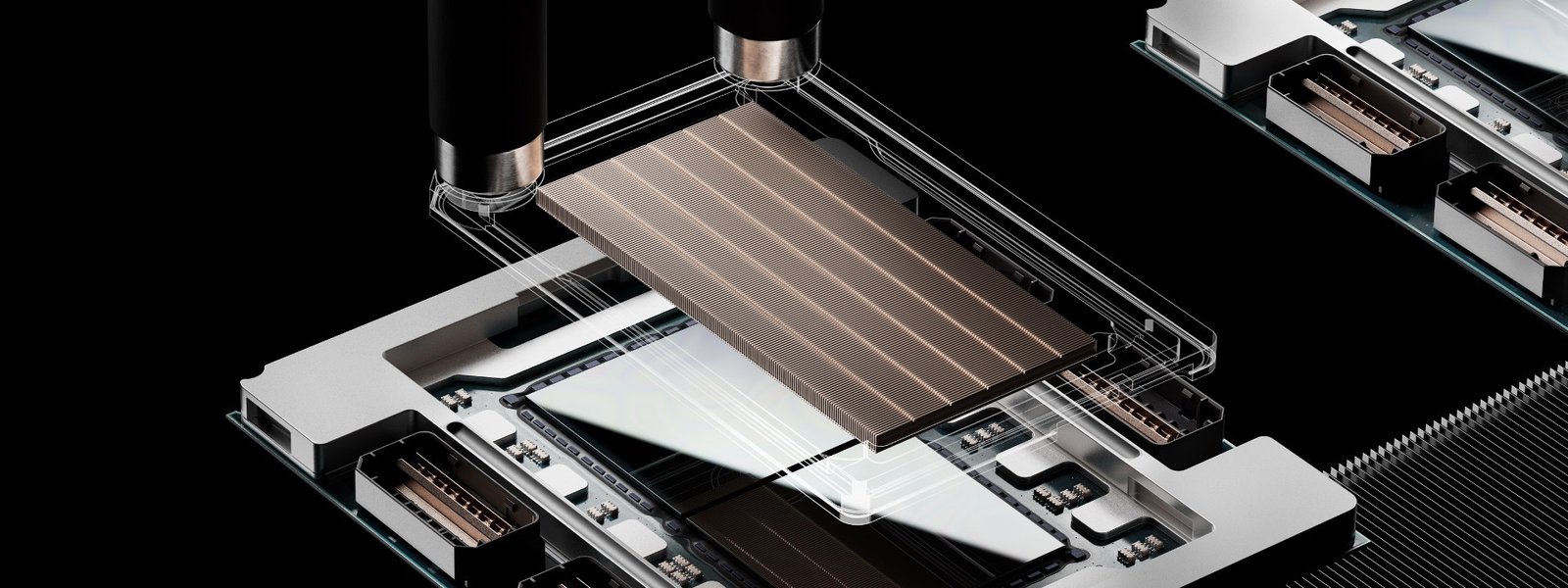
IBM used the stage at this year’s Hot Chips conference to show off something the mainframe world hasn’t seen before: a processor that can natively run both IBM’s own instruction set and Arm’s, on the very same cores, at the same time. The announcement marks the first concrete hardware milestone to come out of the partnership IBM struck with Arm back in April, and it signals a genuinely different direction for a product line that has spent decades defined almost entirely by IBM’s proprietary architecture.
For anyone unfamiliar with how mainframes have historically worked, this is a bigger deal than it might sound. IBM Z and LinuxONE systems have always run on IBM’s own chip designs, built for extreme reliability, security, and the kind of uptime that banks and insurance companies build their entire operations around. Arm, meanwhile, has become the dominant architecture almost everywhere else, from smartphones to a growing share of cloud servers, largely because of its power efficiency and the sheer size of its software ecosystem. Bringing those two worlds together on a single chip, rather than bolting an Arm co-processor alongside an IBM core, is the part that makes this announcement stand out.
According to IBM, the new processor is built on a 2 nanometer manufacturing node and packs 11 high-performance cores running at more than 5.7 gigahertz. That alone represents a meaningful jump from the current generation Telum II chip, which powers today’s z17 and LinuxONE 5 systems with eight cores clocked above 5.5 gigahertz. But the real headline isn’t the clock speed or the core count. It’s the architecture itself. IBM says each core on the new chip is designed to natively execute either Arm and IBM Z instructions, or Arm and LinuxONE instructions, concurrently, without maintaining separate dedicated cores for each instruction set. In practice, that means a single physical processor could run z/OS workloads and Arm-native Linux environments side by side, on the same silicon, rather than requiring separate hardware or complex virtualization workarounds to bridge the two.
The chip also carries forward several of the AI and I/O features that have become signature elements of IBM’s mainframe strategy in recent years. It includes dedicated AI inference accelerators aimed at use cases like in-transaction fraud detection, the kind of real-time scoring that banks rely on to flag suspicious activity before a payment even clears. There’s also a dedicated on-chip data processing unit built specifically to speed up I/O operations, along with a large cache architecture designed to handle the kind of demanding, high-volume enterprise workloads that IBM Z systems are built around. None of this happens in isolation either. IBM Z and LinuxONE platforms are capable of scaling to hundreds of cores and tens of terabytes of memory across a full system, so this new processor is meant to slot into an environment built for genuinely massive scale, not a standalone chip competing on its own.
The origin story here traces back to April, when IBM and Arm formally announced a collaboration aimed at bringing dual-architecture hardware to enterprise computing. That initial announcement laid out three broad goals: exploring virtualization approaches that would let Arm-native software run inside IBM’s enterprise platforms, ensuring the resulting systems could meet the security and data residency demands of regulated industries, and building shared technology layers to widen the software ecosystem available to IBM Z and LinuxONE customers. At the time, IBM Z and LinuxONE chief product officer Tina Tarquinio described the partnership as a natural extension of IBM’s pattern of anticipating enterprise needs before they become mainstream requirements, a framing that lines up with how the company has historically approached mainframe innovation.
What makes the Arm angle particularly relevant right now is the sheer size of its developer base. Arm’s ecosystem spans more than 22 million developers worldwide, supporting everything from cloud-native applications to edge computing to the AI software increasingly running across enterprise environments. For IBM Z customers, many of whom operate in banking, insurance, and government where regulatory and data residency requirements make moving workloads to public cloud infrastructure difficult or outright impossible, gaining native access to that broader software ecosystem without leaving the security perimeter of a mainframe is a genuinely useful proposition. It means enterprises could potentially run modern, cloud-native, Arm-based applications directly alongside their existing z/OS transaction processing, rather than maintaining separate infrastructure or relying on emulation layers that add latency and complexity.
This announcement also arrives against the backdrop of a broader refresh IBM has been rolling out across its Z and LinuxONE lineup throughout the year. The company brought its z17 single-frame and rack-mount systems, along with the LinuxONE Rockhopper 5 and a more affordable LinuxONE Express option, to general availability earlier in August, expanding form factors and price points in an effort to fit into a wider range of data center environments. Those current-generation systems already lean on the Telum II processor and its accompanying Spyre AI accelerator, which IBM says can process meaningfully more AI inference operations per day than the prior generation. The dual-architecture chip unveiled at Hot Chips represents the next step beyond that lineup, though IBM has not yet detailed a firm timeline for when systems built around it will reach customers.
Industry analysts watching the space have framed the move as part of a larger shift in enterprise infrastructure priorities. Patrick Moorhead of Moor Insights and Strategy noted that flexibility and workload portability are becoming just as important to enterprise buyers as raw performance and reliability, a dynamic that plays directly into what IBM and Arm are attempting to build here. Rather than forcing customers to choose between the security guarantees of a mainframe and the openness of the Arm software ecosystem, the goal is to offer both on the same box.
“As organizations modernize their application portfolios and integrate AI into core business operations, they need infrastructure that expands their options,” said Christian Jacobi, Chief Technology Officer and IBM Fellow, IBM Systems Development. “This processor represents a significant architectural advancement for IBM Z and LinuxONE. By bringing Arm natively to our platform, we’re combining access to one of the industry’s fastest-growing software ecosystems with the qualities that have made IBM systems the foundation for how businesses run today.”
It’s worth being clear about where things actually stand today. The processor IBM showed off at Hot Chips is still in the design phase, not a shipping product, and the company has not announced specific availability dates for systems built around it. But the technical direction is now public, and it gives enterprise IT buyers a concrete signal of where IBM intends to take its mainframe architecture over the coming years. For organizations that have spent decades treating IBM Z and Arm-based infrastructure as entirely separate procurement decisions, that line is starting to blur in ways that could reshape how mission-critical computing gets built going forward. Readers interested in how enterprise hardware architecture continues to evolve alongside AI demand can find further coverage on Techora’s enterprise technology desk, while additional technical detail on the collaboration is available through IBM’s official newsroom.