|
Getting your Trinity Audio player ready...
|
Bitdeer Technologies Group has spent $100 million in cash to acquire 200 acres of greenfield land in Milam County, Texas, a move the Singapore-based company says will remove one of the biggest structural constraints on expanding its AI and high-performance computing infrastructure at its existing Rockdale facility. The acquisition, announced September 1, gives Bitdeer outright, fee simple ownership of the land rather than the kind of leased arrangement that typically leaves data center operators exposed to renewal risk and limited long-term planning flexibility.
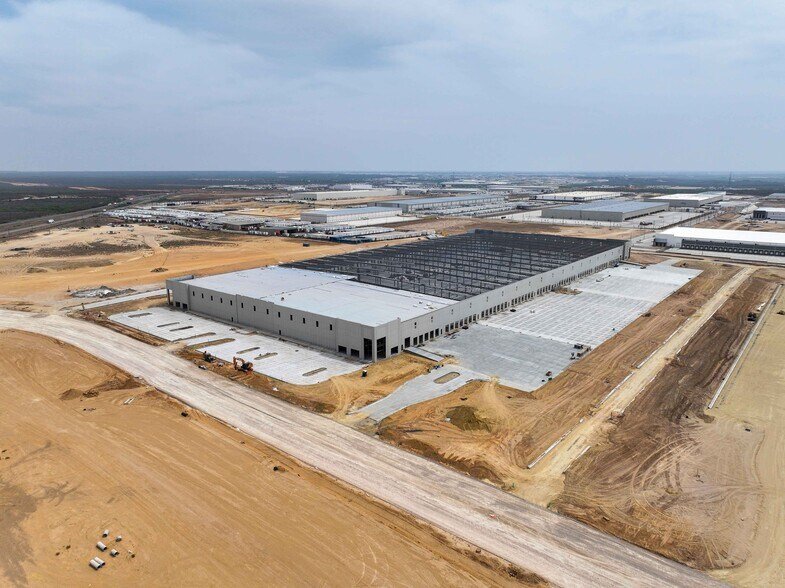
The new parcel sits directly adjacent to Bitdeer’s established Rockdale campus, a site the company has been steadily building out as its primary hub for both traditional bitcoin mining operations and the increasingly central AI and high-performance computing business it’s positioning as its long-term growth driver. Following this transaction, Bitdeer now owns or operates approximately 255 acres in Milam County, backed by roughly 742 megawatts of existing and pipeline power capacity, a combination the company describes as one of its most strategically significant infrastructure assets globally. Located within 70 miles of Austin, the site benefits from proximity to one of the fastest-growing tech hubs in the United States while still offering the kind of large, relatively undeveloped land available in rural Texas counties that data center operators increasingly need to support massive power and cooling requirements.
What makes this acquisition particularly significant isn’t just the acreage itself, but what already exists underneath it. The Milam County sites currently feature approximately 563 megawatts of interconnected grid capacity, with existing plans to scale that figure up to the full 742 megawatts Bitdeer now controls across the combined footprint. That existing large-load interconnection and established transmission infrastructure represents years of prior grid negotiation and buildout work that would be enormously time-consuming and expensive to replicate from scratch at a brand-new site, giving Bitdeer a meaningful head start compared to competitors starting land acquisition and power interconnection processes simultaneously from zero. The site also includes a dedicated water supply, a detail that matters increasingly for AI data centers given how much water many cooling systems consume, particularly as facilities scale toward supporting the kind of dense GPU clusters modern AI training workloads require.
Bitdeer’s own framing of the deal centers heavily on the strategic value of owning rather than leasing this kind of infrastructure land outright. According to the company’s statement, securing outright ownership provides greater long-term certainty over development plans while eliminating the renewal risk that comes with leased arrangements, a distinction that carries real weight for a business trying to plan and finance capital-intensive AI infrastructure projects on multi-year timelines. Data centers of this scale typically require years of planning, permitting, and construction before coming online, and any uncertainty around whether a company will retain access to its underlying land at the end of a lease term introduces exactly the kind of risk that makes financing large infrastructure builds considerably more complicated and expensive.
This move fits into a broader pattern shaping Bitdeer’s business trajectory over the past several years. The company, which built its original foundation as a bitcoin mining operator, has increasingly positioned itself as what it now describes as a world-leading technology company for both AI and bitcoin mining infrastructure, reflecting a strategic pivot that mirrors what several other major cryptocurrency mining companies have pursued as bitcoin mining economics have grown more competitive and AI compute demand has surged dramatically. Rockdale itself illustrates that dual identity clearly, hosting both Bitdeer’s traditional mining operations and its expanding AI and high-performance computing infrastructure side by side on the same broader campus, an arrangement that lets the company leverage shared power infrastructure and site management across both business lines rather than maintaining entirely separate operational footprints.
The financial scale of this transaction, while substantial in absolute terms, represents a comparatively modest incremental investment against the backdrop of what full AI data center buildout at a site like this typically costs. Industry infrastructure tracking has noted that Bitdeer’s broader Rockdale development involves roughly $1.5 billion in first-phase investment, designed specifically to support both traditional server infrastructure and future generations of AI-optimized hardware. Against that scale, the $100 million land purchase functions less as the headline capital commitment and more as a foundational step, securing the physical real estate and existing power infrastructure that everything else gets built on top of over the coming years.
Market reaction to the announcement has been fairly muted so far, with Bitdeer’s stock showing only a marginal move following the news, a pattern that’s not unusual for infrastructure and land acquisition announcements compared to the more dramatic market reactions often triggered by major AI compute partnership deals or earnings surprises. That said, the acquisition adds to a broader industry-wide land grab currently playing out across Texas and other states with favorable power availability, as data center operators, AI labs, and cloud providers race to secure sites capable of supporting the enormous electricity demands of next-generation AI training and inference infrastructure. Texas specifically has emerged as one of the most sought-after locations for this kind of development, driven by a combination of relatively accessible grid interconnection processes through ERCOT, favorable regulatory conditions, and abundant land compared to more densely developed regions of the country.
For Bitdeer, this acquisition reinforces a long-term bet that owning core infrastructure assets outright, rather than depending on leased land and third-party power arrangements, will prove increasingly valuable as competition for AI compute capacity intensifies across the industry. Whether that bet pays off will depend heavily on how quickly Bitdeer can actually convert this newly secured land and existing power capacity into operational AI infrastructure capable of generating revenue, a process that typically takes years even once land and power access are fully secured. For now, the company has removed one significant variable from that equation, giving itself permanent, unencumbered control over one of its most important growth sites heading into what promises to be an increasingly competitive scramble for AI data center capacity across the American Southwest.
Full details on the acquisition are available through Bitdeer’s official investor relations page. For more coverage of AI infrastructure investment and data center expansion, visit Business Tech.