|
Getting your Trinity Audio player ready...
|
Uber and Wayve Launch London’s First Driverless Robotaxi Service Amid UK Self-Driving Car Rollout
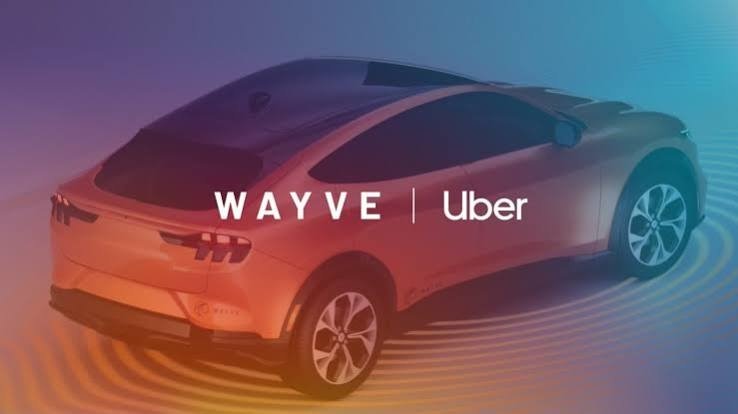
Londoners got their first taste of autonomous ride-hailing this week as Uber and British tech company Wayve launched London’s first self-driving taxi service on Thursday, giving residents a chance to use technology that’s already available in many US cities and other parts of the world. The rollout marks a genuine milestone for the UK’s autonomous vehicle ambitions, though anyone expecting an empty driver’s seat will be disappointed for now. The companies are starting with a small rollout of Ford Mustang Mach-E electric vehicles outfitted with Wayve’s autonomous vehicle technology, and a trained safety operator remains behind the wheel throughout every trip.
The mechanics of the service are straightforward from a rider’s perspective. Starting today, Londoners requesting an UberX, Uber Electric, or Uber Comfort may be matched with a Wayve ride at no extra cost. Riders aren’t given the option to specifically hail one of these vehicles the way they might request a specific car class. Instead, Uber customers won’t be able to specifically request a robotaxi, but they could be matched with a Wayve vehicle when they hail a ride on the app, which they can accept or reject. Coverage extends across most of the city, though riders will be able to travel anywhere within London, apart from airports. Each Mach-E comes fitted with interactive screens available in 64 languages where riders can start their trip and view the vehicle’s planned path, a touch clearly aimed at easing first-time passengers into the experience.
The fleet itself is modest for now. According to Uber’s head of autonomous mobility, the deployment in London will start with under 20 vehicles and expand from there. That cautious scale reflects both the regulatory environment and the unique difficulty of London’s road network. Self-driving systems trained largely on wide American boulevards or Chinese arterial roads face a very different test on streets that predate the automobile entirely. Wayve Technologies Ltd. has been testing a fleet of cars equipped with the British artificial intelligence startup’s autonomous driving software throughout the notoriously narrow, centuries-old streets of the UK capital, and the company has approached the city’s geometry as a feature rather than an obstacle to work around. Headquartered and founded in London, Wayve has built and specifically trained its AI technology on the capital’s challenging roads since 2018.
The human element hasn’t disappeared, and won’t for a while. In London, there will still be a person behind the wheel overseeing the trip who can grab the wheel or tap the brakes if there’s a problem. That supervised setup is a direct consequence of where UK regulation currently stands. Under the UK government’s pilot framework, self-driving taxi operators like Uber and Wayve still need approval to operate without a human safety driver, and officials have not committed to a firm timeline for lifting that requirement. Uber’s own leadership has acknowledged the uncertainty directly, with Sarfraz Maredia noting that the approval process for fully driverless operation is still ongoing and that it remains unclear how long it will take.
This is a notably more conservative posture than what’s already operating elsewhere. Waymo, owned by Google parent Alphabet, now operates fully autonomous taxi service in 14 cities in the United States, with Amazon’s Zoox and Tesla working to catch up. The gap is even more pronounced in Asia, where Baidu, WeRide and Pony.AI operate robotaxi services in multiple cities across China, and those same Chinese firms have been pushing into the Gulf, forming partnerships with Uber or local operators in Dubai, Abu Dhabi and Saudi Arabia. Europe, by contrast, has been notably slower to embrace fully autonomous operation, and Uber’s own most recent European deployment illustrates that caution. Uber said last month it launched its first European commercial robotaxi service in Zagreb, Croatia, in partnership with a local operator and China’s Pony.ai, but human safety drivers are still required.
London won’t stay a two-horse race between Uber and Wayve for long, either. Rival autonomous vehicle developers are already circling the same market, and reporting indicates Waymo and Chinese tech company Baidu are also gearing up to offer commercial passenger service in London. That looming competition is part of why Wayve and Uber pushed to be first, giving both companies a head start on gathering real-world driving data in one of the most complex urban environments in the world before rivals arrive.
The London launch also fits into a much larger global expansion plan for the Uber-Wayve partnership. The two companies have been laying groundwork well beyond the UK, and earlier this year they confirmed plans to bring the technology to Japan through a partnership with a major automaker. Wayve is teaming up with Uber and Nissan to launch a robotaxi service in Tokyo, with a pilot scheduled for late 2026, using Nissan Leaf vehicles fitted with Wayve’s driving software. That Tokyo pilot represents just one piece of a broader rollout strategy, with Wayve and Uber’s global robotaxi rollout, which includes planned services across more than ten cities worldwide, including London already mapped out. The scale of that ambition has been backed by serious capital as well, with Wayve fresh off a funding round Uber’s own reporting has described as exceeding a billion dollars.
Not everyone in London is celebrating the arrival of autonomous cabs on the city’s streets. The city’s traditional taxi trade has voiced skepticism about how genuinely autonomous these vehicles really are given the presence of a safety driver, and about what happens when things go wrong mid-journey. Steve McNamara, who represents London’s black cab drivers, raised pointed questions about the service’s practical logistics, arguing that issues like lost property and mid-route changes remain largely unresolved. His broader point, echoed by transport advocates elsewhere in Europe, is that a supervised robotaxi isn’t quite the fully autonomous product being marketed to the public, even if it represents genuine technical progress.
For now, the London launch is best understood as a controlled first step rather than a finished product. The presence of safety drivers, the sub-20 vehicle fleet, and the airport exclusion zone all point to a company moving carefully in a market it clearly views as strategically important but operationally unforgiving. If Wayve’s AI can handle London’s roundabouts, narrow lanes, and jaywalking pedestrians without a human intervening, it will have cleared one of the toughest real-world tests in the autonomous vehicle industry, and that track record could matter far beyond the UK. Uber has already struck more than two dozen robotaxi partnerships globally, and how this London deployment performs over the coming months will likely shape how quickly the company pushes similar supervised launches into other historic European cities where narrow streets and dense traffic have long been considered obstacles too difficult for self-driving software to handle.