|
Getting your Trinity Audio player ready...
|
Slovenia Clears Tesla’s Full Self-Driving (FSD) System Ahead of EU-Wide Approval Vote
Slovenia has become the sixth European country to approve Tesla’s FSD driver-assistance system for use on its roads, adding fresh momentum to the automaker’s push for a single approval covering the entire European Union. Tesla confirmed the news in a post on X, stating that FSD Supervised is now approved in Slovenia and that rollout will begin soon, a message that was reshared by CEO Elon Musk. Slovenia’s Energy and Infrastructure Minister Jernej Vrtovec also reposted the announcement, adding the phrase “Developing Slovenia,” a small but telling signal that national governments are treating Tesla approvals as a point of technological pride rather than a routine regulatory formality.
The approval did not happen in isolation. It follows a pattern that started in the Netherlands, where regulators granted the first provisional EU type approval for FSD in early April after an extended technical assessment. That Dutch approval matters more than a typical single-country sign-off, because it came through the European Union’s shared vehicle type approval framework, meaning other EU member states can recognize the Netherlands’ assessment rather than having to repeat the full technical review from scratch. Lithuania, Estonia, Denmark, and Belgium each adopted the approval through May and June under that same framework, and Slovenia’s approval this week marks the first new addition since early June, breaking what had effectively been a summer pause in new market rollouts.
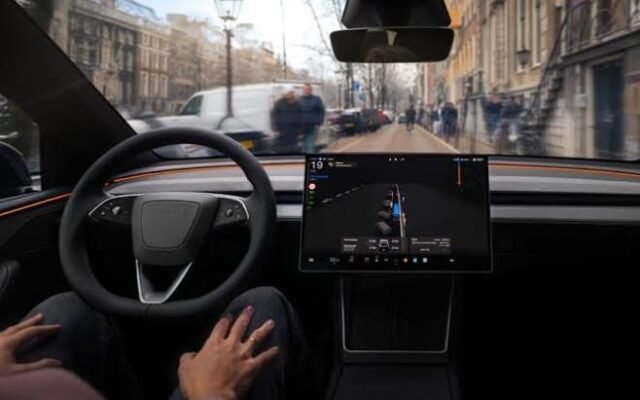
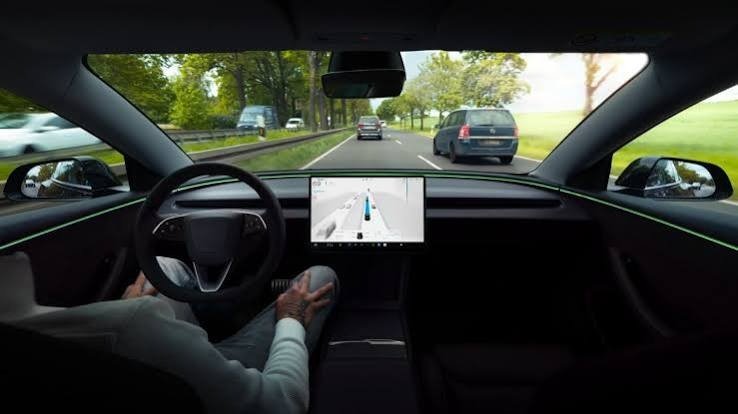
It’s worth being precise about what FSD actually does, since the name itself has caused confusion in the past. Despite being branded “Full Self-Driving,” the system is approved in Europe strictly as a Level 2 driver-assistance feature, not as autonomous driving. That distinction is legally significant. FSD can steer, accelerate, and brake on its own, but the driver remains fully responsible for the vehicle and is required to keep their attention on the road at all times. Regulators across Europe have been careful to enforce that framing precisely because of ongoing safety concerns about drivers over-trusting automated systems, a concern that has shaped how national authorities have approached Tesla’s approval requests one country at a time rather than granting blanket authorization.
The bigger prize for Tesla is a formal EU-wide vote that could authorize FSD across all 27 member states in one decision, rather than requiring individual country-by-country adoption. According to Tesla, that vote could happen as soon as October 6. Reaching that outcome requires a qualified majority within the EU committee responsible for vehicle type approval, meaning at least 15 member states representing 65 percent of the EU’s total population would need to vote in favor. Given that six countries have already granted approval independently, Tesla appears to be building a coalition of precedent ahead of the formal vote, using each national approval as evidence that the system meets safety standards consistently across different regulatory environments.
Not every country has moved quickly, and the more interesting resistance has come from France. French officials raised safety concerns in July that initially stalled progress on approving FSD domestically. Rather than abandoning the process, France shifted toward direct evaluation, and the country’s transport ministry said last week that it had begun testing two FSD-equipped vehicles following what the ministry described as a constructive exchange with Musk. That kind of direct engagement between a national regulator and Tesla’s leadership suggests France is treating the decision seriously rather than deferring entirely to the Dutch precedent, and its eventual conclusion could carry outsized weight if the broader EU vote ends up close. Finland and Greece are also reportedly weighing national approvals of their own, which would bring the total number of individually approving countries closer to double digits before the EU-wide vote even takes place.
Tesla has been actively building its evidentiary case for that vote. Last week, the company publicly released a self-produced dataset drawn from its European and North American testing, timing the release just ahead of the anticipated October decision. Releasing testing data proactively is a notable move for Tesla, a company that has historically been protective of its internal performance data, and it signals how much weight the company is placing on winning EU-wide approval rather than continuing to accumulate individual country sign-offs indefinitely.
The stakes extend beyond Europe. Tesla has separately indicated it expects both European and Chinese regulators to approve its Full Self-Driving system, though progress in China has been considerably more constrained. Smart driving features comparable to FSD remain limited to a small number of vehicles in China, after Tesla was forced to pause software update deliveries there last March pending additional regulatory clearance. Some Chinese Tesla owners who paid a premium of more than $9,000 for the feature have publicly expressed frustration over the operational restrictions still attached to it, a reminder that regulatory friction around advanced driver-assistance systems is not unique to Europe and reflects a broader global caution toward semi-autonomous driving technology regardless of region.
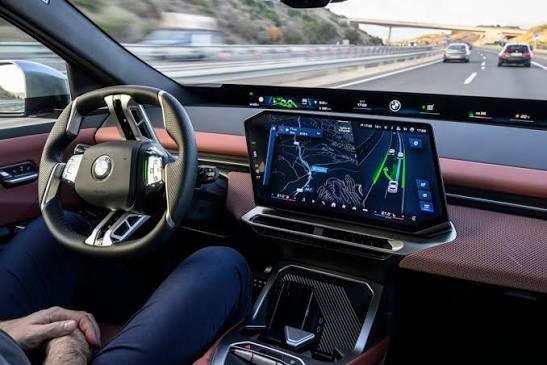
For Tesla, the European approval race carries real commercial weight beyond regulatory symbolism. FSD represents a premium software feature that the company sells as an add-on, and broader European approval would open a significant new revenue opportunity across one of the world’s largest automotive markets. If the October 6 vote succeeds, Tesla would gain the ability to market and roll out FSD across the entire EU simultaneously rather than continuing the current piecemeal approach, a shift that would likely accelerate adoption and give Tesla a meaningful head start over competitors like Mercedes-Benz and BMW, both of which have been developing their own advanced driver-assistance systems but have not yet pursued EU-wide approval at the same pace.