|
Getting your Trinity Audio player ready...
|
China’s Ministry of Finance rolled out one of its most significant financial sector interventions of the year over the weekend, announcing a coordinated 360 billion yuan capital injection, roughly $54 billion, into eight of the country’s largest state-owned banks and insurers. Rather than steadying investor sentiment the way the government likely hoped, the news actually sent shares in those very institutions lower once trading opened Monday, a reaction that says as much about what investors think is driving this move as it does about the size of the package itself.
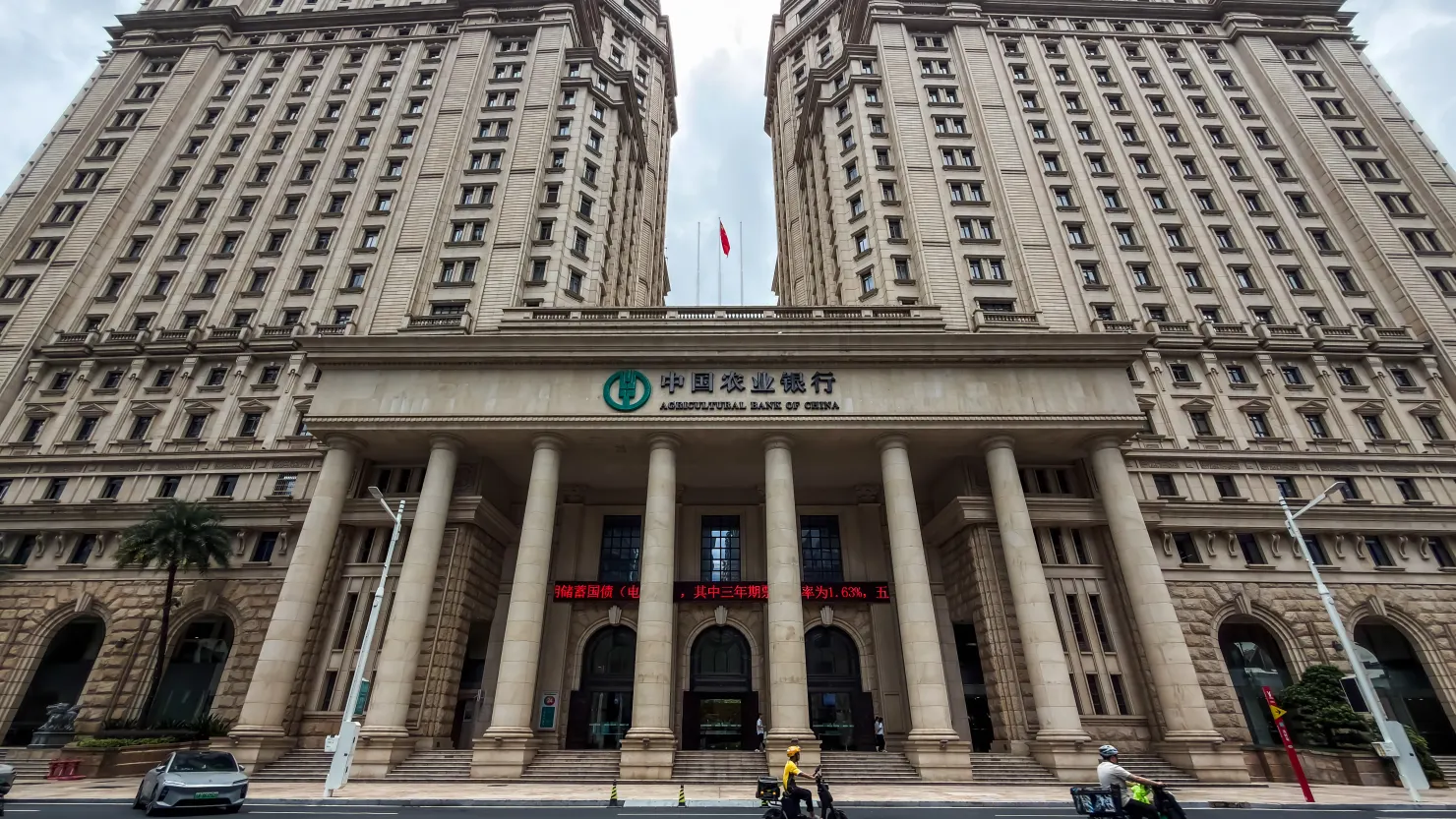
The mechanics of the injection are worth understanding before getting into why markets reacted the way they did. State-owned banks are absorbing the largest share of the package, with 290 billion yuan directed their way. Agricultural Bank of China and Industrial and Commercial Bank of China are each pursuing private placements of A shares, worth up to 160 billion yuan and 100 billion yuan respectively, with the Ministry of Finance and China National Tobacco Corporation among the listed investors. On the insurance side, China Life Insurance Group, the country’s largest life insurer, is set to receive 35 billion yuan, while China Taiping Insurance Group will get 7 billion yuan. People’s Insurance Company of China said it plans to raise up to 15 billion yuan through a private placement of shares to the Ministry of Finance, China Export and Credit Insurance Corp, known as Sinosure, is receiving 10 billion yuan to bolster its core capital, and China Reinsurance is raising an additional 3 billion yuan.
What makes this particular round notable isn’t just the dollar figure, it’s the fact that insurers are included at all. This marks the first time Beijing has extended this kind of recapitalization support to insurance companies specifically, a signal that stress in China’s financial system has spread beyond the banking sector into deteriorating solvency positions at major insurers as well. That’s a meaningful expansion of scope compared to previous rounds of state support, which had focused almost entirely on shoring up bank balance sheets.
Despite the scale of the announcement, the market reaction was unambiguously negative for the companies involved. Hong Kong-listed shares of the banks and insurers slumped on Monday, underperforming the broader market even as the Hang Seng Index itself fell less than 1 percent overall. Agricultural Bank of China dropped 2.7 percent, while Industrial and Commercial Bank of China fell 2.3 percent. The insurance side saw even sharper declines, with China Taiping Insurance losing almost 4 percent, and both People’s Insurance Company of China and China Life Insurance falling more than 2 percent each. On the mainland, the picture was similar, with the insurance sector declining 2.5 percent and the banking sector losing 1.5 percent even as Chinese tech shares moved higher on the same trading day.
There are a few overlapping explanations for why a capital injection meant to strengthen these institutions ended up dragging their stock prices down instead. The most straightforward is dilution. When companies raise capital through private placements of new shares, existing shareholders end up owning a smaller slice of the company unless they participate proportionally in the placement themselves, and markets tend to price that dilution in immediately even when the underlying balance sheet improvement is genuinely beneficial long-term. The recapitalization was also described by market watchers as smaller in scale than what many investors had actually anticipated for these institutions, meaning the announcement may have underdelivered relative to expectations that had built up in the days leading into it.
There’s also a more uncomfortable read on the situation that seems to be weighing on sentiment. Rather than treating the injection as a proactive growth catalyst, many market participants appear to be interpreting it as a reluctant acknowledgment of deeper balance sheet problems, particularly around mounting non-performing loans tied to China’s prolonged property sector downturn. When a government has to inject tens of billions of dollars into its largest financial institutions to shore up solvency ratios and Tier-1 capital buffers, that’s not typically the kind of news that inspires confidence in near-term earnings, even if it does reduce the risk of a more serious crisis down the line. Weak domestic loan demand compounds the concern, since it suggests Chinese banks are struggling to put fresh capital to productive use even once they have it, a dynamic that limits how much a recapitalization alone can actually improve profitability.
This isn’t Beijing’s first attempt at this kind of intervention, and understanding the pattern helps explain why investors reacted the way they did. The current package builds on a 500 billion yuan capital injection into four major state banks last year, along with a pledge made back in March to issue 300 billion yuan in special treasury bonds this year specifically to replenish capital at large state lenders. Layered together, these repeated rounds of support paint a picture of a financial system that keeps needing government backstopping rather than one that’s stabilizing on its own, which is precisely the narrative markets seem to be reacting to now.
For Beijing, the stakes extend beyond just the health of individual banks and insurers. State-owned insurers specifically have been directed to support the broader stock market using medium and long-term funds, meaning the government is essentially asking newly recapitalized institutions to turn around and help prop up equity valuations elsewhere in the economy. That creates an unusual feedback loop where the state is funding the very institutions it expects to act as stabilizing forces for the market overall, a strategy that only works if those institutions are genuinely solvent enough to absorb that responsibility rather than needing continual top-ups themselves.
Whether Monday’s selloff proves to be a temporary, dilution-driven overreaction or a more lasting signal of investor skepticism toward China’s financial sector will likely become clearer over the coming weeks, particularly as more detail emerges about how these funds will actually be deployed and whether further rounds of support follow. For now, the disconnect between the headline number, a genuinely large $54 billion commitment, and the market’s cool reception is a useful reminder that the size of a stimulus announcement doesn’t automatically translate into investor confidence, especially when it arrives against a backdrop of persistent structural concerns about property sector exposure and weak credit demand. Readers following how China’s economic policy moves continue to ripple through global markets and technology-adjacent sectors can find ongoing coverage on Business Tech as this story develops.