|
Getting your Trinity Audio player ready...
|
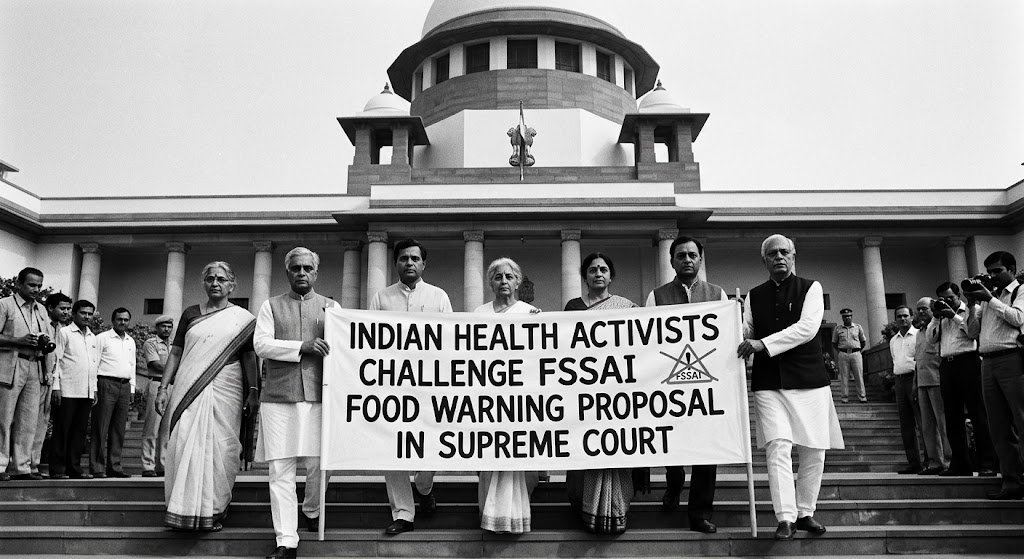
Indian health activists challenge FSSAI food warning proposal in Supreme Court
Indian health activists have taken their objections to India’s proposed packaged food warning labels to the Supreme Court, arguing that the government’s current approach could leave consumers without clear warnings on products containing excessive amounts of a single nutrient.
The legal challenge comes as India’s Food Safety and Standards Authority of India, or FSSAI, prepares to introduce a front-of-pack warning system for packaged foods and beverages. The proposal would use prominent red hexagonal labels to alert consumers when products contain high levels of certain nutrients associated with health risks.
The dispute centers on how those warnings would be triggered. Under the first phase of the proposed system, a product would receive a warning when it exceeds the applicable limits for at least two of three nutrients: added sugar, salt and saturated fat. Health campaigners argue that requirement creates a significant gap because a product could contain a very high amount of one concerning nutrient while avoiding a warning if it does not also cross the threshold for another.
The nonprofit group 3S And Our Health has submitted a formal complaint to the Supreme Court, making it the first such court objection specifically directed at the government’s latest proposal, according to Reuters. The petition is expected to be considered on September 10.
For health advocates, the concern is straightforward. They argue that consumers should not have to interpret a complicated nutrition table to determine whether a packaged product contains an excessive amount of sugar, salt or fat. A warning system is supposed to make that information visible at the point of purchase.
Rajiv Shankar Dvivedi, a lawyer representing 3S And Our Health, argued in the filing that a product containing excessive sugar could still pose a health risk even if its salt and saturated fat levels remain below the proposed warning thresholds.
The disagreement puts India’s food labeling policy at an important crossroads. The government has moved toward a more visible warning system after sustained pressure from health campaigners and scrutiny from the Supreme Court. However, activists now want the regulator to make the system more comprehensive rather than relying on a two-nutrient trigger during its initial phase.
The FSSAI proposal represents a significant change from the way nutrition information has traditionally been presented on packaged food in India. Instead of requiring consumers to examine detailed information on the back or side of a package, the proposed front-of-pack system would place a highly visible warning directly on the product.
The proposed labels would identify concerns such as high fat, high sugar or high salt, depending on the nutritional composition of the product. The thresholds are linked to India’s Dietary Guidelines for Indians, 2024, prepared through the Indian Council of Medical Research and National Institute of Nutrition.
FSSAI has proposed a two-phase approach. The first phase would cover products exceeding limits for at least two of the specified nutrients. The second phase is intended to extend warnings to products exceeding the threshold for a single nutrient. However, the government has not provided a firm timetable for when the second phase would begin.
That missing timeline is another point of concern for health campaigners. They argue that delaying single-nutrient warnings could allow products with significant amounts of sugar, salt or saturated fat to remain without a prominent warning for an uncertain period.
The government, however, has defended the phased approach. A government source told Reuters that the activists’ concerns were not justified and said food labeling systems can be introduced progressively. The government also indicated that India intends to strengthen the warning system during a later phase.
The debate has also exposed a rare disagreement between public health campaigners and the food industry, although for very different reasons.
Health activists believe the proposed system may not go far enough. Food companies and industry representatives, meanwhile, have warned that the proposed thresholds could result in warning labels appearing on a large share of packaged products. That could influence consumer perceptions and potentially affect demand for affected brands.
India’s packaged food and beverage industry is a major commercial market, making the labeling dispute more than a regulatory discussion. Changes to front-of-pack requirements could require manufacturers to redesign packaging, update product information and reconsider how products are marketed to consumers.
For major international food and beverage companies, the issue could also have wider commercial implications. Reuters has reported that companies and industry groups representing major brands, including Coca-Cola, Nestlé and PepsiCo interests, have previously opposed aspects of front-of-pack warning proposals.
The controversy comes against the backdrop of growing concern about obesity and diet-related health problems in India. A study cited by Reuters estimated that around 180 million Indian adults were overweight or obese in 2021, with that number projected to reach 450 million by 2050 if current trends continue.
Those figures help explain why food labeling has become a major public policy issue. As packaged and highly processed foods become increasingly common, regulators face pressure to give consumers information that is easy to understand without requiring specialist nutritional knowledge.
The technology of food packaging itself is not particularly complicated, but the information design is important. A front-of-pack warning has to be visible, understandable and consistent across thousands of products. The effectiveness of such a system depends not only on the nutrient thresholds but also on the size, wording, placement and presentation of the warning.
India’s proposed red hexagonal system is therefore part of a broader international movement toward simplified nutrition warnings. Other countries have experimented with front-of-pack symbols designed to make unhealthy nutritional characteristics immediately visible.
Chile is frequently cited in the debate. Its food labeling system uses separate black warning symbols for products high in nutrients such as sugar, salt and saturated fat. Research has linked the Chilean system to changes in consumer purchasing behavior, including a reported decline in purchases of sugary drinks.
Indian campaigners are using such international examples to argue that warning labels can work best when consumers receive a direct signal about individual nutrients rather than having to calculate whether a product crosses multiple thresholds.
The Supreme Court’s role adds another layer to the dispute. The court is not simply considering a disagreement between manufacturers and activists. Its involvement reflects a broader legal and public policy question about how the Indian government should protect public health while regulating a large and commercially important food sector.
The September 10 hearing could therefore become an important stage in determining how India’s front-of-pack warning system develops. The court’s consideration may influence whether FSSAI’s phased model remains intact, whether the regulator is asked to accelerate implementation or whether additional changes are required.
For consumers, the outcome could eventually change what they see when buying common packaged products such as snacks, drinks, cereals, instant noodles and other processed foods.
The central question is whether a warning system should identify products that are high in any one nutrient of concern or require multiple nutrients to exceed their limits before a warning appears.
Health activists say the first approach is clearer and provides stronger protection. The government has argued that a phased model is a practical way to introduce the system before making it more comprehensive.
The food industry, meanwhile, faces a different concern: how extensive the labeling requirement could become and what effect warning symbols might have on consumer choices and product sales.
That three-way debate is likely to continue as the Supreme Court reviews the matter. Whatever the outcome, India’s proposed food warning labels represent a significant change in how packaged food could communicate nutritional risks to consumers.
The immediate dispute may be about one regulatory threshold, but the larger issue is about how much responsibility should fall on consumers to interpret nutrition information and how much responsibility should be placed on manufacturers and regulators to make potential health risks obvious.
For FSSAI, the challenge is to create a system that is scientifically defensible, practical for manufacturers and genuinely useful to consumers. For health campaigners, the priority is ensuring that the final rules do not leave obvious gaps. And for food companies, the issue is how new labeling requirements will affect packaging, marketing and demand.
The Supreme Court’s upcoming consideration could help determine which of those priorities ultimately shapes India’s food labeling rules. Until then, the proposed red warning system remains a work in progress, with both health advocates and industry groups pressing for changes from opposite sides.