|
Getting your Trinity Audio player ready...
|
World’s Youngest Reigning Monarch Dies in Uganda Aged 34 as King Oyo of Tooro Kingdom Passes Away
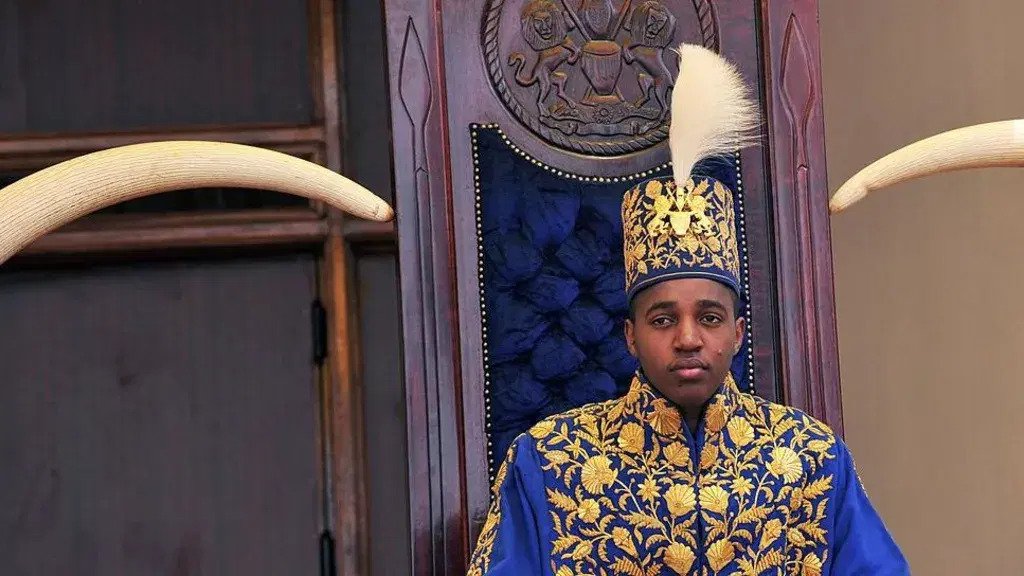
King Oyo Nyimba Kabamba Iguru Rukidi IV, the Ugandan traditional ruler recognized by Guinness World Records as the world’s youngest reigning monarch, has died at the age of 34, according to an announcement from the prime minister of his kingdom. His death, confirmed late Thursday, brings to a close a reign that began under extraordinary circumstances when he ascended the throne at just three years old, following the sudden death of his father in 1995.
Tooro’s Prime Minister Calvin Armstrong Rwomiire Akiiki delivered the news in a statement posted on social media, describing the moment with visible emotion. “It is with profound sadness and a heavy heart that I announce the passing of His Majesty the Omukama of Tooro, King Oyo Nyimba Kabamba Iguru Rukidi IV,” Akiiki wrote, calling the king’s death an immeasurable loss to both the royal family and the people of Tooro. According to the kingdom’s announcement, King Oyo died at approximately 10:00 pm while receiving medical treatment in the United States. The Tooro Kingdom did not publicly disclose the specific cause of death, though a Ugandan government minister was quoted in local media saying the king had been critically ill in the weeks leading up to his passing, which had prompted his travel abroad for treatment.
Born on April 16, 1992, Oyo Nyimba Kabamba Iguru Rukidi IV became the Omukama, or king, of the Tooro Kingdom in western Uganda on September 12, 1995, at just three years old, following the death of his father, King Patrick David Matthew Kaboyo Rwamuhokya Olimi III, who died of a heart attack. The transfer of power happened remarkably fast even by the standards of hereditary succession, with the traditional rituals to hand over the reins of leadership beginning just a week after his father’s burial. Those ceremonies, according to accounts of the transition, included a symbolic mock battle staged at the palace entrance, part of the elaborate cultural process through which the young crown prince formally assumed his role as the kingdom’s sovereign leader, even though he would not be old enough to understand what that role fully meant for well over a decade.
Because he ascended to the throne as a toddler, King Oyo grew up largely in the public eye, his childhood and adolescence tracked by both Ugandan media and international outlets curious about a boy-king navigating both an ordinary education and the ceremonial duties of a monarchy simultaneously. He was formally crowned once he turned 18 in 2010, an event that drew significant attention both within Uganda and internationally, given how unusual his circumstances were among the world’s remaining monarchies. Guinness World Records recognized him as the world’s youngest reigning monarch, a title that stemmed from the sheer improbability of a three-year-old inheriting a throne and then continuing to hold that position into adulthood.
The Tooro Kingdom itself is one of several traditional monarchies that continue to operate within Uganda’s modern political structure, despite the country being governed as a republic under an elected president. These traditional kingdoms, including Tooro, the larger and more prominent Buganda Kingdom, and others recognized by the Ugandan government, hold no formal political power under the country’s constitution, but they retain enormous cultural, social, and symbolic influence over the communities and ethnic groups they represent. King Oyo, as the 13th monarch of a kingdom founded in the early 19th century, presided over more than two million people from his palace in Fort Portal, located roughly 270 kilometers southwest of the capital, Kampala, near Uganda’s border with the Democratic Republic of Congo.
Tributes poured in quickly following the announcement of his death, reflecting the genuine affection and respect King Oyo commanded across Ugandan society well beyond the borders of his own kingdom. Bobi Wine, the popular musician-turned-politician who serves as Uganda’s leading opposition figure, wrote on social media that the news was devastating, expressing hope that the king’s soul would rest in eternal peace. The Buganda Kingdom, Uganda’s largest and most politically influential traditional institution, issued its own statement expressing that it mourned alongside the people of Tooro, describing King Oyo as a valuable figure to the broader nation rather than simply a regional monarch confined to cultural relevance within his own kingdom’s borders.
Notably, just months before his death, Tooro’s prime minister had publicly celebrated King Oyo’s youth as a genuine asset to his leadership rather than a liability, delivering remarks around his birthday in April that framed his relative youth as bringing energy and a fresh perspective to the role. The message described the king as part of the same generation and ecosystem as his subjects, growing and learning alongside them rather than ruling from a position of remote, inherited authority disconnected from contemporary Ugandan life. That framing takes on added poignancy in light of how suddenly his health appears to have declined in the months that followed, with reports of his deteriorating condition circulating for weeks before his death was ultimately confirmed.
King Oyo’s death raises immediate questions about succession within the Tooro Kingdom, though as of the announcement, no formal statement had been made regarding who might inherit the throne or how the kingdom’s traditional succession customs would apply given the unusual circumstances of a monarch dying without having reached what might be considered old age by comparison to many of history’s long-reigning rulers. Given that King Oyo himself inherited the crown as a small child following his own father’s unexpected death, questions about how quickly and smoothly a new transition might unfold will likely draw close attention both within Tooro and across Uganda more broadly in the coming days and weeks.
For a country whose modern political identity has been shaped for decades by its long-serving elected president, the death of a traditional monarch whose personal story captured global curiosity from a young age represents a moment that extends well beyond the boundaries of one kingdom’s internal affairs. King Oyo spent his entire adult life carrying a title that made him a subject of fascination far outside Uganda, a distinction rooted not in any particular political achievement but simply in the singular circumstance of having become a head of state, however ceremonial that role ultimately was, before most children even start primary school. His passing at 34 closes that chapter with the same sense of unusual, almost improbable timing that opened it three decades earlier.