|
Getting your Trinity Audio player ready...
|
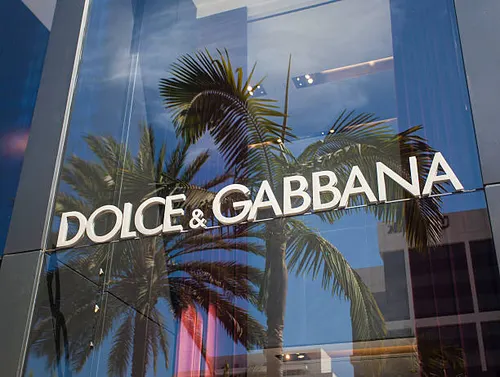
Dolce & Gabbana secures debt waiver from banks after FY operating loss and luxury sector slowdown
Dolce & Gabbana has obtained a fresh waiver from its banking partners on the terms governing its debt, following a financial year in which the Italian luxury house posted a substantial net loss despite modest revenue growth. The waiver, granted as part of ongoing refinancing negotiations, gives the family-controlled fashion group breathing room on its credit covenants at a moment when weakening global demand for high-end goods has squeezed profitability across much of the luxury sector, not just at Dolce & Gabbana.
For the fiscal year ended March 31, 2026, the company reported revenue of €1.9 billion, up 4 percent from the prior year, but that top-line growth masked a much less encouraging bottom line. Dolce & Gabbana recorded a net loss of €143 million for the period, a sharp reversal from the smaller losses the company had posted in recent years and a clear signal that rising costs, softer demand, and broader macroeconomic headwinds were outpacing whatever gains the brand achieved through higher sales. The scale of that loss set the stage for the latest round of negotiations with lenders, who had already granted the company a waiver on debt requirements once before, during a refinancing exercise completed in 2025.
That earlier refinancing left Dolce & Gabbana with roughly €450 million in outstanding bank debt, a figure that grew after the company took on an additional €150 million in new borrowing to fund expansion into beauty and real estate. At the time, the deal restructured around €300 million of existing debt through February 2030 and came bundled with a covenant waiver that gave the company flexibility on its borrowing terms. But the relief proved temporary. As luxury spending slowed globally through 2025 and into 2026, compounded by broader economic uncertainty tied to geopolitical instability including the war in Iran, Dolce & Gabbana found itself back at the negotiating table barely a year later, this time seeking not just another waiver but a more substantial restructuring of its financial position.
The company brought in Rothschild & Co as financial adviser to lead those talks, and according to people familiar with the discussions, lenders have been pushing for a capital injection of up to €150 million as part of any broader refinancing of the €450 million debt pile. To help meet that liquidity need without diluting family control of the business, Dolce & Gabbana has explored several avenues, including the potential sale and leaseback of Milan real estate assets it owns outright, a maneuver that would let the company unlock cash from its property portfolio while continuing to operate out of the same buildings under a lease arrangement. The brand has also leaned on licensing deals to shore up its balance sheet, notably extending its eyewear partnership with EssilorLuxottica through 2050, a deal reportedly worth up to €150 million that provides a meaningful, relatively low-risk source of incoming cash.
The financial pressure has coincided with a notable reshuffling at the top of the organization. Stefano Gabbana, the brand’s co-founder and long-time public face alongside Domenico Dolce, quietly stepped down from his chairman role at the start of 2026, a transition that wasn’t publicly disclosed until it surfaced in corporate filings months later. Alfonso Dolce, brother of co-founder Domenico Dolce and the company’s chief executive, has since taken over as chairman, while former Gucci executive Stefano Cantino joined as co-CEO, a hire widely seen as an attempt to bring in outside expertise as the brand tries to reposition itself from a fashion label into what company leadership has described as a broader lifestyle platform. Gabbana himself remains involved creatively, continuing to co-direct the brand’s design vision alongside Domenico Dolce even after exiting the boardroom, but reports have indicated he is weighing his options regarding his roughly 40 percent ownership stake as the company works through its debt situation.
Dolce & Gabbana has long prized its independence in an industry that has consolidated dramatically over the past two decades, with major conglomerates like LVMH and Kering absorbing one storied house after another. The brand has previously said it hasn’t ruled out bringing in a minority investor or even pursuing a public listing to raise capital, but it has consistently framed those options as a last resort rather than a preferred path, preferring instead to manage its debt through refinancing, licensing income, and asset sales that don’t require ceding equity or creative control.
The pressure Dolce & Gabbana is facing is not unique in the luxury sector. Kering, the owner of Valentino alongside Gucci and other major brands, agreed last year to inject €100 million into Valentino’s operations following a covenant breach with its own lenders, a sign that even conglomerate-backed labels with deep pocketed parent companies aren’t immune to the demand slowdown rippling through high-end fashion. Slower consumer spending in key markets including China, combined with cautious purchasing behavior among aspirational shoppers who once drove much of the sector’s growth, has left even well-established houses scrambling to protect margins while continuing to invest in the kind of runway shows, retail expansion, and brand campaigns that luxury customers expect.
For Dolce & Gabbana specifically, the securing of this latest waiver buys time rather than resolving the underlying tension between an ambitious expansion strategy, particularly its push into beauty and hospitality, and a lending relationship that has now required covenant relief twice in as many years. Whether the brand can use that breathing room to stabilize its finances without sacrificing the independence its founders have fought to preserve for four decades will likely depend on how quickly the broader luxury market recovers, and on whether the leadership changes now underway, from Cantino’s operational expertise to Alfonso Dolce’s steadier hand at the helm, can translate into the kind of earnings turnaround that would make future negotiations with its banking partners considerably less fraught.