Expect higher prices after Trump admin’s latest moves on Canada, Iran spark inflation fears and tariff uncertainty
Consumers already weary of grocery bills and gas station sticker shock have two fresh reasons to brace for higher costs this fall. Within the span of a single week, the Trump administration escalated economic pressure on two very different fronts, launching a sweeping new sanctions campaign against Iran while letting a collapsed trade negotiation with Canada trigger 50 percent tariffs on roughly 20 billion dollars worth of Canadian goods. Neither move happened in isolation, and economists tracking both situations say the combined effect is likely to show up where it always does first, at the pump, in grocery aisles, and on the price tags of everything from steel appliances to electronics.
Treasury Secretary Scott Bessent unveiled what he called “Operation Economic Outcast” on Monday, announcing that the Office of Foreign Assets Control is sanctioning more than 60 entities, individuals and vessels accused of helping Iran procure nuclear and missile technology, run cyber operations, and generate oil revenue that funds the regime. Bessent described the effort in blunt terms, saying the administration is “launching an economic onslaught against Iran’s financial connections around the globe” with the goal of severing “every economic lifeline that sustains this tyrannical regime until Tehran stands alone.” Any entity caught laundering money on Iran’s behalf, he warned, would be cut off from the U.S. dollar system entirely.
Iran’s government did not stay quiet. Mohsen Rezaei, secretary of the country’s Supreme National Security Council, threatened to halt oil exports altogether in response to what Bessent had earlier billed as an approaching “economic D-Day.” Iran’s currency, meanwhile, has already cratered to a record low near 2.02 million rial to the dollar as the sanctions news rattled currency markets. Notably absent from Monday’s announcement was any immediate action against the network of Chinese banks that facilitate Beijing’s ongoing purchases of discounted Iranian crude, a conspicuous omission given that China remains Iran’s largest oil customer and has previously demonstrated its willingness to retaliate against U.S. pressure by threatening to restrict rare earth mineral exports critical to American defense and technology manufacturing. With a state visit from Chinese President Xi Jinping reportedly on the calendar for next month, few expect Washington to escalate against Beijing directly in the near term, even as it tightens the screws on Tehran.
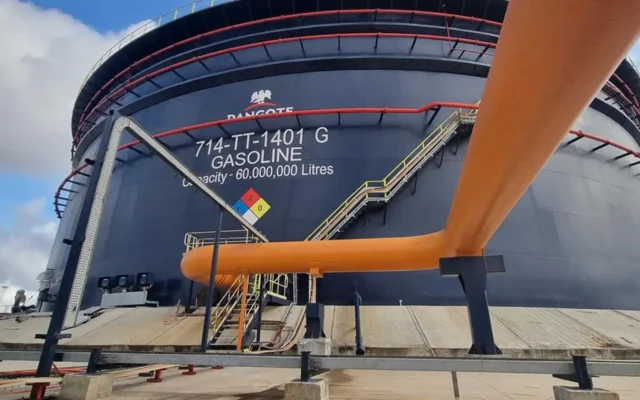
The oil market angle matters far beyond the Middle East. Analysts at the House Oversight Committee, cited in recent reporting, noted that Americans have already spent an additional 71.5 billion dollars on gasoline since the start of the administration’s confrontation with Iran, and that oil sector stocks held by Trump himself, including Valero and Marathon, have more than doubled in value since the start of 2026. Every escalation in the Iran standoff tends to nudge crude prices upward almost immediately, and a full-scale campaign to choke off Tehran’s oil revenue carries the kind of market uncertainty that traders price in well before any barrel actually goes undelivered.
Layered on top of that is the unraveling of trade talks with Canada. The Trump administration first floated new tariffs on an estimated 5 percent of Canadian imports back on July 20, with implementation originally scheduled for August 19. A last-minute three-day pause gave negotiators one final window to strike a deal, but talks broke down late last week, and the administration proceeded with 50 percent tariffs on the affected goods, covering everything from hockey sticks and agricultural products to steel and cement. Canadian Prime Minister Mark Carney did not mince words about why the negotiations collapsed, saying Washington’s proposed terms were “uneconomic, unfair, and undermined the net benefits for Canada.” As he put it, “they asked too much, and they offered too little.” Carney has promised dollar-for-dollar retaliatory tariffs starting September 8, targeting U.S. steel, dairy, appliances, farm equipment, pulp and paper, and electronics, a list that virtually guarantees some of the pain flows back into American manufacturing and consumer tech supply chains.
U.S. Trade Representative Jamieson Greer has tried to downplay the fallout, calling the situation “a little bit of a tempest in a teapot” and noting that the new tariffs affect only about 5 percent of Canadian trade and roughly 6 percent of overall U.S. consumption. But Trump himself signaled Monday that the dispute is far from settled, announcing that starting January 1, 2027, the United States will double certain tariffs on Canadian goods, a move that suggests this is less a contained skirmish and more the opening phase of a longer standoff.
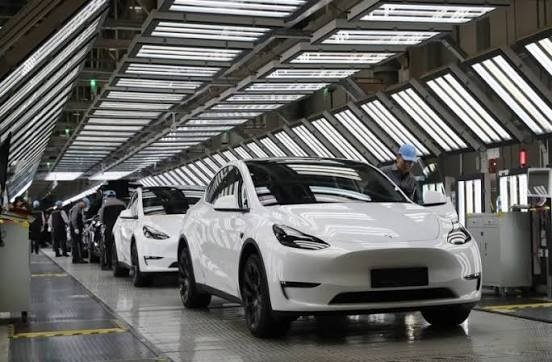
Economists remain divided on how sharply either move will actually hit prices in the short term. Goldman Sachs analysts have previously argued that tariff-driven disruptions to Canadian energy imports are unlikely to meaningfully move U.S. natural gas prices given the relatively small volumes involved, and that Canadian oil producers, rather than American consumers, would likely absorb much of the tariff burden through steeper discounts on Canadian crude sold into a market with limited alternative buyers. Still, those forecasts were made under earlier, narrower tariff regimes. A 50 percent duty combined with a retaliatory package touching steel, appliances and electronics is a different animal, and inflation data from the Federal Reserve Bank of St. Louis already shows that steeper tariffs have contributed to elevated inflation this year, even if the pace has leveled off somewhat in recent months.
The political stakes could not be higher for an administration heading into a midterm election year with cost of living consistently topping voter concerns in polling. Every dollar added to a gas tank or a grocery cart becomes a talking point, and the simultaneous nature of the Iran and Canada actions means the administration is effectively running two inflation-sensitive gambits at once, betting that the strategic payoff, whether choking Tehran’s finances or forcing a better trade deal out of Ottawa, will outweigh the near-term cost pressure on American households. Whether that bet pays off politically may depend less on the economic logic underpinning either policy and more on how quickly gas prices and store shelves reflect the consequences.