|
Getting your Trinity Audio player ready...
|
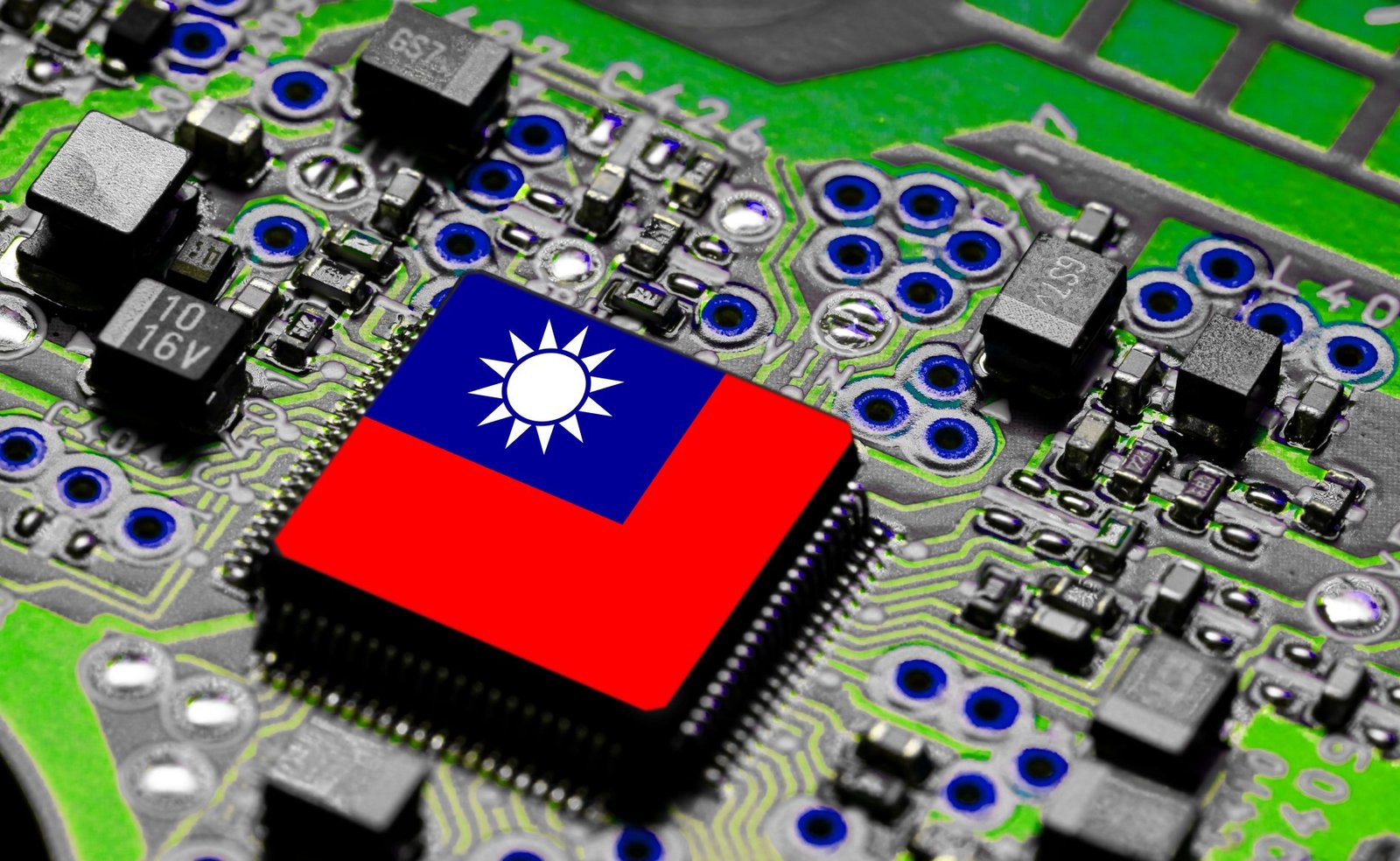
Kaohsiung broke ground Monday on Baipu Industrial Park, the newest addition to southern Taiwan’s rapidly expanding semiconductor S Corridor, marking the latest step in the city’s yearslong transformation from a traditional manufacturing base into one of the world’s most concentrated chip-industry hubs. More than 20 semiconductor supply-chain companies sent representatives to the ceremony, according to CNA reporting picked up by Taiwan News, underscoring how much industry interest has already built around a site that only recently received official government designation.
The park spans a total of 88.73 hectares, with roughly 53 hectares set aside for industrial use and 25 hectares specifically earmarked for recruiting advanced semiconductor back-end process equipment manufacturers and related supply-chain businesses, according to reporting from BigGo Finance. Liao Tai-hsiang, director-general of Kaohsiung’s Economic Development Bureau, described Baipu as an important next step for the city’s semiconductor corridor, positioning it as the node that extends the region’s existing strength in chip manufacturing and packaging into the equipment and materials side of the supply chain, a segment that has historically been underrepresented in Taiwan’s southern industrial base compared with its manufacturing and packaging capacity.
The timing behind Baipu’s development traces directly to demand pressures reshaping the global chip industry. Liao pointed specifically to the rapid growth of artificial intelligence applications, high-performance computing and data center buildouts as the driving force behind the park’s focus, noting that advanced packaging has become a core element in boosting chip performance now that the industry has moved into what he described as the post-Moore’s Law era, where squeezing more performance out of silicon increasingly depends on how chips are packaged and connected rather than purely on shrinking transistor size. That shift has made advanced packaging capacity one of the most sought-after capabilities across the entire AI chip supply chain, and Baipu is being built specifically to serve that need.
Kaohsiung’s broader semiconductor cluster already spans three distinct functional zones across the city, according to Liao. Renwu handles advanced packaging and testing work, Qiaotou focuses on key components and materials, and Nanzih houses advanced chipmaking operations, together forming what city officials describe as a complete, geographically compact ecosystem spanning design, manufacturing, packaging, testing and now, with Baipu’s addition, equipment and materials supply as well.
TSMC’s involvement has anchored much of this growth. The company separately opened a supplier campus within Baipu Industrial Park designed to co-locate materials suppliers alongside TSMC engineers inside shared cleanrooms, a setup TechTimes reported is expected to boost CoWoS packaging validation efficiency by between 25 and 50 percent, directly accelerating the ramp-up of AI chip production across TSMC’s broader network of facilities in Chiayi, Longtan and Tongluo. National Science and Technology Council Minister Wu Cheng-wen has described the full corridor, which now links science parks across Chiayi, Tainan, Kaohsiung, Pingtung, central Taiwan and Hsinchu, as the world’s most comprehensive AI and semiconductor industry corridor, a claim that reflects just how deliberately Taiwan’s government and its leading chipmakers have coordinated this geographic expansion over the past two years.
ASE Technology Holdings, the world’s largest provider of independent semiconductor packaging and testing services, has been among the most active investors in Kaohsiung specifically. The company broke ground on a new facility in the Renwu Industrial Park in April, a joint investment with partners WinWay Technology and HORNG TERNG AUTOMATION aimed at establishing a high-tech semiconductor testing services cluster, with total capital investment exceeding NT$108.3 billion, equivalent to roughly €2.9 billion, and a projected annual output of approximately NT$177.3 billion once the facility is fully operational. ASE separately broke ground in March on two additional buildings at Nanzih Technology Industrial Park III, representing an NT$17.8 billion investment expected to create roughly 1,470 jobs upon completion in mid-2028. In May, the company announced a further strategic collaboration with WUS Printed Circuit Co. to build an advanced AI packaging hub in Nanzih, representing an additional NT$35 billion investment expected to generate more than 2,000 jobs by the time it reaches completion in September 2029.
The cumulative scale of Kaohsiung’s transformation over the past six years is substantial by any measure. According to figures released by the city’s Economic Development Bureau and reported by BigGo Finance, Kaohsiung has attracted more than NT$2.7 trillion, approximately $84.8 billion, in cumulative investment since 2020, developing six industrial parks and adding 710 hectares of new industrial land in the process. Employment across the city’s science parks in Kaohsiung, Qiaotou and Nanzih grew from roughly 8,600 workers in 2020 to more than 20,000 by 2025, a 136 percent increase that outpaced growth at comparable science parks under the jurisdiction of Hsinchu, Taichung and Tainan over the same period.
The broader strategic logic behind Taiwan’s push to build out this southern corridor extends beyond simple economic development. Concentrating design, manufacturing, packaging, testing and now equipment supply within a tightly connected geographic cluster reduces logistical distances and dependency risk across the semiconductor supply chain, a consideration that has taken on added significance as global chip demand, particularly for AI applications, continues to strain capacity at facilities around the world. By building Baipu specifically to fill the equipment and materials gap in its existing cluster, Kaohsiung is positioning itself to capture a larger share of the value chain surrounding AI chip production rather than remaining dependent on suppliers based elsewhere in Taiwan or overseas.
With more than 20 companies already engaged around Baipu’s groundbreaking and Kaohsiung’s broader investment momentum showing no signs of slowing, the park appears likely to fill its allotted industrial space relatively quickly given the pace of recent activity across the rest of the city’s semiconductor corridor. Continuing coverage of how global semiconductor investment is reshaping regional manufacturing hubs is available on Business Tech. Additional detail on TSMC’s advanced packaging operations in the region is available through the company’s official site, and further background on ASE’s Kaohsiung expansion can be found through ASE Technology Holdings‘ official site.