|
Getting your Trinity Audio player ready...
|
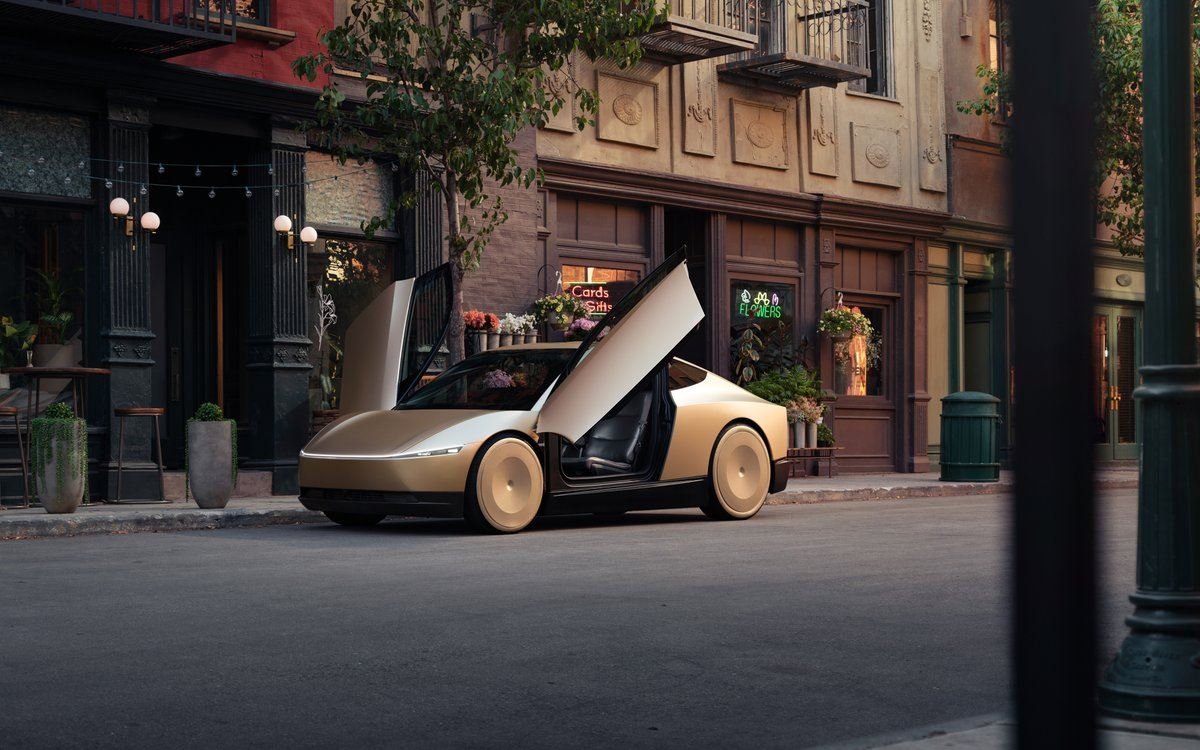
Tesla has finally begun putting paying customers inside its Cybercab, the steering wheel-free, two-seat autonomous vehicle Elon Musk first showed off in October 2024. The company confirmed this week that Cybercab rides are now live through its Robotaxi app on iOS and Android, marking the first time actual customers, rather than employees or invited testers, have ridden in the vehicle. The rollout arrives nearly two years after Musk’s original unveiling, a timeline that reflects just how much slower Tesla’s autonomous driving ambitions have moved compared to the aggressive targets he’s repeatedly set publicly.
The launch itself came together in an oddly muted fashion for a company known for splashy product reveals. Tesla hosted what was described as a closed-door event in Austin on Thursday evening, with traditional media and even some longtime Tesla enthusiasts left off the guest list. Musk himself didn’t attend. Several investors and social media personalities who did make it in were reportedly told they couldn’t post content during the actual presentation, and the general public livestream many were expecting never materialized, leaving most of the coverage to arrive secondhand through attendee videos and Tesla’s own promotional posts rather than a traditional keynote-style launch.
For now, actually getting a Cybercab ride requires a fair amount of luck. While the Robotaxi app lists availability across Austin, Dallas, Houston, Miami, Orlando, and Tampa, the Cybercab option only appears within Austin’s existing service area, the same geofenced zone Tesla’s Model Y robotaxi fleet has already been operating in. Even there, riders can’t specifically request a Cybercab. What vehicle actually shows up depends on group size and availability at the moment of booking, meaning most Austin robotaxi customers will likely continue getting picked up by a Model Y rather than the purpose-built two-seater for the foreseeable future.
That’s largely a function of how small the actual Cybercab fleet currently is. According to Texas Department of Motor Vehicles data cited in recent reporting, Tesla is authorized to operate 314 driverless vehicles in the state, but only 45 of those are Cybercabs, with the remainder being Model Ys. Tesla said Cybercab production began back in April 2026, though Musk cautioned at the time that initial output would be very slow, a warning that appears to have held up given how limited the fleet remains months later. By comparison, Waymo, the current leader in US robotaxi operations, runs roughly 4,000 vehicles across 14 cities, putting Tesla’s entire driverless footprint, Cybercabs and Model Ys combined, at a fraction of its main competitor’s scale.
The vehicles currently operating in Austin are owned outright by Tesla, not sold to individual customers, and there’s no public timeline yet for when consumers might actually be able to purchase one. Musk has described a longer-term vision in which private owners could purchase multiple Cybercabs and effectively run them as a small ride-hailing fleet, earning income through Tesla’s broader robotaxi network when they’re not using the vehicles personally. For now, Tesla is only collecting inquiries through an interest form for people wanting to help build out its robotaxi network, language suggesting the company plans to sell fleets to interested businesses first rather than opening sales to individual consumers anytime soon.
A few operational details are worth knowing if you do manage to hail one. Tesla bans children under 13 from riding in a Cybercab, and the version of Full Self-Driving software running the vehicle is described as more advanced than what’s currently deployed in Tesla’s Model 3, Model Y, and Cybertruck lineup, reflecting the fact that Cybercab was purpose-built from the ground up for autonomous operation rather than adapted from an existing human-driven platform. Whether Tesla charges for these initial Cybercab rides, and whether every Austin robotaxi app user can actually secure one, remains unclear, since Tesla hasn’t published specific pricing or availability details beyond confirming the service is live.
The launch hasn’t escaped regulatory attention either. A spokesperson for the National Highway Traffic Safety Administration confirmed this week that the agency is in contact with Tesla and evaluating the situation surrounding the Cybercab rollout, though the spokesperson didn’t elaborate further on what specifically prompted that evaluation. Federal regulations limit how many vehicles any single manufacturer can sell without a steering wheel and pedals, a rule that shapes how aggressively Tesla can scale Cybercab deployment even if it wanted to move faster, since manufacturers can deploy unlimited vehicles for testing purposes but that designation restricts their ability to actually collect fares from riders.
Context matters here too, since Musk has a well-documented history of promising driverless Tesla timelines that ultimately slipped considerably. He first unveiled Cybercab at a Los Angeles-area movie studio event in October 2024, and separately promised unsupervised Model 3 and Model Y robotaxi rides during Tesla’s Q4 2024 earnings call back in January 2025. Public Cybercab rides didn’t actually begin until September 2026, and even now they remain geofenced to a single city rather than the broader multi-city rollout Musk had originally implied would follow quickly. Some analysts covering Tesla’s autonomous driving business have flagged this slower-than-expected pace repeatedly over recent months, a pattern this launch does little to dispel given how limited the current deployment actually is.
Whether Cybercab eventually becomes the high-volume vehicle Musk has repeatedly promised, capable of anchoring a genuinely global robotaxi network, will likely depend on how quickly Tesla can scale both production and regulatory approval simultaneously, two areas where the company’s track record so far suggests considerably more patience will be required than Musk’s public timelines have typically allowed for. For now, Austin residents willing to accept a fairly limited service area and no guarantee of actually landing in the gold-colored two-seater get to be among the first members of the public anywhere to experience it.
Further detail on Tesla’s robotaxi service is available through the company’s official Robotaxi page. For more coverage of autonomous vehicle technology and EV industry developments, visit Business Tech.