|
Getting your Trinity Audio player ready...
|
Super Bowl champions to one of Silicon Valley’s most recognizable technology investors. The deal, valued at roughly $9.612 billion, is now the largest sum ever paid for an NFL franchise, surpassing the $6.05 billion the Washington Commanders sold for in 2023.
For a tech audience, the headline isn’t just about football. It’s about where old money in professional sports is starting to meet new money built on chips, software, and venture capital. Vinod Khosla co-founded Sun Microsystems in the early 1980s before becoming a general partner at Kleiner Perkins and later founding Khosla Ventures, the firm that has quietly built one of the most consequential venture portfolios in modern computing. Khosla Ventures was an early backer of OpenAI, and its bets have also included DoorDash, Instacart, and a long list of climate and healthcare startups that lean heavily on machine learning. Buying a controlling stake in an NFL team is, in a sense, the least technical thing Khosla has done in decades, but it puts a familiar Silicon Valley name at the head of a franchise that just won its second Super Bowl in team history.
The purchase agreement was first struck in July with the estate of Paul Allen, the Microsoft co-founder who bought the Seahawks in 1997 for $194 million and kept the team from relocating out of Seattle. Allen died in 2018, and his sister, Jody Allen, ran the franchise on behalf of the estate for years afterward. In February, the estate announced it had begun a formal process to sell the team, honoring instructions Allen had left behind. That search ended in July when the Khosla-led group beat out a rival bid reportedly involving former Boston Celtics owner Wyc Grousbeck and steel industry heir Aditya Mittal.
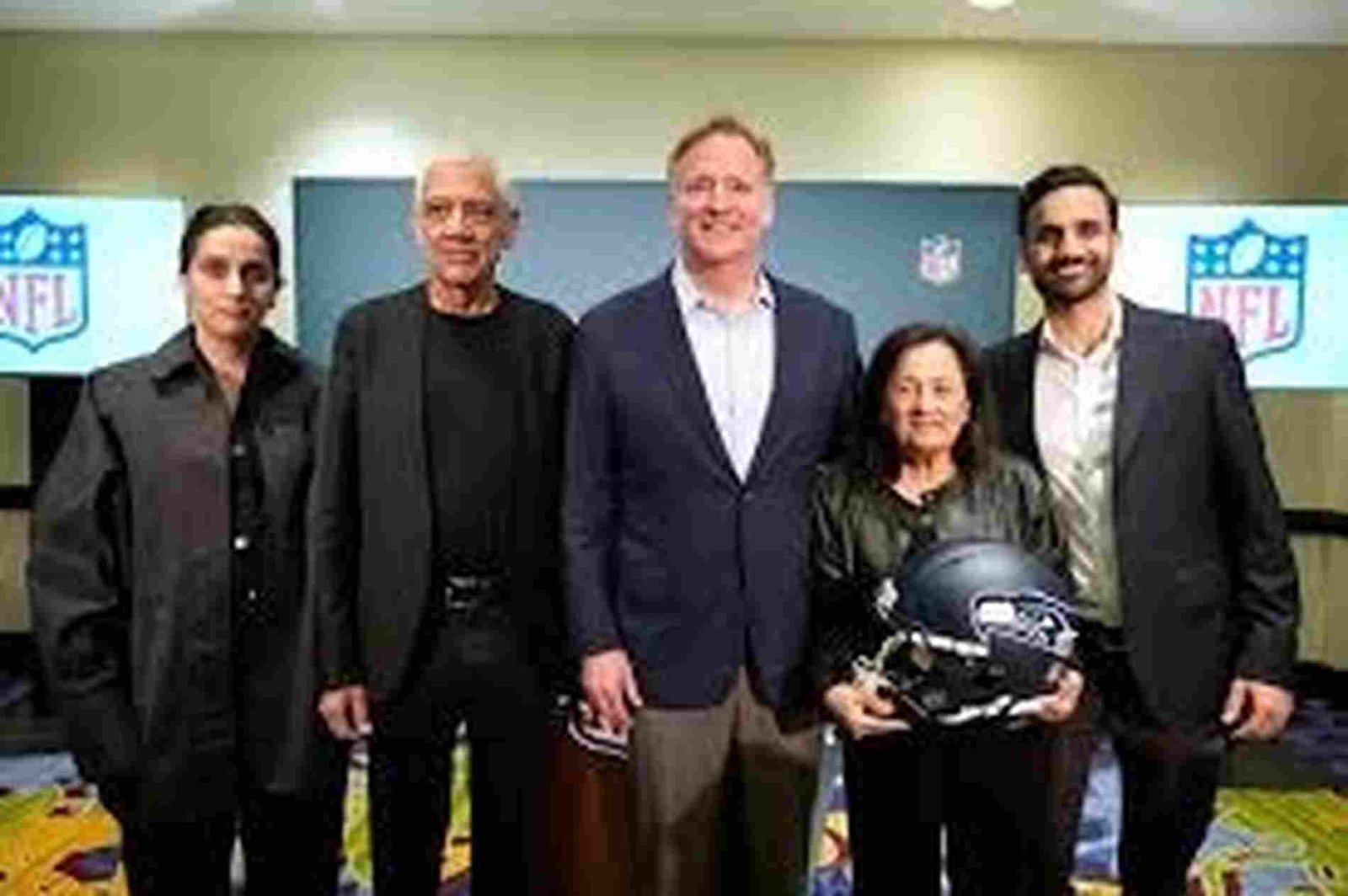
Wednesday’s vote in Atlanta needed support from at least 24 of the league’s 32 owners to pass, and it cleared with no dissent. Speaking after the meeting, Khosla struck a notably humble tone for someone who just agreed to pay a record price for a professional sports franchise. He called it a rare opportunity to buy a team fresh off a championship and said he and his family felt fortunate to be entrusted with what he described as an iconic brand. He was flanked at the announcement by his wife, Neeru, who is expected to serve as the team’s controlling owner, and their son Neal, who will also take an active role in running the franchise.
Neal Khosla brings his own technology credentials to the ownership group. He is the founder and chief executive of Curai, an AI-driven primary care startup, and people close to the family have said he was the one who pushed his parents to seriously pursue the Seahawks once the team went up for sale. The elder Khosla, meanwhile, was already a minority owner of the San Francisco 49ers, having bought roughly a 3 percent stake in that team in 2025 at a valuation north of $8.5 billion alongside other Bay Area investors, including partners from Bessemer Venture Partners and ICONIQ. NFL rules require cross-ownership conflicts to be resolved, so Khosla will have to divest his 49ers stake in order to take control of the Seahawks.
The sale still has to formally close, and league insiders expect that process to take roughly a week as attorneys work through the final transfer details from the Allen estate. Once it does, Khosla will be introduced as the new owner in Seattle, with the goal of completing the transition before the Seahawks open their season on September 9 against the New England Patriots, a rematch of February’s Super Bowl LX at Levi’s Stadium. That timeline would let the team begin the year under new ownership rather than in limbo, something the league has generally tried to avoid with recent sales.
This deal also fits a broader pattern that has been building in professional sports for several years now. Tech and venture wealth has increasingly found its way into ownership boxes across every major American league, from Steve Ballmer’s purchase of the Los Angeles Clippers to the Walton-Penner family’s record-setting acquisition of the Denver Broncos for $4.65 billion in 2022, a mark that stood for less than three years before the Commanders and now the Seahawks blew past it. Team valuations have climbed sharply across the board as media rights deals grow and private equity is allowed to take passive stakes in franchises, and technology fortunes built on cloud computing, semiconductors, and now generative AI have become some of the deepest pools of capital willing to pay those prices.
Khosla’s arrival also raises an obvious question for Seahawks fans and NFL watchers alike: what does a venture capitalist actually do with a football team once he owns one. Team executives who have worked with tech-industry owners in other leagues describe a tendency to lean harder into data, analytics, and personalization, whether that means scouting, ticketing, or fan engagement technology. Whether Khosla brings that same instinct to Seattle, or largely leaves football decisions to head coach Mike Macdonald and the existing front office, will likely become clearer once the sale officially closes and the new ownership group settles in.
For now, the numbers tell most of the story. A $9.6 billion price tag for a single NFL franchise would have sounded implausible even five years ago, back when the Commanders’ $6.05 billion sale was itself treated as a shocking outlier. Sports franchise values have simply outrun most other asset classes in recent years, and the people writing the biggest checks increasingly come from the same industry driving that broader wealth creation. The Seahawks’ new majority owners just happen to be one of the more visible examples of that shift, arriving with a résumé built on early bets on companies like OpenAI rather than decades spent inside professional sports. Full NFL approval details and the league’s official announcement are available on the league’s site, though the transaction itself remains pending until final paperwork is completed in the coming days.
Readers who follow how venture capital dollars move beyond traditional tech investing may find the pattern familiar; Techchora has tracked similar crossover moves as AI-era wealth increasingly reshapes ownership in industries far outside software.