|
Getting your Trinity Audio player ready...
|
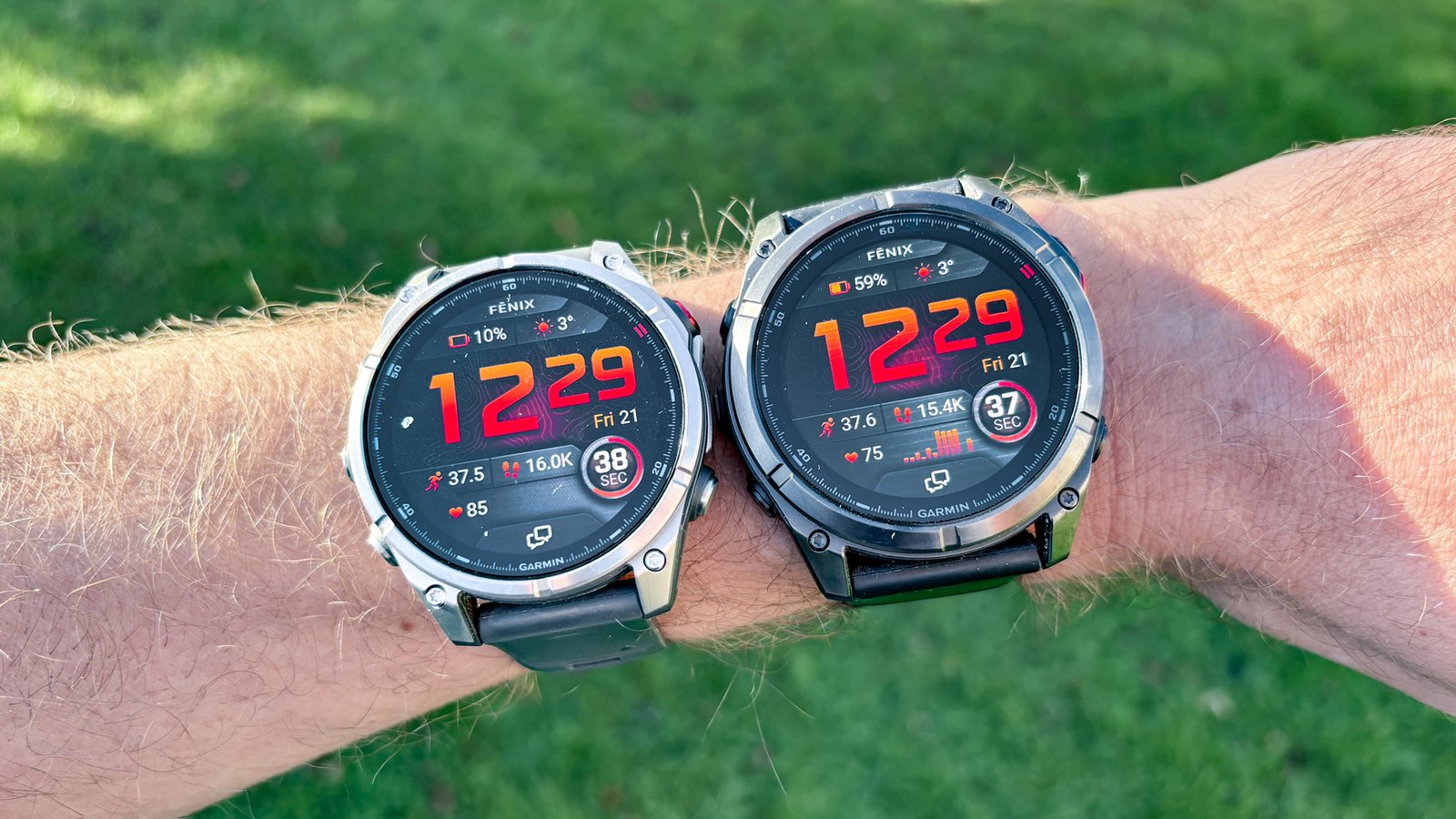
Garmin has officially launched the fēnix 9 lineup, and outdoor athletes weighing whether to upgrade from the fēnix 8 now have a fairly detailed picture of what’s actually changed. Released on August 25, 2026, the fēnix 9 arrives as the successor to a watch that has remained one of Garmin’s most complete outdoor and multisport smartwatches since its own launch back in 2024. Rather than a complete reinvention, this generation focuses on refining display quality, mapping performance and storage capacity while keeping the core sensor suite largely familiar, a pattern that will feel reassuring to longtime fēnix owners and slightly underwhelming to anyone hoping for a dramatic leap forward.
The new lineup spans three tiers, the base fēnix 9, the fēnix 9 Pro, and the fēnix 9 Pro Solar, each offered across 43mm, 47mm and 51mm case sizes. UK pricing for the base model starts at £859.99 for the 43mm and 47mm versions, climbing to £949.99 for the 51mm case, while the Pro tier with built-in inReach satellite connectivity starts considerably higher, at $1,199.99 for the 43mm and 47mm sizes and $1,299.99 for the 51mm model in US pricing. Here’s a breakdown of what genuinely separates the fēnix 9 from its predecessor, organized by the changes that actually matter to how the watch performs day to day.
1. Display brightness and size
The fēnix 9 lineup features AMOLED displays that Garmin says are twice as bright as those found on the fēnix 8, a change that should make a real difference for anyone using the watch outdoors in direct sunlight, historically one of the tougher conditions for AMOLED displays generally. The 51mm fēnix 9 Pro also gets a display that’s 1.5 percent larger than the previous generation, and Garmin has now shipped its biggest screen ever on this size.
2. Case material and lens durability
Every fēnix 9 model now uses a sapphire lens as standard, Garmin’s most scratch-resistant material option, whereas the fēnix 8 dropped to Gorilla Glass on its cheaper variants. The fēnix 9 Pro additionally moves to an all-titanium design across its case and rear cover, an upgrade from the mixed material approach used on some fēnix 8 configurations.
3. Storage and memory
Storage has doubled from 32GB on the fēnix 8 to 64GB on the fēnix 9, giving users considerably more room for detailed offline maps and music storage. Garmin says the fēnix 9 can now store up to 7,000 songs from services like Spotify, Deezer or Amazon Music for phone-free listening, provided you maintain an active subscription with the relevant service. The watch’s processor also runs with twice the RAM of its predecessor, contributing to smoother overall performance.
4. Mapping engine speed
This is arguably the change most users will notice in daily use. Garmin rebuilt the mapping engine for the fēnix 9 generation, delivering panning speeds 30 percent faster than the fēnix 8 and round-trip routing that’s 40 percent faster than the fēnix 8 Pro. Reviewers who tested the watch ahead of launch specifically called out how much this eliminates the map lag that occasionally frustrated fēnix 8 users when navigating complex routes or unfamiliar terrain.
5. Physical size and weight
Despite packing in more capable hardware, the fēnix 9 Pro actually manages to be slimmer in some configurations. The 47mm fēnix 9 Pro is 16 percent slimmer than the equivalent 47mm fēnix 8 Pro model, a meaningful improvement for anyone who found the previous generation’s case thickness cumbersome during extended wear.
6. New software features exclusive to fēnix 9
Several features debut with this generation that simply don’t exist on the fēnix 8, regardless of tier. Garmin Epic records an entire trip spanning multiple days, weeks or even months, compiling activities, photos and performance statistics into a single shareable story. ArcheryX replaces the older Archery profile with real-time shooting timing and aiming indicators. The watch also gains a full indoor rowing suite covering VO2 max, functional threshold power, a power curve with training zones, and lactate threshold tracking, though these particular rowing metrics require a compatible rowing machine to function.
7. Satellite connectivity and inReach
Both the fēnix 8 Pro and fēnix 9 Pro support satellite messaging through the Garmin Messenger app, letting users exchange texts with contacts directly from their watch or paired smartphone, along with SOS functionality that connects to Garmin’s 24/7-staffed Garmin Response emergency coordination center. It’s worth noting that inReach, Garmin’s more comprehensive LTE and satellite communication system supporting voice calls and LiveTrack tracking, remains exclusive to Pro tier models on both generations. Neither the standard fēnix 8 nor the standard fēnix 9 includes built-in inReach, so buyers specifically seeking that capability need to choose a Pro configuration regardless of which generation they land on.
8. Heart rate sensor and GPS accuracy
Somewhat surprisingly given the broader upgrade cycle, the fēnix 9 uses the same Elevate Gen 5 optical heart rate sensor found in the fēnix 8 Pro, meaning there’s no new next-generation sensor this cycle despite some pre-launch speculation suggesting otherwise. Similarly, both generations rely on the same class of multi-band GNSS hardware with SatIQ auto-mode switching, and Garmin has not published any specific accuracy or satellite acquisition speed improvements for the fēnix 9. The navigation upgrades this generation are really about smoother map rendering and a new NextFork map guide feature rather than raw positioning precision, so most users are unlikely to notice a measurable difference in GPS accuracy between the two watches.
9. Battery life
The standard fēnix 9 stays remarkably close to the fēnix 8 in terms of maximum battery life, rated at up to 10, 16 and 29 days in smartwatch mode for the 43mm, 47mm and 51mm sizes respectively. Where things diverge sharply is with the fēnix 9 Pro Solar in its 51mm configuration, which Garmin rates at up to 291 days in power-saving mode, a figure nothing else in the current or previous lineup comes close to matching, making it the clear choice for anyone prioritizing extreme battery longevity above all else.
For anyone currently using a fēnix 8 and weighing whether the fēnix 9 justifies the upgrade cost, the honest answer depends heavily on what matters most in daily use. Runners and hikers who rely heavily on navigation will likely notice the improved mapping engine immediately, while anyone satisfied with their existing heart rate accuracy and GPS performance may find less urgency to upgrade purely on sensor grounds, since those core measurement systems remain largely unchanged between generations.
Full specifications and pricing for the complete fēnix 9 lineup are available through Garmin’s official product pages. For more coverage of wearable technology and consumer hardware, visit Business Tech.