|
Getting your Trinity Audio player ready...
|
Apple Releases iOS 27: Here’s Every iPhone That Supports the New Update
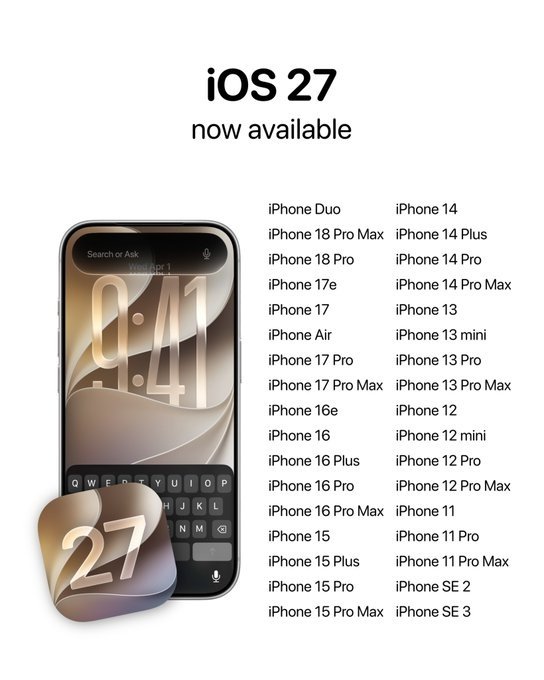
Apple officially rolled out iOS 27 on Monday, September 14, bringing its biggest annual software update to iPhones going back six years, alongside companion releases for iPad, Mac, Apple Watch, Apple TV and Vision Pro. The update marks the twentieth major version of iOS and follows iOS 26, carrying forward the same broad compatibility list Apple has stuck with in recent years rather than cutting off any older devices.
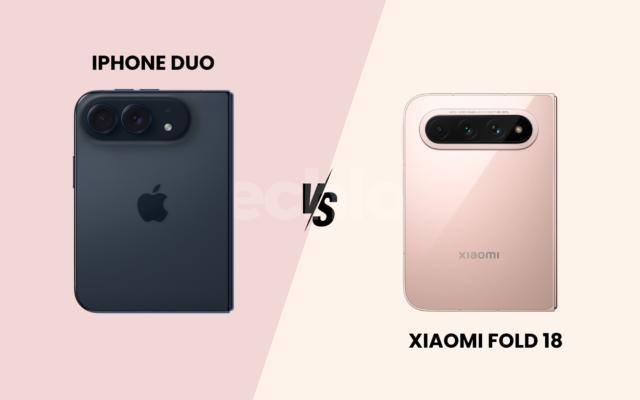
If you’re wondering whether your phone made the cut, the short answer is almost certainly yes. iOS 27 runs on the iPhone 11 and every model released since, along with the second-generation iPhone SE and newer. In practice, that covers pretty much every iPhone sold since 2019: the entire iPhone 11, 12, 13, 14, 15, 16 and 17 lineups, all iPhone SE models from the second generation onward, the iPhone Air, and naturally the brand-new iPhone 18, iPhone 18 Pro, iPhone 18 Pro Max, and Apple’s long-awaited first foldable, the iPhone Duo, all four of which ship with iOS 27 already installed out of the box. No iPhone that was eligible for last year’s update lost support this time around, which has become something of a pattern for Apple, stretching software support windows further than most of the Android world typically manages.
Being able to install iOS 27, though, isn’t the same thing as getting everything Apple actually built into it. The update leans heavily on Apple Intelligence, the company’s on-device and cloud-assisted AI system, and a good chunk of the headline features simply aren’t available on older hardware regardless of whether the software itself installs fine. Devices going back to the iPhone 15 Pro and 15 Pro Max, along with the 16 lineup, get access to most Apple Intelligence features, but only three current models get the full package: the iPhone 17 Pro, iPhone 17 Pro Max, and iPhone Air. Apple has described these three as the only phones capable of running what it calls its most powerful on-device model, which unlocks things like expressive custom Siri voices and more advanced dictation, both of which specifically require the newer A19 Pro chip. The Duo also carries that same chip, so it lands in that top tier of AI capability alongside the three phones it launched next to.
Anyone still using an iPhone 12, 12 mini, 12 Pro or 12 Pro Max will be able to update to iOS 27 just fine, but Apple Intelligence itself won’t show up on those devices at all, not even in a scaled-back form. The same goes for the iPhone 11 lineup and both older SE models. It’s a reminder that Apple’s approach to AI features has increasingly split its software updates into two separate tracks: one covering general bug fixes, security patches and interface tweaks that reach nearly everyone, and a second, much narrower track of AI-driven features reserved for phones with enough on-device processing power to actually run them without leaning entirely on the cloud.
Feature-wise, Apple has framed iOS 27 less as a visual overhaul and more as a refinement pass built around three priorities: expanding Siri and Apple Intelligence, strengthening trust and safety protections, particularly around children’s accounts, and smoothing out the Liquid Glass design language it introduced with iOS 26 last year. That design system is sticking around rather than being replaced, but Apple has added a system-wide transparency slider this time, letting people dial the glass-like translucent effect anywhere from fully see-through to mostly opaque, addressing one of the more common complaints about the original version feeling a little too see-through for some users’ taste.
A few smaller but genuinely useful additions rounded out the release too. Apple added a feature called iPhone Handoff that lets someone switch between two separate iPhones while keeping the same phone number active on whichever device they’re currently using, useful for anyone juggling a work phone and personal phone, or switching devices temporarily without dealing with SIM swaps or forwarding calls manually. On the generative AI side, iOS 27 also introduces the ability to create images using a private cloud-based model rather than relying purely on-device, though Apple has capped how much of that feature people can use for free each day, with heavier usage limits lifted for iCloud+ subscribers, excluding those on the entry-level 50GB storage tier. Separately, newer Apple Intelligence camera features inside the Home app require an iCloud+ plan of at least 2TB, a fairly steep storage tier to gate a feature behind, and one that will likely only appeal to households already deep into Apple’s ecosystem of cameras and smart home accessories.
For most people, the practical takeaway is simple enough: if your iPhone was already running iOS 26, it’ll run iOS 27 without any issue, and the update should already be showing up as available in Settings. Whether it actually feels meaningfully different day to day will depend heavily on which phone you’re holding, since the update’s most talked-about features are, once again, reserved almost entirely for Apple’s newest and most expensive hardware.