|
Getting your Trinity Audio player ready...
|
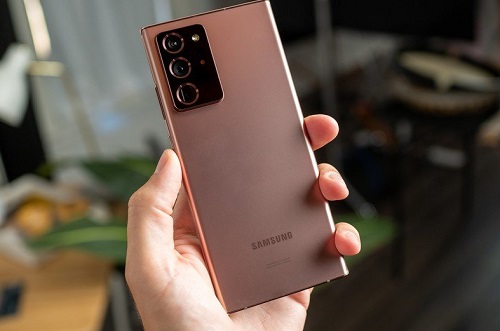
Samsung Electronics has been ordered to pay Swiss watchmaker Swatch Group $11.6 million after a London court found that its Galaxy smartwatch app store hosted digital copies of luxury watch designs without authorization. The ruling, handed down by the High Court in London, closes out a long-running trademark dispute that centered on how much responsibility a tech giant bears for content created by outside developers and sold through its own storefront.
The case traces back to a batch of 26 watch-face applications that appeared on Samsung’s Galaxy App Store, designed to mimic the look of prestigious timepieces from brands including Omega, Tissot, Longines, Breguet and Blancpain, all part of the Swatch Group portfolio. Independent developers built these apps, not Samsung itself, but the court had already established in an earlier judgment that Samsung was liable for trademark infringement because of the role it played in reviewing, approving and displaying them on its platform between 2015 and 2019. This latest ruling, published this week, was specifically about calculating how much Samsung owes for that infringement.
The gap between what Swatch wanted and what Samsung was willing to pay turned out to be enormous. Swatch had initially pursued roughly $170 million in damages, arguing that the presence of near-identical digital replicas of its watches, available for free or at minimal cost, actively cheapened decades of brand-building around exclusivity and craftsmanship. Samsung, on the other hand, argued in court that the appropriate damages figure was closer to a few hundred dollars, essentially treating the infringement as a technicality with no meaningful financial impact. The court settled on a figure far below Swatch’s ask but nowhere close to Samsung’s, landing at $11.6 million.
Presiding judge Marcus Smith didn’t mince words about why the low price of the copied apps mattered so much to his reasoning. He compared Samsung’s marketplace to a physical store displaying counterfeit goods, and found that making these digital watch faces available cheaply or for free actively damaged the reputation the Swatch Group brands had spent years cultivating. That reasoning helped shape roughly $10 million of the final award, which was tied to the mere display of Swatch’s trademarks within Samsung’s marketplace, independent of how many times individual apps were actually downloaded. Investigators in the case also factored in approximately 160,000 downloads of the offending apps across Britain and the European Union when calculating the remaining damages.
Samsung’s defense leaned heavily on the fact that it removed the apps once complaints were raised, framing that response as evidence of good faith and limited harm. The court didn’t see it that way. Judges found that pulling the apps after the fact didn’t erase Samsung’s responsibility for having hosted and approved them in the first place, a distinction that carries real weight for any company running a digital marketplace where third parties can list content. Following the ruling, a Samsung spokesperson said the company was reviewing the judgment and would weigh its options, including a possible appeal, while a Swatch Group representative pushed back on Samsung’s earlier courtroom strategy, characterizing it as an attempt to minimize the seriousness of the infringement.
For an African audience, this case carries more weight than a typical overseas courtroom drama. Samsung remains the continent’s dominant global phone brand by a meaningful margin, accounting for roughly 21 percent of African smartphone shipments in the first quarter of 2025, trailing only the combined strength of Transsion’s Tecno, Infinix and Itel brands, which together controlled about 47 percent of the market. With millions of Galaxy devices and Galaxy Watches in active use across African markets, the ruling is a reminder that the same app store policies and content moderation decisions Samsung makes globally directly shape what ends up on devices sold locally, whether that’s a wearable face designed to look like an Omega or any other piece of third-party content flowing through its platform.
This isn’t Samsung’s first brush with expensive intellectual property litigation, and it likely won’t be its last. The company has a long history of courtroom battles over design and patent rights, including a high-profile dispute with Apple years ago that resulted in a substantial damages award tied to smartphone design elements. More recently, US semiconductor company Netlist secured jury verdicts against Samsung worth hundreds of millions of dollars over patent infringement claims, including a $303 million award in 2023 and a further $118 million judgment in 2024. Set against those figures, $11.6 million is a relatively modest sum for a company of Samsung’s size, but the reputational sting of losing a case tied specifically to counterfeit-style branding is arguably more significant than the dollar amount itself.
The broader implication reaches well beyond Samsung and the luxury watch industry. As more companies operate app stores, marketplaces and platforms where third-party developers can upload content with minimal upfront vetting, this ruling adds to a growing body of case law suggesting that platform operators can’t simply point to their terms of service and wash their hands of what gets published. If a company reviews and approves content before it goes live, and profits from hosting it, courts increasingly appear willing to hold that company accountable when the content turns out to infringe someone else’s trademark or intellectual property, regardless of who originally built it.
For Swatch Group, the win, even at a fraction of what it originally sought, reinforces a message the Swiss watch industry has been sending for years: knockoffs and lookalikes, whether physical or digital, chip away at the exclusivity that luxury brands depend on to justify their pricing and prestige. For Samsung, the case is a costly but survivable lesson in platform accountability, one that arrives at a moment when the company’s smartwatch and wearable business continues to expand into new markets, Africa very much included. Whether Samsung ultimately appeals the decision or simply absorbs the cost, the ruling has already set a precedent that other tech companies running app marketplaces would be wise to study closely.