|
Getting your Trinity Audio player ready...
|
Tim Cook’s Last Day as Apple CEO: How He Led Apple’s Rise to $4 Trillion Before John Ternus Takeover
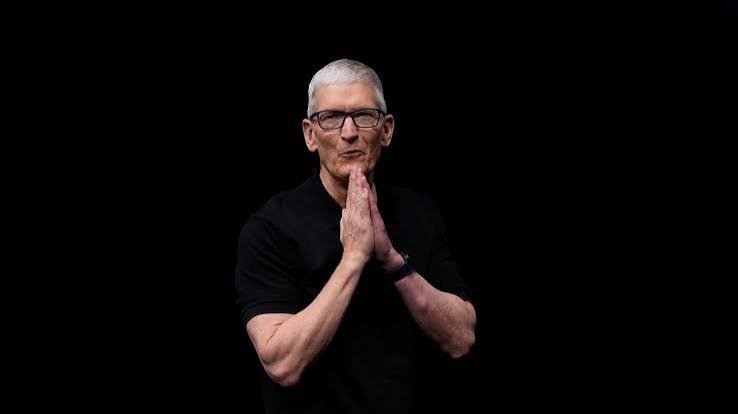
Tim Cook spent his final hours as Apple’s chief executive the way he spent most of his fifteen years in the job, quietly and without much fuss. On Monday, August 31, he sent a farewell memo to Apple employees, thanked them for what he called their shared belief that what they build matters, and then handed the company over to John Ternus, who officially becomes CEO today, September 1. It closes out one of the more understated yet consequential runs in corporate history, one that took Apple from a company worth around $350 billion when Cook took the reins to a business valued at roughly $4 trillion today.
Cook’s path to the top job wasn’t exactly conventional for a tech CEO. Steve Jobs first met him in 1998 and convinced him to leave Compaq to join Apple as senior vice president of worldwide operations, a role that played to Cook’s background in supply chain management rather than product design or engineering. He was promoted to executive vice president of worldwide sales in 2002, made chief operating officer in 2005, and then stepped into the CEO role in August 2011 when Jobs resigned just six weeks before his death. At the time, plenty of people wondered whether anyone could really follow an act like Jobs. Cook answered that question not by trying to be another visionary showman, but by building Apple into a far larger, more disciplined and more profitable machine than it had ever been.
The numbers from his tenure are hard to argue with. Apple’s annual revenue nearly quadrupled during his time as CEO, climbing from $108 billion in 2011 to $416 billion in 2025. iPhone revenue alone jumped from $47.1 billion to $209.6 billion over that same stretch, even as skeptics periodically warned that the smartphone market was maturing and Apple’s best growth years were behind it. Cook also pushed Apple’s Services division, things like the App Store, Apple Music, iCloud and Apple TV+, past $100 billion in annual revenue, giving the company a second major growth engine that didn’t depend on hardware upgrade cycles.
Product-wise, his era produced a steady stream of new categories rather than one singular breakthrough. The Apple Watch and Apple Pay both launched in 2014, pushing the company into wearable health tech and mobile payments. Apple Music arrived the following year, marking the shift away from iTunes downloads toward subscription streaming. AirPods debuted in 2016 and turned into one of the most successful accessory lines in consumer electronics history, and 2019 brought both Apple TV+ and the Apple Card. Perhaps the most consequential technical decision of Cook’s tenure was moving the Mac lineup away from Intel processors to Apple’s own custom silicon, a transition that dramatically improved battery life and performance in ways competitors are still catching up to years later.
None of this means Cook leaves without unfinished business. Apple has been playing catch-up on generative AI compared to Microsoft and Google, and that gap is one of the more obvious challenges Ternus inherits as he steps into the corner office. Ternus isn’t a stranger to the pressure of shipping under scrutiny. He has spent 25 years at Apple, most recently as senior vice president of hardware engineering, where he led development across the iPhone, Mac and AirPods lines and more recently oversaw the launch of the ultra-thin iPhone Air and the lower-cost MacBook Neo. His elevation suggests Apple’s next chapter will lean heavily on product execution and hardware credibility at a moment when AI capability, not camera upgrades or thinner designs, is what investors and competitors are watching most closely.
Cook made his endorsement of Ternus clear in his farewell memo, writing that he takes comfort in handing the company to someone he considers a genuine product builder. He isn’t disappearing from Apple either. He’s moving into the role of executive chairman, where he’s expected to stay involved in select responsibilities, including engaging with policymakers around the world, a task that has become increasingly important given the regulatory pressure Apple faces across the US, Europe and China.
The timing of the handover is not incidental. Apple has already confirmed its next major product event for September 9, which will mark Ternus’s first big keynote as chief executive. Expectations are running high, with rumors pointing to new iPhone models, updated Apple Watch and AirPods hardware, and continued rollout of Apple’s AI-branded Siri overhaul alongside iOS 27. How that event lands will say a lot about whether Wall Street and Apple’s massive user base see this leadership change as a smooth continuation or the start of a more turbulent chapter.
What’s clear is that Cook’s version of leadership won’t be repeated in quite the same way. He wasn’t the industry’s most charismatic communicator, and he rarely tried to compete with Jobs on that front. Instead, he built Apple into arguably the most operationally efficient company in tech history, expanded its retail footprint, deepened its supply chain relationships across Asia, and made services a business nearly as large as entire Fortune 500 companies on their own. Investors who stuck with Apple through his tenure watched their holdings grow enormously, and that track record is likely to define how history remembers him more than any single product launch.
Ternus now takes over a company that is bigger, richer and more scrutinized than the one Cook inherited from Jobs fifteen years ago. Whether he can match Cook’s operational discipline while closing Apple’s AI gap will shape the next phase of the company’s story, one that officially began the moment Cook’s title changed today. Readers can find Apple’s official statement on the leadership transition on Apple’s newsroom, and Techchora will continue following how Ternus’s first moves as CEO shape the company heading into its September product event.