|
Getting your Trinity Audio player ready...
|
Apple CEO John Ternus Faces AI Test as Siri Overhaul and Foldable iPhone Take Center Stage
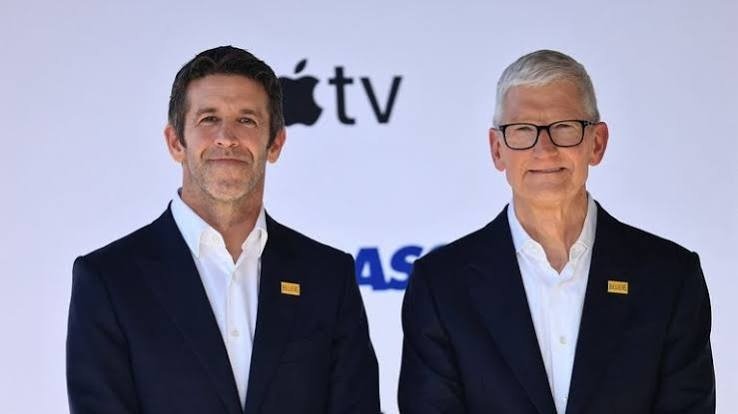
When John Ternus steps onto the stage at Apple’s Cupertino headquarters this week, he will be doing something Tim Cook did nearly every September for over a decade, unveiling the company’s newest iPhone lineup. But this time the moment carries a different kind of weight. It is Ternus’ first major product event as Apple’s chief executive, and Wall Street is watching closely to see whether he can prove the company still has the hardware ambition and AI credibility to justify its position at the top of the tech industry.
Ternus took over as Apple’s CEO on September 1, succeeding Cook, who led the company for 15 years and helped grow its market value from roughly $350 billion to more than $4 trillion. The transition had been in the works for months. Apple’s board approved the succession plan on April 17 and announced it publicly three days later, with Cook staying on through the summer to work alongside Ternus on a smooth handover before officially becoming executive chairman. In his farewell memo to staff, Cook wrote that he was not leaving Apple but stepping away from a role he had loved deeply, adding that he felt enormous comfort handing the company to someone he described as brilliant, wonderful, and capable. Ternus, a mechanical engineer who joined Apple in 2001 and rose through the hardware engineering ranks before being promoted to senior vice president in 2021, becomes just the eighth chief executive in the company’s history.
This week’s event is widely expected to center on Apple’s first foldable iPhone, a device analysts say could quickly become one of the more significant hardware launches in years, despite an anticipated price above $2,500. Nabila Popal, senior research director at IDC, told Reuters that even at that price point, the Apple foldable is likely to sell out quickly, crediting the company’s reputation for creating a sense of exclusivity and scarcity around new product categories. Popal projected the device could generate more than $45 billion in revenue for Apple by the end of next year, a striking figure given that foldable phones as a category still represent only a single-digit share of the overall smartphone market.
That kind of projection reflects something specific about how Apple tends to enter established product categories. Samsung, Google, and Huawei have all sold folding phones since 2019, giving Apple years of real-world data on what has worked and what has repeatedly failed in the category, particularly around hinge durability and screen crease visibility. Anshel Sag, an analyst at Moor Insights & Strategy who has tested numerous folding devices, said Apple’s advantage comes precisely from that delayed entry, since the company has had the chance to observe which engineering approaches held up over years of daily use and which ones did not. Analysts expect Apple’s foldable to focus heavily on solving those specific pain points, aiming for a hinge that feels sturdy after thousands of open-and-close cycles and a screen that minimizes the visible crease competitors have struggled to eliminate.
Beyond the folding phone itself, Apple is expected to update its premium iPhone Pro and Pro Max lineup at this event while holding off on refreshing the iPhone Air and its base and budget models until spring. That staggered release strategy appears deliberate, designed to keep attention concentrated on the foldable device rather than splitting coverage across multiple simultaneous launches. It is a fairly clear signal that Apple views the foldable as the centerpiece of its 2026 product year, not just another line extension.
The hardware unveiling, however, is only half of what Ternus needs to deliver this week. The other half, and arguably the more consequential one for Apple’s long-term competitive position, is proving that the company’s AI strategy is finally catching up to rivals like Google and OpenAI. Apple has already announced a significant overhaul of Siri, notably incorporating Google’s AI technology behind the scenes, a move that would have been difficult to imagine a few years ago given the historical rivalry between the two companies. That partnership may end up being one of Ternus’ first tangible wins as CEO, arriving after years of delays and public frustration over Siri’s comparatively limited capabilities next to newer AI assistants. Analysts told Reuters that a successful Siri revamp by the end of this year could put Apple on more even footing with Google’s Gemini assistant, a benchmark that has become something of an informal industry standard for conversational AI capability.
The stakes attached to that AI positioning extend beyond a single product cycle. Investors have largely tolerated Apple’s slower entry into generative AI so far, a patience that has been sustained mainly by the company’s enormous installed base of more than a billion active devices and a historically loyal customer base that tends to stick with Apple’s ecosystem regardless of feature gaps elsewhere. But that patience is not unconditional. Ternus now carries the pressure of convincing consumers, and by extension investors, that Apple’s devices remain the best way to actually use AI in daily life, not just a well-designed hardware platform that happens to run someone else’s AI models. How he navigates that balance, hardware polish paired with credible AI capability, could shape whether he is seen as extending Cook’s momentum into a new era or spending his early tenure playing catch-up against competitors who moved faster on AI integration.
For now, all eyes are on Cupertino this week. If the foldable iPhone delivers on its engineering promise and Siri’s overhaul shows real, usable improvement rather than incremental polish, Ternus will have answered the two biggest questions hanging over his young tenure in a single event. If either falls short, the pressure on Apple’s new leadership to prove it can still set the pace in consumer technology will only intensify heading into 2027.