|
Getting your Trinity Audio player ready...
|
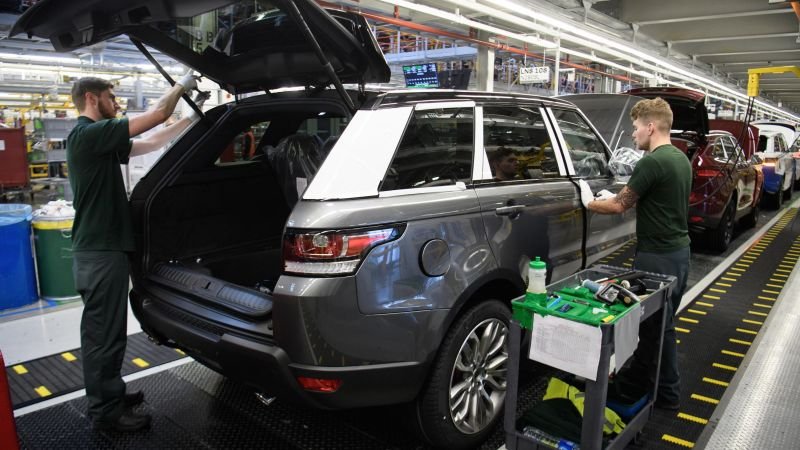
Jaguar Land Rover is preparing for one of the most significant restructuring efforts in its recent history, with the British luxury carmaker set to eliminate as many as 4,000 jobs over the next two years as part of a plan to save roughly £1.7 billion, or about $2.3 billion. The company, owned by India’s Tata Motors, confirmed it is launching a voluntary redundancy program aimed at employees in hiring and management positions, though it stopped short of naming an exact number of roles being cut when it made the announcement Monday.
The scale of the cuts, which would represent close to 10 percent of JLR’s workforce, reflects just how much pressure has piled up on the company over the past year. Staff had already been warned late the previous Friday to expect a formal announcement, and reporting from The Times had signaled the scope of the plan days before JLR made it official. In a statement, the company said it needed to adapt to changing global market conditions, targeting savings of roughly £1.7 billion over the next two years while also working to lower its break-even point down to 300,000 vehicles produced annually. A company spokesperson said achieving that would require further simplifying the organization, improving efficiency, and building greater resilience into how the business operates.
Several distinct pressures have converged to force this decision, and none of them are minor on their own. Chinese automakers have been aggressively expanding their presence in markets JLR has traditionally relied on, offering competitive vehicles at price points that put real pressure on premium British brands. U.S. President Donald Trump’s tariffs have added another layer of cost for a company that counts the United States among its largest markets, squeezing margins at a time when the company can least afford it. And then there’s the cyberattack from September 2025, which halted JLR’s global operations for several weeks and reportedly cost the manufacturer tens of millions of pounds in lost revenue per day while systems were down. That combination, competitive pressure, tariff exposure, and a costly cybersecurity incident, has left the company dealing with financial strain from multiple directions simultaneously rather than facing a single, isolated problem it could solve in isolation.
The financial numbers underline how serious the situation has become. JLR’s revenue fell 9.6 percent year-on-year to £6 billion in the three months ending June 30, a meaningful decline for a company of its size. Production disruptions haven’t helped either. The company temporarily suspended production of its Range Rover and Range Rover Sport models at its Solihull plant back in March following a fire at a component manufacturer’s facility in Norway, and it also had to pause production of several diesel and gasoline models, including the F-Pace, adding operational chaos on top of the demand-side challenges the company was already navigating.
There’s an interesting tension sitting underneath all of this that speaks to the broader challenges facing legacy luxury automakers right now. JLR recently opened orders for its first electric Range Rover, priced at £154,070, positioning it among the most expensive electric SUVs on the market and nearly £50,000 above the comparable combustion-engine version. That pricing puts the vehicle well out of reach of the budget-conscious buyers increasingly drawn to lower-cost Chinese electric SUVs gaining traction in markets like the UK. In other words, JLR is trying to fund an expensive transition to electrification at the premium end of the market while simultaneously getting squeezed by cheaper competition at the volume end, a genuinely difficult position for any legacy manufacturer to navigate without making painful tradeoffs somewhere in the business.
JLR isn’t alone in facing this kind of reckoning, and that context matters for understanding why this announcement is landing the way it is. Volkswagen’s supervisory board has thrown its support behind a restructuring plan proposing 50,000 additional job cuts across its operations, a staggering number that dwarfs JLR’s reductions but points to the same underlying dynamics playing out across Europe’s auto sector. British luxury car firms Aston Martin and Bentley have also announced their own cost-saving measures in recent months, suggesting this isn’t a company-specific stumble so much as an industry-wide reckoning with rising costs, shifting demand, and intensifying competition from abroad.
The political dimension of this story is significant too, particularly for the UK. JLR’s cost-cutting drive is being watched closely as an early test for how the current government handles industrial pain in a sector that’s long been a source of national pride and substantial employment. U.K. Business and Trade Minister Jonathan Reynolds ruled out a bailout for the company over the weekend, a decision that puts pressure squarely on JLR’s own management to make the restructuring work without government financial support. Reynolds is expected to meet with JLR executives to discuss the redundancy program directly, a conversation that will likely shape how much political scrutiny the company faces as the cuts move forward and how affected workers and communities are ultimately treated.
Markets reacted to the announcement with relatively muted concern. Shares of Tata Motors traded 0.7 percent lower on Monday following the news, a modest dip that suggests investors had largely priced in some version of this restructuring given how much reporting had already circulated in the days beforehand. The Mumbai-listed stock remains up around 9.5 percent year-to-date, indicating that despite the near-term pain of layoffs and declining sales, investors haven’t lost overall confidence in Tata Motors’ broader trajectory.
What happens next will likely determine how this restructuring is ultimately judged. Voluntary redundancy programs give companies some flexibility in managing workforce reductions with less immediate disruption than involuntary layoffs, but they also carry risk if too many experienced employees choose to leave, or too few, leaving the company short of its savings targets. JLR will need to balance hitting its £1.7 billion savings goal against maintaining the engineering and operational talent required to execute its electrification strategy at the same time, all while continuing to compete against both premium European rivals and increasingly capable Chinese manufacturers. For readers tracking how global economic pressures, tariffs, and shifting consumer demand continue to reshape major industries, Business Tech will keep following how this restructuring unfolds in the months ahead.