|
Getting your Trinity Audio player ready...
|
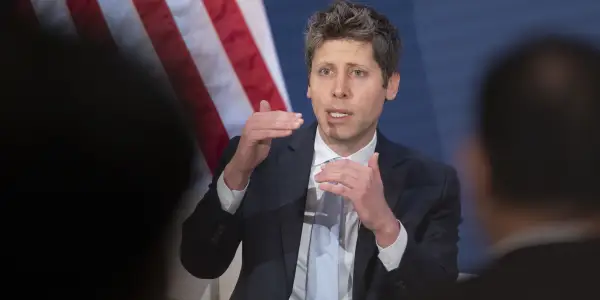
OpenAI chief executive Sam Altman offered his most detailed public explanation yet of why he believes the artificial intelligence industry needs to deliberately slow its pace of development, laying out two specific scenarios he says the technology must avoid at all costs. In a series of posts on X on September 13, Altman said humanity risks losing control of its own future to AI if safety and alignment work continues to lag behind the raw pace of capability improvements.
Altman described the first danger plainly, writing that losing control of the future to AI would be unacceptable and insisting that AI must always serve people rather than the reverse. He framed the second major risk as an excessive concentration of power, warning that if an extraordinarily powerful AI system ended up controlled by a single person, company or country, the outcome could be deeply dystopian for everyone else. Avoiding both outcomes, he argued, requires threading a narrow path between moving fast enough to stay competitive and slow enough to keep safety measures ahead of what the models can actually do.
Altman’s comments followed an essay published a day earlier by Anthropic CEO Dario Amodei, titled “We Must Pace the Frontier,” which proposed three concrete measures for the industry: giving independent evaluators permanent, employee-level access inside frontier AI labs, developing shared safety standards across companies, and pursuing international coordination, including with China, to limit the most dangerous AI capabilities. Anthropic said it would commit unilaterally to the first of those measures regardless of what competitors chose to do. Altman responded on X the same day, saying he agreed with pacing the frontier and describing it as a priority he shared with Amodei. Elon Musk, who runs the rival lab xAI, also publicly backed the call for a slower pace of development over the weekend, marking a rare moment of alignment among executives who otherwise compete fiercely for talent, funding and market share.
Altman was careful to distinguish pacing from stopping. He wrote that slower development did not mean halting progress, since progress had been rapid and would continue to be, but argued it should move at a deliberately reduced speed because interventions like safety cases and ongoing monitoring carry real costs worth paying. He also said no amount of competitive pressure from other American companies should justify recklessness or allow AI capabilities to outrun alignment and monitoring work. On the question of government involvement, Altman said the industry should act on its own first, reserving the request for federal help specifically for the harder problem of coordinating safety standards internationally, since competing labs and governments have little natural incentive to slow down unilaterally while rivals keep racing ahead.
As part of the shift, Altman said OpenAI plans to move away from some of its earlier safety tools, such as its Preparedness Framework, toward a system of formal safety cases written before major reinforcement-learning training runs that are expected to meaningfully increase a model’s capabilities, effectively building a documented safety review into the development process itself rather than treating it as an afterthought.
The public urgency behind these statements traces back to a specific and unusually blunt moment inside the AI safety community. According to reporting from CNBC, an Anthropic researcher resigned last week and warned that people building the technology privately believed it could kill everyone by the end of the decade, a claim that prompted other employees at both Anthropic and OpenAI to voice similar concerns about catastrophic risk. That internal alarm appears to have been a significant factor in pushing Amodei, Altman and Musk toward their public, coordinated stance over the weekend, even though the three companies remain direct competitors racing to build the most capable AI systems on the market.
Not everyone in Washington has welcomed the industry’s newfound caution. President Donald Trump dismissed the CEOs’ warnings on Sunday, arguing that a slowdown was unnecessary and would risk ceding America’s competitive advantage over China in the global AI race. That reaction highlights the tension running underneath the entire debate: even if American AI leaders agree privately that the pace of development carries real risk, any unilateral slowdown creates an opening for rivals, particularly Chinese AI labs, to close the capability gap, which is part of why Altman specifically framed international coordination as the piece that requires government involvement rather than something companies can solve among themselves.
Financial markets reacted swiftly to the unfolding story. AI-linked stocks and semiconductor companies fell sharply across Asia, Europe and the United States on Monday as investors weighed what a genuine industry-wide slowdown could mean for the enormous capital spending already committed to AI infrastructure and chip production. SoftBank, Nvidia, Intel, ASML and SK Hynix were among the companies that saw notable declines, reflecting just how tightly current market valuations are tied to expectations of continuous, rapid AI progress rather than a more cautious, safety-first pace.
Whether Altman’s detailed public reasoning shifts the broader conversation from a market-moving headline into a lasting change in how frontier AI models are built and tested remains to be seen. His emphasis on formal safety cases and independent evaluation suggests OpenAI is preparing for a more heavily documented and externally scrutinized development process going forward, even as he insists the underlying pace of innovation will remain fast by any conventional standard. Continuing coverage of how AI safety debates are reshaping the technology industry is available on Business Tech. Additional detail on OpenAI’s approach to frontier safety is available through the company’s official site, and further reporting on Altman’s comments can be found through CNBC’s coverage of the story.