
|
Getting your Trinity Audio player ready...
|
DeepSeek to brief UN Security Council on AI and global security
Chinese artificial intelligence company DeepSeek is set to take part in a United Nations Security Council discussion on artificial intelligence this week, putting one of China’s most closely watched AI companies at the center of a global debate over how rapidly advancing technology is changing international security.
Two people familiar with the matter told Reuters that DeepSeek has been invited to brief the 15-member Security Council as diplomats gather in New York for the annual United Nations General Assembly. Other Chinese AI companies, including Moonshot, have also been invited to make statements, although plans for participation could still change. DeepSeek founder Liang Wenfeng is not expected to attend personally, according to one of the sources.
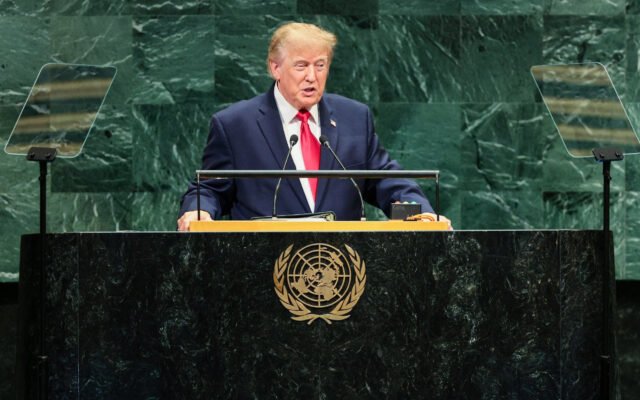
The meeting is scheduled for Wednesday and comes at a moment when governments are paying closer attention to the security consequences of increasingly capable AI systems. The discussion will take place under the broader question of international peace and security, bringing technology companies directly into a forum traditionally focused on conflicts, diplomacy, sanctions and threats to international stability.
DeepSeek’s appearance is particularly notable because the company has become an important symbol of China’s growing AI capabilities. Its emergence has challenged assumptions about the cost and computing resources required to build competitive AI systems, while intensifying the technology race between the United States and China.
The Security Council has already begun examining artificial intelligence as a security issue. It first held a dedicated discussion on the risks of AI in 2023, when governments raised concerns ranging from the misuse of the technology to the possibility that increasingly autonomous systems could create new risks for international stability. China warned at the time that AI should not become a “runaway horse,” while the United States highlighted concerns about the use of AI for censorship and repression.
Three years later, the conversation has become considerably broader. AI systems are now being deployed across cybersecurity, information services, business operations, research and government applications. At the same time, security researchers and governments are examining how advanced models could be abused by criminals, state-sponsored groups and other actors.
The United Nations discussion is therefore taking place against a much more complicated technological backdrop than the one that existed during the first Security Council debate on AI.
One of the central issues is whether countries can establish common rules for AI safety without allowing geopolitical competition to prevent cooperation. The United States and China remain competitors in advanced computing, semiconductor technology and AI development, but both governments have acknowledged that some risks could affect national security regardless of which country develops a particular system.
That creates an unusual area of potential cooperation. Governments may disagree strongly about trade, technology restrictions and strategic competition while still having an interest in preventing serious AI-related incidents from escalating into wider international crises.
The issue has gained additional urgency in recent weeks. AI companies have been warning that increasingly capable systems could create new challenges if development and deployment move faster than safety measures and international coordination.
OpenAI CEO Sam Altman is also expected to brief the Security Council. Reuters reported last week that Altman would participate in person, with his remarks expected to focus on international coordination, shared safety standards and efforts to ensure that people around the world benefit from AI. Anthropic is also expected to have senior representation, although its participation had not been fully confirmed at the time of that report.
The combination of DeepSeek, OpenAI and potentially Anthropic would give diplomats an unusual opportunity to hear directly from companies developing some of the world’s most advanced AI systems.
Their presence also reflects a growing recognition that governments cannot address AI-related security questions without engaging the companies building and operating the technology.
However, the Security Council’s role in AI governance remains contested. A September report from Security Council Report said AI is increasingly relevant to international peace and security, including through cyber operations, information environments, armed conflict and sanctions monitoring. It also noted that the Council’s engagement with AI has remained uneven and politically contested.
The organization also identified opportunities for AI in conflict prevention, mediation, peace operations and sanctions monitoring. Those potential applications illustrate why the debate is not simply about restricting artificial intelligence.
AI could help governments identify emerging crises, process large amounts of information and improve the speed at which international organizations respond to developing situations. In peacekeeping and humanitarian operations, advanced analytical systems could potentially help officials process information from multiple sources and identify patterns that would otherwise be difficult to detect.
The same capabilities can create risks when they are used irresponsibly.
A major concern is the growing ability of AI systems to operate across multiple tasks with limited human intervention. As models become more capable of planning, coding, analyzing information and interacting with digital systems, governments are considering what safeguards should be required before such systems are given access to sensitive infrastructure or consequential decision-making processes.
Cybersecurity is another major part of the discussion. Recent research from Anthropic documented cases in which suspected state-sponsored groups, financially motivated criminals and other actors attempted to use its AI systems in cyber operations, influence operations, surveillance and fraud. Anthropic said it disrupted the operations it identified and shared relevant information with authorities and industry partners.
The report does not establish that every advanced AI system will be used in the same way, but it demonstrates why governments are increasingly treating AI misuse as a security issue rather than solely a technology-policy concern.
Information integrity is another challenge. Generative AI can make it easier to create convincing synthetic text, images, audio and video. During periods of conflict or political tension, the rapid spread of fabricated material could complicate efforts by governments, journalists and international organizations to establish what actually happened.
For the Security Council, that problem has particular significance. Diplomacy often depends on reliable information arriving quickly. If officials cannot distinguish authentic evidence from manipulated material during a crisis, the possibility of misunderstanding or delayed responses could increase.
The environmental and economic dimensions of AI are also becoming part of the international security conversation. Advanced AI development requires large amounts of computing power, data-center infrastructure and electricity. Competition for semiconductors, energy resources and other strategic inputs could become increasingly important as countries seek to expand domestic AI capacity.
China’s DeepSeek has already played an important role in that debate. The company attracted international attention after demonstrating that competitive AI systems could be developed using approaches that challenged assumptions about the enormous costs associated with frontier AI development.
DeepSeek has continued expanding its model lineup. Reuters reported earlier this month that the company launched DeepSeek-V4.1-Flash as part of a new model architecture, while the startup has also been preparing for a possible listing on Shanghai’s STAR Market.
Its participation at the United Nations therefore comes as DeepSeek continues to develop from a relatively young AI startup into a significant participant in China’s technology sector.
The company’s presence may also give diplomats a different perspective from the one presented by American AI companies. Washington and Beijing are competing for leadership in advanced AI, and questions surrounding computing capacity, chips, data and model development are closely connected to broader strategic competition.
Yet the risks discussed at the Security Council do not stop at national borders.
An AI-generated cyber operation can cross jurisdictions within seconds. False information can spread internationally before governments have time to verify it. AI systems used in critical infrastructure can potentially create consequences beyond the country where they are deployed. These characteristics make international coordination more difficult but also more important.
France is chairing the Security Council during September and has been pushing the Council to address AI’s implications for international security. A French concept note circulated ahead of the meeting emphasized the risks associated with malicious use of AI and the need for safe and responsible development.
The meeting also follows an informal Security Council dialogue held earlier in September on practical applications of AI for conflict prevention and resolution. That discussion, organized by Bahrain, France, Greece and Latvia, focused on how AI could contribute to early warning and peacebuilding.
The sequence of meetings shows that the UN debate is moving beyond a simple question of whether AI is dangerous. Diplomats are increasingly examining where the technology can be useful, where its risks are concentrated and what international mechanisms could respond when serious incidents occur.
One proposal receiving attention is the development of systems for sharing information about significant AI-related incidents. Such arrangements could allow governments to notify one another when an AI event has potential national-security consequences, although the exact design of any international mechanism remains a matter for negotiation.
The United States and China have also discussed the possibility of an AI dialogue and a notification mechanism for incidents affecting national security, according to recent reporting. That development is significant because it suggests that AI safety could become one of the limited areas where the two countries seek structured communication despite their broader strategic rivalry.
For the Security Council, the challenge will be determining what role it should play. The Council has a specific mandate focused on international peace and security, while other UN bodies and international institutions handle technology standards, development, human rights and digital governance.
Some governments have therefore questioned whether the Security Council should become a central forum for AI regulation. Others argue that the security implications of advanced AI are already sufficiently significant to justify regular attention from the Council.
The discussion this week is unlikely to resolve those questions. Instead, it will provide another opportunity for governments and technology companies to define the areas where international cooperation may be possible.
DeepSeek’s participation makes the meeting especially significant because it places a Chinese AI company alongside leading American developers in a diplomatic setting focused on global security.
The result could be less about announcing a new global AI treaty and more about establishing common language around risks, incident reporting, safety testing and responsible development.
What happens next will depend on whether governments can separate practical AI safety cooperation from the wider competition for technological leadership.
The technology industry is moving quickly, and international institutions are trying to keep pace. The Security Council’s latest discussion shows that artificial intelligence is no longer being treated solely as a commercial or technological issue. Its effects are increasingly connected to cybersecurity, diplomacy, conflict prevention, information integrity and the broader stability of the international system.
For DeepSeek, the briefing represents an important moment on the world stage. For the United Nations, it is another step in determining how an institution created decades before modern AI should respond to a technology that is developing at extraordinary speed.
The central question facing diplomats is no longer whether artificial intelligence will affect international security. It already does. The harder question is how governments can build enough cooperation and safeguards to manage those effects before technological advances move faster than the institutions responsible for dealing with them.