|
Getting your Trinity Audio player ready...
|
A United Nations fact-finding mission has concluded there are reasonable grounds to believe US forces were responsible for a missile strike on an Iranian primary school that killed more than 150 people, including around 120 schoolchildren, according to a new report set to be presented to the UN Human Rights Council in Geneva. The findings mark the most authoritative international assessment yet of one of the deadliest and most disputed incidents of the US-Israeli war against Iran, an attack that has gone without a formal US accounting for more than seven months.
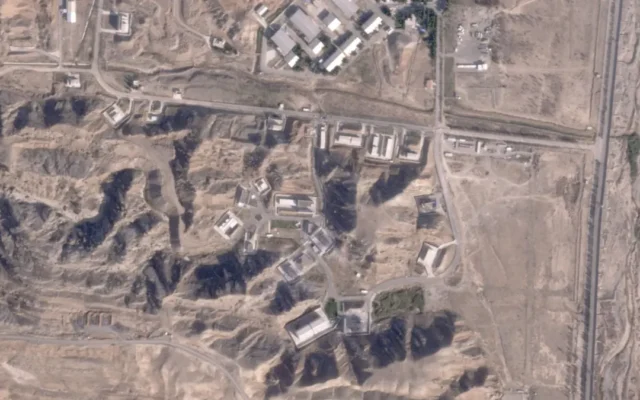
The Independent International Fact-Finding Mission on Iran examined the February 28 strike on Shajareh Tayyebeh Primary School in the southern city of Minab, concluding that the attack constituted an indiscriminate strike causing civilian deaths and damage to civilian infrastructure, amounting to a war crime under international law. According to the report, US forces relied on intelligence suggesting a senior Iranian military commander was present at the site but failed to adequately verify that information before launching the strike. Investigators described the failure to update targeting intelligence as going well beyond mere negligence, concluding that US forces directed strikes at the school building while aware of a substantial risk of hitting a civilian object and acted recklessly regarding that possibility.
The mission reached a similar conclusion over a separate strike on a sports centre in Lamerd, finding that the attack damaged nearby residential buildings and a school while killing and injuring 22 civilians, and that the strike was indiscriminate and therefore constituted a war crime as well. US Central Command has previously stated that US forces did not conduct any strikes into the city of Lamerd on the day in question, a denial that stands in direct contrast to the UN mission’s own findings on that specific incident.
The Minab strike itself has carried disputed casualty figures from the beginning, reflecting the broader difficulty of establishing a clear public record around an incident the US government has never formally acknowledged responsibility for. Iranian officials initially reported 168 children killed, mostly girls, in what education ministry officials described as two missile strikes in quick succession at the all-girls elementary school. A subsequent Amnesty International investigation in March put the death toll at least 170, most of them children, and concluded that a US-manufactured Tomahawk missile was likely used in the attack. The UN mission’s own figure of roughly 150 deaths, including approximately 120 schoolchildren, represents the most recent and most formally documented casualty assessment, though the mission itself noted it could not independently verify every figure tied to the broader conflict.
What makes this case particularly notable is the gap between how quickly evidence pointing to US responsibility emerged and how little the US government has publicly acknowledged in the months since. According to reporting from the Associated Press, the US military possessed evidence almost immediately that the school site had been struck, according to a US official with direct knowledge of the situation who spoke on condition of anonymity given the ongoing nature of the investigation. Reuters had separately reported back in early March that US military investigators believed it was likely American forces were responsible, even before the Pentagon had reached a final conclusion or completed its own probe, a probe that was subsequently elevated within the department but has yet to produce a public accounting more than seven months after the strike occurred. President Trump has said publicly that it may never be known who was ultimately at fault for the strike.
The same UN report reached findings on the other side of the conflict as well, examining the Iranian government’s crackdown on nationwide anti-government protests that began in late December. Investigators concluded that Iranian authorities carried out a widespread and systematic attack against civilians during that crackdown, involving unlawful killings, torture, arbitrary detention, enforced disappearances, and severe restrictions on freedom of expression, findings the mission characterized as amounting to crimes against humanity. Rights groups have described that crackdown as the largest since the Islamic Republic was established in 1979, though the fact-finding mission said it could not independently verify the full scope of deaths and injuries involved. Iranian authorities have rejected the allegations, blaming what they describe as terrorists and rioters backed by foreign adversaries, including the US and Israel.
Neither the Iranian nor the US permanent missions in Geneva immediately responded to requests for comment on the new report’s findings. US officials have consistently maintained that military operations throughout the conflict were conducted in accordance with the law of armed conflict, while Iran has continued rejecting allegations of systematic rights violations tied to its own protest crackdown, a pattern of mutual denial that has left the UN mission’s findings as one of the few independent assessments either government has had to formally respond to on the record.
The broader significance of this report extends beyond a single school strike, however devastating. Humanitarian organizations including the International Federation for Human Rights called for an independent investigation back in the immediate aftermath of the Minab attack, arguing that any evidence of war crimes, whether involving indiscriminate attacks, deliberate targeting of civilians, or strikes on schools and medical facilities, must be promptly and transparently investigated, with accountability extending to those responsible regardless of rank or official position. Whether this new UN finding translates into any formal accountability process, either through US domestic military justice channels or international mechanisms, remains genuinely uncertain given how many prior instances of documented war crimes findings against major military powers have failed to produce meaningful prosecutorial consequences. For the families of the roughly 120 children killed at Shajareh Tayyebeh Primary School, the UN mission’s conclusion offers the clearest official confirmation yet of what happened that morning in February, even as the question of what, if any, accountability follows remains entirely unresolved.
For more coverage of international conflict and human rights investigations, visit Business Tech.