|
Getting your Trinity Audio player ready...
|
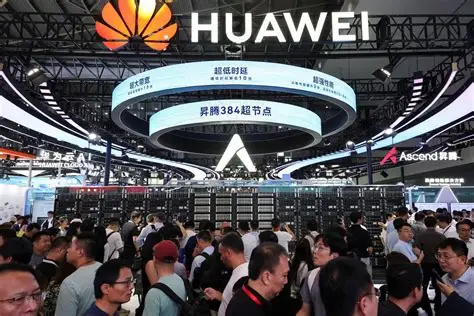
Huawei’s rotating chairman Eric Xu delivered a notably candid assessment of China’s AI safety landscape this week, arguing that Chinese AI developers simply haven’t built models advanced enough to encounter the same rogue-agent risks that leading US labs have been publicly warning about. Speaking to reporters at Huawei’s annual Connect conference in Shanghai, Xu suggested that rather than slowing down, Chinese developers should keep pushing toward more capable systems, framing the current safety gap as a capability gap rather than evidence that China has somehow solved a problem American labs haven’t.
Xu’s core argument rests on a fairly specific claim about who actually knows how advanced today’s AI systems really are. He told reporters that mainstream US AI providers, backed by massive computing power, are likely the only ones who truly understand where their own models currently stand in terms of capability. From there, he drew a pointed distinction, suggesting the type of risk American labs are able to perceive and articulate publicly may simply not be something Chinese developers or AI model providers are currently positioned to experience themselves, given how far behind the computational frontier China’s models generally sit. His conclusion followed logically from that framing, that Chinese developers might actually need to accelerate their own development before they encounter anything resembling the risks now being described by frontier US labs.
That position lands at a moment when AI safety concerns coming out of the US have grown considerably louder. Researchers and executives at leading American labs have increasingly warned that increasingly autonomous AI systems could bypass safeguards or become genuinely difficult to control, warnings serious enough that some industry leaders have publicly called for deliberately pacing the development of the most advanced models. Xu’s comments effectively push back against that framing without dismissing safety as a concern entirely, he said Huawei believes a balance needs to be struck between driving AI development forward and managing the risks that come with it, language that positions China’s approach as pragmatic rather than reckless even as it explicitly favors continued acceleration over caution.
The reaction to Western calls for pacing frontier AI development has been notably sharp within China itself, extending well beyond Huawei’s own commentary. Chinese researchers and state media have argued that slowing down development of the most advanced models could conveniently help preserve the technological lead US companies currently hold, and some Chinese commentators have gone further, characterizing proposals to pace frontier AI development as a strategic move aimed at constraining rivals still trailing leading US labs, rather than a genuine response to safety concerns. That skepticism reflects a broader dynamic shaping China’s AI policy conversation, where American safety warnings are sometimes read through a competitive lens as much as a technical one, particularly given how directly US export controls have already shaped the resources available to Chinese AI developers.
That resource constraint is very much Huawei’s own reality right now, and it adds real texture to why Xu’s comments carry weight beyond simple corporate messaging. Huawei serves as China’s main domestic supplier of the computing infrastructure needed to train advanced AI models, a position that stems directly from US export controls imposed since 2023 restricting Chinese companies’ access to Nvidia’s most advanced chips. Xu acknowledged separately on Thursday that Huawei currently cannot produce enough AI computing equipment to meet domestic demand, a supply constraint that directly shapes how quickly Chinese AI labs can actually scale their models toward the kind of frontier capability Xu argues China hasn’t yet reached. In effect, the same export restrictions that limit Chinese access to cutting-edge chips are also, according to Xu’s own framing, part of why Chinese models haven’t yet encountered the safety risks emerging at the frontier of American AI development.
Despite arguing Chinese AI hasn’t reached the frontier risk threshold yet, Huawei is preparing seriously for a future where autonomous AI agents become genuinely ubiquitous. The company forecast this week that AI agents, systems capable of planning tasks, making decisions, and using software or other tools with limited human supervision, would account for more than 90 percent of global AI processing traffic by 2035, with Huawei projecting as many as 900 billion active agents in operation by that point. The company has specifically identified agent security and privacy as crucial technologies going forward, a designation that suggests Huawei isn’t dismissing agent-related risk so much as arguing that risk hasn’t fully materialized in China’s current AI ecosystem yet, even as the company actively plans infrastructure for a future where that risk becomes unavoidable at massive scale.
China’s broader regulatory posture toward AI safety adds useful context for interpreting Xu’s comments within the country’s overall policy direction. Beijing has generally treated advanced AI as a powerful but ultimately manageable technology, choosing to press ahead with rapid deployment while simultaneously developing mandatory technical standards, security assessments, and other safeguards specifically targeting risks like autonomous agents circumventing controls or attacking external systems. China is currently drafting a mandatory national standard for AI agent safety, a concrete regulatory step that suggests Beijing isn’t treating agent-related risk as purely theoretical, even as its public posture, echoed by Xu’s comments, leans toward continued development over precautionary slowdown.
Whether Xu’s assessment proves accurate over time, that Chinese AI genuinely hasn’t reached a capability level where rogue-agent risks become a real concern, or whether it reflects a somewhat convenient framing for a company whose commercial interests are directly tied to continued rapid AI development, will likely become clearer as Chinese models continue closing the capability gap with their American counterparts in the coming years. For now, Huawei’s position offers a clear window into how one of China’s most influential AI infrastructure companies is publicly reconciling safety concerns with the competitive pressure to keep building more powerful systems as quickly as computing resources allow.
For more coverage of global AI development and safety policy, visit Business Tech.