|
Getting your Trinity Audio player ready...
|
Two of high-end audio’s most respected names have quietly stopped building disc players this year, not because customers stopped wanting them, but because the parts needed to build them simply stopped existing. PS Audio and Naim have each discontinued a flagship CD or SACD product after the optical drive mechanisms their designs depended on vanished from the supply chain, a casualty of an industry-wide collapse in optical drive manufacturing that traces back to the PC world abandoning disc drives years ago.
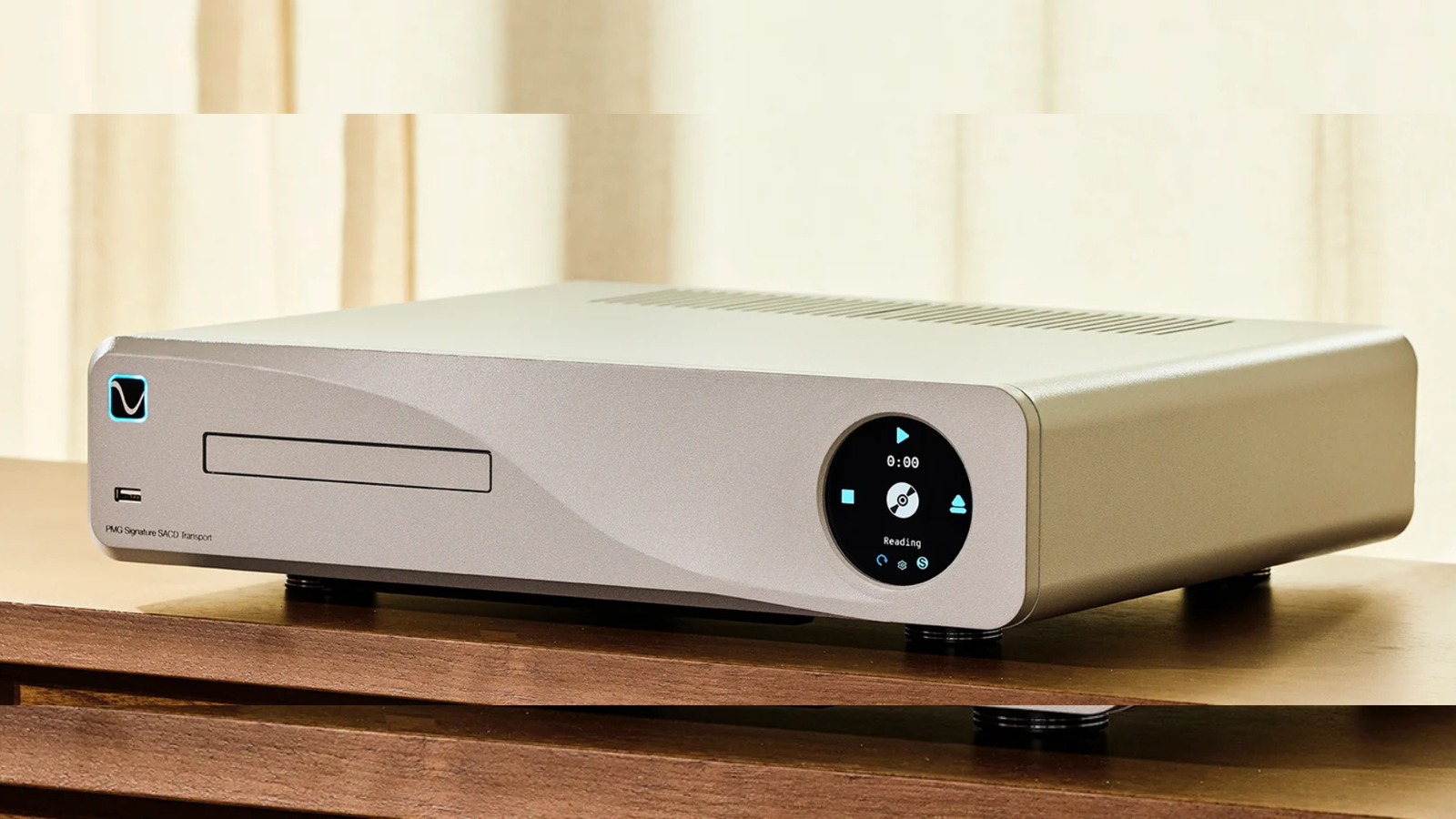
PS Audio customers received an email in late January informing them that the company’s PMG Super Audio CD Transport was ending production. The root cause dates back further than that announcement. In June 2024, PS Audio learned that D&M Holdings, the parent company of Denon and Marantz and one of the last major manufacturers still producing SACD and CD drive mechanisms for outside brands, was ending that business entirely. PS Audio placed one final large order to secure the drives it needed, but by the time that order went through, component costs had roughly doubled due to the sudden spike in demand from other companies scrambling for the same shrinking supply. Even that final purchase eventually ran out. PS Audio CEO Paul McGowan explained the situation directly on the company’s own forum, stating plainly that drives appropriate for the PMG are no longer available, and adding that building a replacement mechanism in-house was never realistically on the table, since the company’s expertise lies in electronics and software rather than precision optomechanics.
Naim’s experience followed a similar arc but played out over a longer timeline. The company confirmed on its official community forum on March 31 that the optical drive inside its Uniti Star streaming amplifier had been discontinued and could no longer be sourced, prompting Naim to halt production and set aside its remaining mechanisms specifically for warranty and repair needs rather than new units. Naim did attempt to find an alternative supplier before giving up entirely, but the swap proved far more complicated than simply substituting one part for another. A CD mechanism ships as a complete assembly with its own control interface, timing characteristics and mounting geometry, meaning a replacement drive typically requires new firmware, redesigned electronics and mechanical rework on a product that had already been fully engineered years earlier. While Naim was still evaluating whether that overhaul was worth undertaking, the alternative drive it had been considering also went out of production, closing off the option entirely. The company eventually released the Uniti Star Lite in August, essentially the same amplifier stripped of its disc-playing capability altogether, a workaround that avoided the sourcing problem by removing the component causing it.
What makes the timing particularly striking is that both discontinuations arrived just as physical media has been enjoying a genuine sales resurgence. According to reporting from Headphonesty, CD revenue jumped 58 percent in early 2026 compared with the prior year, part of a broader trend of listeners returning to physical formats they can actually own rather than stream, a shift that has also lifted vinyl sales in recent years. That resurgence makes the supply collapse feel especially poorly timed for manufacturers, since demand for exactly this kind of product appears to be growing at precisely the moment the components needed to build it have become nearly impossible to obtain.
The scope of the problem extends well beyond PS Audio and Naim. Reporting from Headphonesty citing Japanese audio outlet avcat.jp identified a lengthy list of other high-end manufacturers exposed to the same underlying supply crunch, including dCS, CH Precision, WADAX, Metronome Technologie, Goldmund, Soulnote and McIntosh, all of which have relied at some point on mechanisms from the shrinking pool of manufacturers still willing to produce them. dCS offers a particularly clear example of how tangled this dependency chain has become. The company’s earlier Vivaldi Transport relied on an Esoteric-made mechanism that eventually went out of production, forcing dCS to switch to a D&M mechanism for its current Varèse Transport, the very same supplier whose 2024 exit from third-party manufacturing is what triggered PS Audio’s crisis in the first place.
The underlying cause traces back to a shift that happened years before any of these specific product discontinuations. Optical drives disappeared from mainstream computing gradually and largely unnoticed, with laptop manufacturers dropping them first, followed by desktop case makers abandoning the 5.25-inch drive bays that once housed them, until the remaining consumer demand shrank down to a small niche willing to buy standalone USB drives when they occasionally needed to burn or read a disc. That collapse in mainstream volume eliminated the industrial base that had kept optical drive manufacturing commercially viable at scale, and high-end audio, which always represented a tiny fraction of that broader market, has now been left stranded without the manufacturing infrastructure it quietly depended on for decades.
Not every hi-fi brand is walking away from disc playback entirely, however. Some manufacturers are responding by bringing more of the mechanism design in-house rather than depending on external suppliers who could exit the business without warning. Cambridge Audio, for instance, currently sells a $599 CD transport built around its own proprietary servo platform rather than a third-party mechanism, and a buying guide compiled in December 2025 counted roughly ten CD players and transports either already shipping or scheduled to arrive within the following fourteen months, suggesting the category is contracting and consolidating rather than disappearing outright.
For current owners of the discontinued PS Audio and Naim units, the immediate outlook remains manageable. Both companies say they have retained a stock of remaining components specifically earmarked for repair and warranty service, meaning existing customers should not face an immediate risk of being unable to service their equipment. Whether either company, or any of the other exposed manufacturers named in the Headphonesty report, finds a sustainable long-term path back into disc playback likely depends on whether enough of the industry follows Cambridge Audio’s lead in building mechanisms internally, since relying on an already-thin and rapidly shrinking pool of external optical drive suppliers appears to be a strategy running out of road. Continuing coverage of how supply chain shifts are affecting consumer technology and audio hardware is available on Business Tech. Additional detail on the discontinued PMG Super Audio CD Transport is available through PS Audio’s official site, and further reporting on the broader supply crisis can be found through Headphonesty’s coverage of the industry.