|
Getting your Trinity Audio player ready...
|
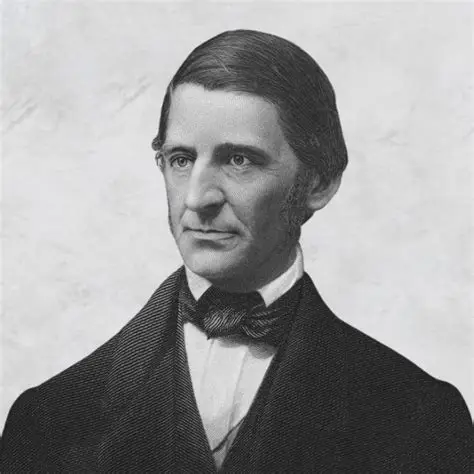
Essayist and lecturer Ralph Waldo Emerson, born in Boston in 1803, was a former minister who became the central voice of American Transcendentalism. In his 1841 essay “Compensation,” he wrote a sentence that now sits at the root of the modern idea of paying it forward: “The benefit we receive must be rendered again, line for line, deed for deed, cent for cent, to somebody.” The essay is mostly about balance in nature and human life, and this passage turns that idea into a practical rule about generosity.
The sentence works because it solves a problem most people recognise. Those who helped us most are often beyond our reach. A teacher has retired, a mentor has moved on, a relative who paid for our start can no longer be repaid in kind. Emerson accepts this plainly. Just before the quoted line, he says that in the order of nature we cannot return benefits to the people who gave them to us, or can do so only seldom. His answer is not to drop the debt but to redirect it.
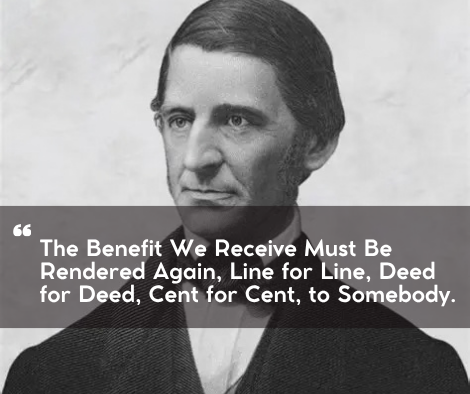
“The Benefit We Receive Must Be Rendered Again, Line for Line, Deed for Deed, Cent for Cent, to Somebody.” – Ralph Waldo Emerson
The key word is “somebody.” Emerson does not say to the person who helped you. He says to somebody, anybody in a position to receive what you can now give. That small word turns a private debt into a chain. Each person who passes a benefit forward becomes the next link, and the original kindness keeps moving instead of ending with a thank-you.
The ledger language is deliberate. “Line for line, deed for deed, cent for cent” sounds like bookkeeping, and Emerson is borrowing that exactness to make a moral point. A benefit received creates a real obligation, as definite as a financial one. It would be a mistake to read the phrase as advice to count and ration. The tone is closer to a demand for honesty: do not pretend you built your position alone.
Consider a manager who gave you your first real responsibility when you had little to show for it. You may never be able to repay her. Years later, a junior colleague asks for the same chance. Giving it to him is the repayment Emerson has in mind. It costs you some time and some risk, and it passes forward exactly the kind of trust you once received.
Receiving without giving is the real failure
Emerson is blunt about the alternative. In the same passage, he calls it base to receive favours and render none. The point is not that receiving help is shameful. Everyone depends on others, especially early in a career. The failing is treating help as a one-way transaction, taking the introduction, the advice or the opportunity and never offering the same to anyone else.
In business, this shows up in small ways. The professional who was coached through a difficult first year and never mentors anyone. The founder who benefited from an early customer’s patience and treats later clients with none. Emerson’s test is simple: who has received something from you that you once received from someone else?
Good that stays in your hand tends to spoil
Emerson adds a warning that is easy to overlook. He cautions against letting too much good stay in your hand, because kept benefits tend to decay and turn sour. The modern reading is that knowledge, contacts and goodwill lose their value when hoarded. A skill shared makes you a better teacher and a clearer thinker. A network that is only used for personal gain thins out, because people stop wanting to be part of it.
This is also why the principle works well in professional life. Reputations grow through generosity that others witness. A person known for passing along opportunities finds that opportunities keep returning.
Where the popular version comes from
Many readers know a shorter saying: you can never pay back, but you can always pay forward. That line is often credited to Emerson, but it is a later paraphrase, popularised by a famous American football coach, and it is not Emerson’s wording. His actual sentence is longer and more demanding, and the original is worth reading in full for that reason.
Why this advice still holds true today
Modern careers depend on informal help more than most people admit: an early referral, a candid piece of feedback, a door held open at a key moment. Emerson’s sentence turns gratitude into a habit with a direction. When you cannot repay the person who helped you, you can still honour what they gave by giving the same to someone else. Nearly two centuries after he wrote it, the rule remains simple enough to follow this week, with one introduction, one hour of advice or one chance offered to someone who needs it.