|
Getting your Trinity Audio player ready...
|
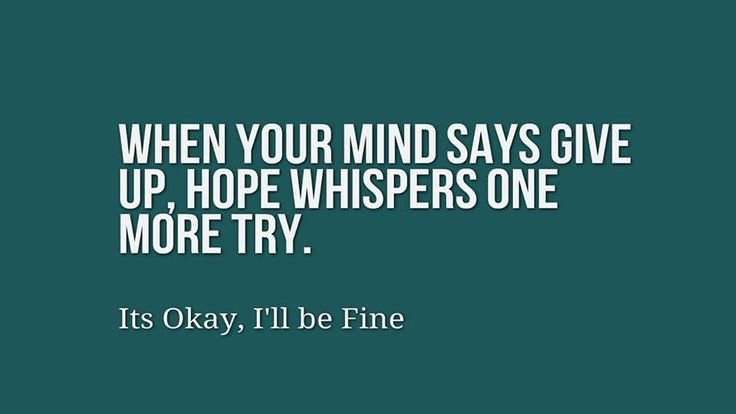
Unlike many quotes that trace back to a single well-documented moment, this one has no confirmed author. It circulates widely across social media, motivational pages and personal blogs, often shared without attribution, which is unusual for a line this often repeated. That anonymity does not weaken it. If anything, it points to why the quote has spread so far. It reads less like something one famous person said once, and more like something countless ordinary people have quietly told themselves during a hard stretch, until the phrasing settled into its current form and kept travelling.
The idea behind the quote
The quote sets up a contest between two voices that speak at the same difficult moment. One is loud and logical. It tallies the setbacks, calculates the odds, and arrives at a reasonable conclusion: stop. The other voice is quieter and far less rational on paper. It does not offer evidence or a strong argument. It simply suggests one more attempt, without promising that the attempt will work.
What makes the quote useful is its honesty about which voice usually sounds more convincing in the moment. The mind’s case for quitting is often genuinely well-reasoned. Multiple failures really can indicate that a path is not working. Hope’s whisper does not try to out-argue that logic. It survives anyway, in the narrow space where a person decides that the story is not finished yet, regardless of what the evidence so far suggests.
Why this idea matters in business today
Every founder, salesperson and small business owner eventually reaches a point where the numbers argue clearly for stopping. A product has been pitched dozens of times without a signed deal. A business has absorbed losses for longer than the original plan accounted for. A market has resisted every strategy tried against it. At that point, the mind’s case for giving up is not paranoia. It is usually built on real data.
This is exactly the moment the quote describes. It does not suggest ignoring the data. It suggests that the decision to try once more, even when the data is discouraging, is not automatically irrational. Many businesses that eventually succeeded went through a stretch where continuing looked like the illogical choice to nearly everyone watching from the outside, including, at times, the founders themselves. The difference between a venture that folds and one that eventually turns a corner is sometimes nothing more sophisticated than one additional attempt after the point where stopping would have been perfectly defensible.
Applying the lesson without ignoring reality
The danger in a quote like this is treating persistence as always correct, regardless of circumstances. That is not a sound way to run a business, and endless retries without adjustment usually waste time and money rather than producing a breakthrough. The more useful reading pairs the quote with judgment, not blind repetition.
Separate a bad idea from bad timing
Before trying again, it helps to ask honestly whether the underlying idea has genuinely failed, or whether the conditions around it, timing, resources, positioning, were simply wrong. The quote applies far better to the second situation than the first.
Change something before the next attempt
One more try rarely means repeating the exact same approach and hoping for a different result. It usually means adjusting one meaningful variable, pricing, messaging, audience, execution, before making the next attempt.
Set a real limit alongside the hope
Persistence without any boundary can quietly become denial. Deciding in advance how many more attempts a plan deserves, or what specific sign would indicate it is genuinely time to stop, keeps hope from becoming an excuse to avoid a hard decision.
Recognise when the whisper is worth listening to
Not every setback deserves another attempt, but some genuinely do. The skill worth building is not blind optimism. It is the ability to tell the difference between a project that has actually run its course and one that simply has not been given its fair chance yet.
Conclusion
This quote endures without a famous name attached to it because its truth does not depend on who said it. It describes something most people recognise from experience, that discouragement usually arrives with strong arguments, while hope rarely bothers to argue at all. It simply asks for one more attempt. Businesses and careers are frequently shaped less by dramatic breakthroughs than by the quiet decision, made in a discouraging moment, to try one more time before deciding the story is over.