|
Getting your Trinity Audio player ready...
|
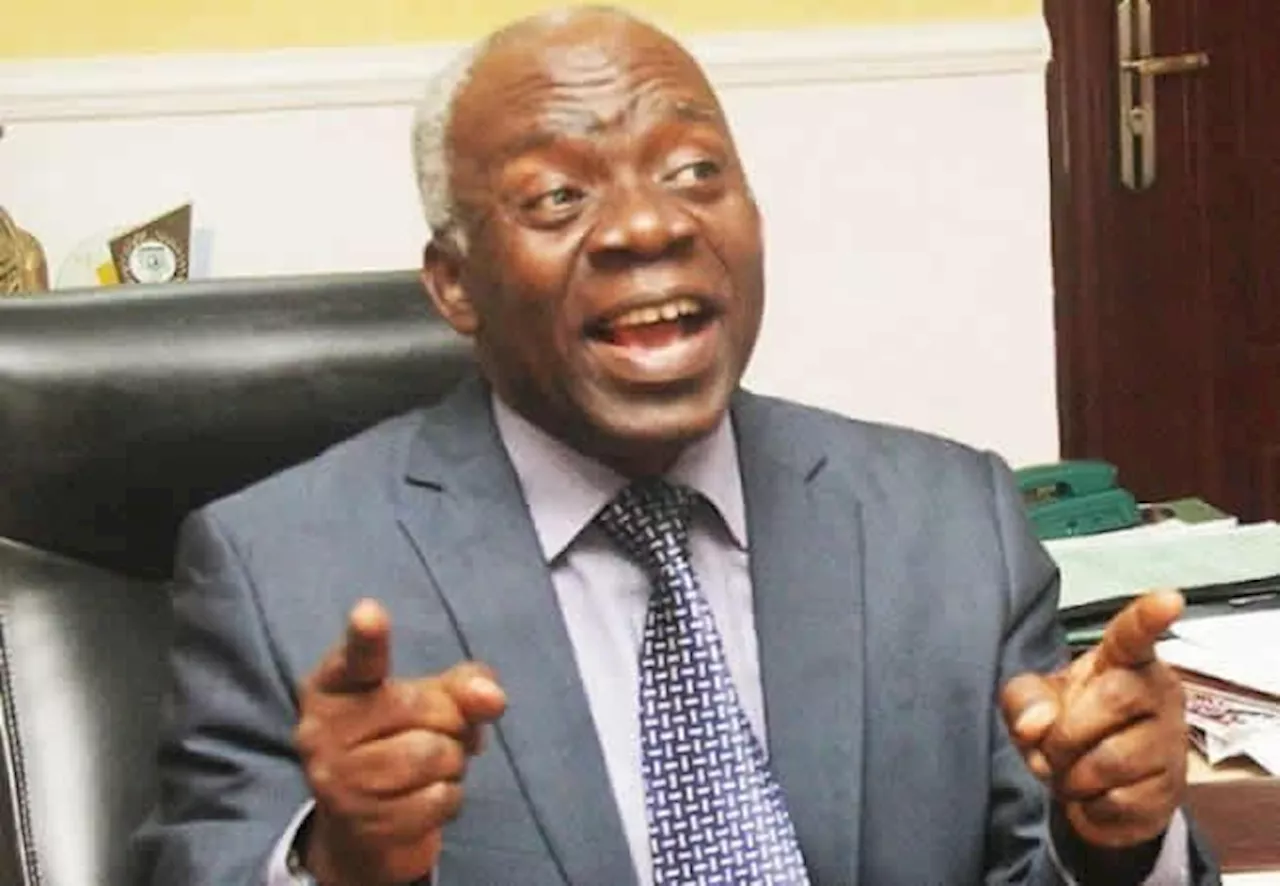
Human rights lawyer Femi Falana has renewed his call for the Nigerian government to cut the price of petrol, arguing that rising global crude prices driven by the conflict between the United States and Iran should not automatically translate into higher costs for Nigerian motorists given the country’s own status as an oil producer.
Falana, a Senior Advocate of Nigeria, issued the call in a statement released under the Alliance on Surviving COVID-19 and Beyond on October 4. He pointed directly to the war between the US, Israel and Iran as the backdrop for his renewed appeal, noting that disruptions to crude oil shipments through the Strait of Hormuz have pushed international crude prices above $100 a barrel, with ripple effects reaching economies around the world, Nigeria included.
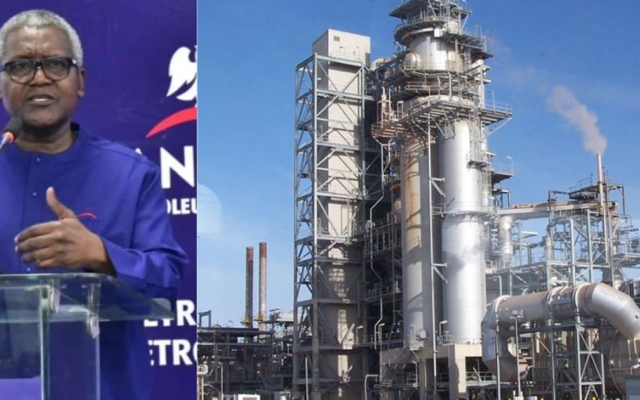
What sets Falana’s latest intervention apart from a straightforward complaint about high fuel prices is the specific policy mechanism he says is driving the problem. He took direct aim at Nigeria’s use of what’s known as the Import Parity Price model, a pricing formula that calculates domestic petrol costs as though every litre sold in Nigeria had been imported from abroad, complete with the shipping, insurance and logistics costs that come with bringing fuel in from overseas refiners. Falana argues that applying this model to a country that produces its own crude oil, and increasingly refines a meaningful share of that crude domestically through facilities like the Dangote refinery, systematically inflates the price Nigerians pay at the pump beyond what the country’s actual production costs would justify.
To back up that argument, Falana referenced a recent ASCAB seminar on the state of the nation, where a US-based petroleum expert identified as Professor Agbon presented figures on Nigeria’s actual production economics. According to Agbon, the cost of producing a barrel of crude oil in Nigeria ranges between $31 and $48, compared with a global average production cost of around $12 a barrel. If accurate, that gap would mean Nigerian crude is considerably more expensive to extract than the global norm, even before any of it reaches a refinery, a detail that complicates the broader argument somewhat since it suggests Nigeria’s production costs themselves aren’t especially cheap even by the country’s own standards, let alone the international benchmark.
Despite that nuance, Falana maintained that the federal government retains real capacity to bring petrol prices down, specifically by ensuring that crude oil earmarked for domestic consumption is actually processed inside Nigeria rather than continuing to flow through pricing and supply arrangements built around the assumption of imported fuel. His argument rests on the idea that once domestic refining capacity is genuinely prioritized for the local market, the resulting pump price should reflect Nigeria’s own cost structure rather than a global import benchmark shaped by events thousands of miles away, like a war in the Persian Gulf that has nothing directly to do with Nigeria’s own oil fields.
This isn’t the first time Falana has pushed this general argument. Back in September, he used an appearance on Channels Television’s Sunday Politics program to call on the government to stop petrol imports altogether, urging authorities to ensure that the 450,000 barrels of crude oil he said are allocated daily for domestic consumption actually reach local refiners rather than being handled through arrangements that still leave Nigeria dependent on imported finished fuel. At the time, he also questioned the accuracy of consumption figures the government had previously used to justify subsidy payments, noting that NNPC had at one point claimed it was supplying the market with more than 98 million litres of petrol a day, a figure Falana suggested didn’t line up cleanly with other available data. He framed the broader push for domestic refining as a way to ease the economic hardship that followed President Bola Tinubu’s removal of the petrol subsidy in May 2023, even while acknowledging that the old subsidy system had itself been unsustainable and riddled with alleged fraud.
Falana’s latest call also lands against a backdrop of repeated government appeals to marketers over the course of 2026, though those earlier interventions ran in the opposite direction. Back in June and again in July, Minister of State for Petroleum Resources Heineken Lokpobiri publicly pressed fuel marketers to pass on savings to consumers whenever global crude prices fell, at one point pointing out that Brent crude had dropped from roughly $118 a barrel earlier in the year to below $70, and demanding to know why pump prices hadn’t moved down correspondingly. That earlier pattern, government pressure on marketers during periods of falling prices, stands in contrast to the current moment, where global prices are climbing rather than falling, and where Falana’s intervention is aimed less at marketer behavior and more at the underlying pricing formula the government itself relies on.
Whether the federal government moves to revisit the Import Parity Price model in response to Falana’s latest appeal remains to be seen. For now, his statement adds to a broader and increasingly familiar debate in Nigeria over how closely domestic fuel prices should track international crude benchmarks, particularly at a moment when a war thousands of miles away in the Middle East continues to shape what Nigerian motorists pay for petrol produced, at least in part, from the country’s own oil fields.