
|
Getting your Trinity Audio player ready...
|
Nigeria’s mining industry is heading into its biggest annual meeting with unusual momentum. Nigeria Mining Week 2026 opens at the Abuja Continental Hotel on October 12, with a pre-conference day followed by the main conference and exhibition on October 13 and 14. The event arrives at a moment when the sector is being talked about more than at any point in recent memory, thanks to a new minerals agreement with the United States, a government push for local processing, and a continuing debate over security at mining sites.
The gathering is billed as the premier event for the country’s solid minerals sector. According to the organiser’s materials, the conference and expo is run by the Miners Association of Nigeria in partnership with PwC Nigeria, VUKA Group and Mining Review Africa, with the Ministry of Solid Minerals Development as official host. VUKA Group, formerly known as Clarion Events Africa, is a Cape Town-based exhibition and conference company. This year’s edition is described as the 11th, though some event listings number earlier editions differently, so readers may see slightly different counts online. The official programme and registration details are on the Nigeria Mining Week website.
The theme chosen for 2026 is “Unlocking Investment and Growth through Partnerships,” according to a press release the organisers issued in July. That wording matters because it reflects what the government and industry bodies say they want most from the sector right now: money, technical partners and processing capacity. The release said the gathering supports Nigeria’s ambition to become a regional refining and processing hub, and it followed the government’s announcement of a strategic roadmap aimed at turning mineral wealth into investment in clean energy manufacturing and domestic value addition.
The headline addition to this year’s programme is a Critical Minerals Forum, scheduled for October 13. Organisers say it will focus on the minerals needed for the global energy transition, including lithium, rare earth elements, graphite, copper and other battery and technology minerals. One organiser quoted in the press release described the event as perfectly timed for what they called a defining moment for Nigeria’s mining sector, and said the forum would look at how the country should position itself to attract serious investment. The framing fits the current policy mood, since critical minerals are the part of the sector that foreign governments and manufacturers are chasing hardest.
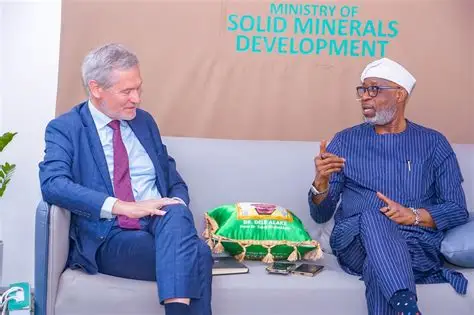
That timing is not an accident. Less than three weeks ago, Nigeria and the United States signed a critical minerals framework in New York, aimed at drawing American investment into a sector the government values at about $700 billion. As several Nigerian outlets have pointed out, that figure is an estimate of the value of the country’s mineral resources, not a pledge of money or a signed investment contract. The framework covers geological data, exploration, processing, infrastructure and technical capacity, and Minister of Solid Minerals Development Dele Alake has said the real work is moving from agreement to implementation. A mining conference that brings buyers, financiers and officials into one place is exactly the kind of setting where that translation is supposed to start.
The organisers say they expect delegates from more than 40 countries, naming markets that include the United Kingdom, the European Union, the United States, Canada, China, the United Arab Emirates and India. That is the organisers’ own claim and the final attendance will not be known until the event is over. The published speaker line-up includes representatives from the Mining Industry Association of Southern Africa, Anglo American, Nigeria’s Ministry of Steel Development, the Zambia Extractive Industries Transparency Initiative and DFR Gold, among others. Event programmes tend to change as dates approach, so attendees should check the official site for the latest sessions and speakers.
Past editions offer a hint of what deal-making at the event can look like. A recap of the previous edition published by ESI-Africa described high-level participation from government, investors and industry leaders, strategic discussions on exploration finance, beneficiation and ESG, and deals announced in a Kaduna Mining Development Company deal room and at a Nigeria Gold Day session. Those descriptions come from the event’s own promotional account rather than an independent audit, but they show the kind of sessions that return each year: finance, local processing, environmental and social standards, and direct meetings between investors and project owners.
Beyond the exhibition floor, several issues are likely to shape the conversations in Abuja. The first is value addition. The government has repeatedly said it does not want Nigeria to remain a supplier of raw ore, and processing and refining are central to that goal. Delegates will want to know which projects are bankable, how power and transport constraints will be handled, and what incentives are available for investors who build processing plants. The second is regulation and licensing. Investors typically ask for clear, stable rules and fast approvals, and the pace at which licences are issued and renewed will come up in many private meetings.
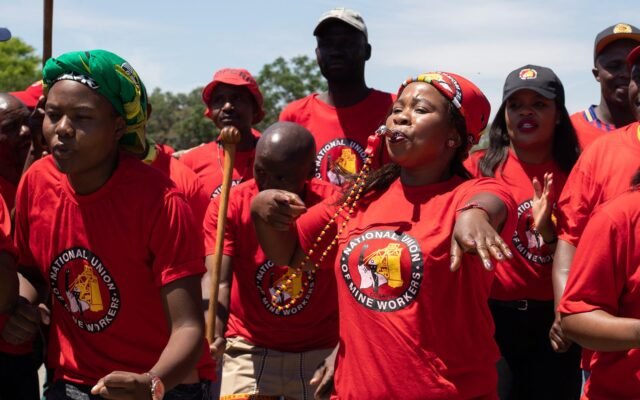
Security is the third issue, and it has become hard to avoid. In recent weeks, gunmen have attacked mining sites in Plateau State, killing miners in Barkin Ladi and surrounding communities, and local associations have called for stronger protection. The Nigerian Union of Mine Workers has asked for better pay, safety standards and welfare for workers while commending new federal funding for exploration. At the same time, the commander of the Mining Marshals, a specialised unit of the Nigeria Security and Civil Defence Corps, has urged what he calls strategic resource nationalism and said his unit has arrested about 700 people and restored more than 100 sites to legitimate owners. Those figures are his unit’s own account. How the government balances enforcement, worker protection and an open door to foreign capital is likely to be a live topic in the corridors of the conference.
For companies thinking of attending, the practical value of an event like this is access. Junior explorers can meet financiers, equipment suppliers can meet operators, and state governments can pitch projects to potential partners. For smaller Nigerian firms and cooperatives, the pre-conference day and workshops can offer a chance to learn about funding schemes and compliance requirements. For journalists and analysts, it is one of the few times each year when ministry officials, regulators, producers and investors are all in the same building making public statements.
What happens after the conference matters more than the event itself. Observers will be watching for signed agreements, announcements of financing facilities, project timelines and any new policy details from the Ministry of Solid Minerals Development. A busy exhibition hall does not by itself mean mines will open, and the sector’s history includes plenty of announcements that took years to turn into production. The test of this year’s Nigeria Mining Week will be whether the partnerships it promotes show up later as drilling programmes, processing plants and jobs.
Readers who follow Nigeria’s mining, energy and business developments can find more coverage at BusinessTech Nigeria. Additional details on the event programme and speakers are available from VUKA Group.