|
Getting your Trinity Audio player ready...
|
The Nigerian Union of Mine Workers (NUMW) has called for higher wages, stronger safety standards and better welfare packages for people who work in the country’s mines, in the same week that gunmen killed two more miners at a site in Plateau State. The union’s statement and the attack were reported together on Monday by The Guardian Nigeria, and they land against a backdrop of repeated violence at mining locations around Jos and Barkin Ladi that has left workers, families and local leaders asking who is responsible for protecting them.
The latest killings happened at a mining site in Kuru Jenta, in Heipang District of Barkin Ladi Local Government Area. Rwang Tengwong, the national publicity secretary of the Berom Youth Moulders Association (BYM), confirmed in a statement that two miners were shot dead at about 11:30 p.m. while they and others were working at the site. He described the attack as unprovoked and said it came barely a week after gunmen killed other miners at another site in the area. The identity of the attackers has not been officially established in the reports reviewed here, and the Plateau State Police Command had not issued a statement or confirmed any arrests when one outlet filed its report on Sunday.
Tengwong asked security agencies to investigate, identify those responsible and bring them to justice. He also urged residents, particularly miners, to avoid night-time mining, stay alert and follow the security measures introduced by the state government. He raised concern that the killings took place despite a curfew imposed on three local government areas, Barkin Ladi among them, which suggests that restrictions on movement have not been enough to stop attacks on isolated work sites.
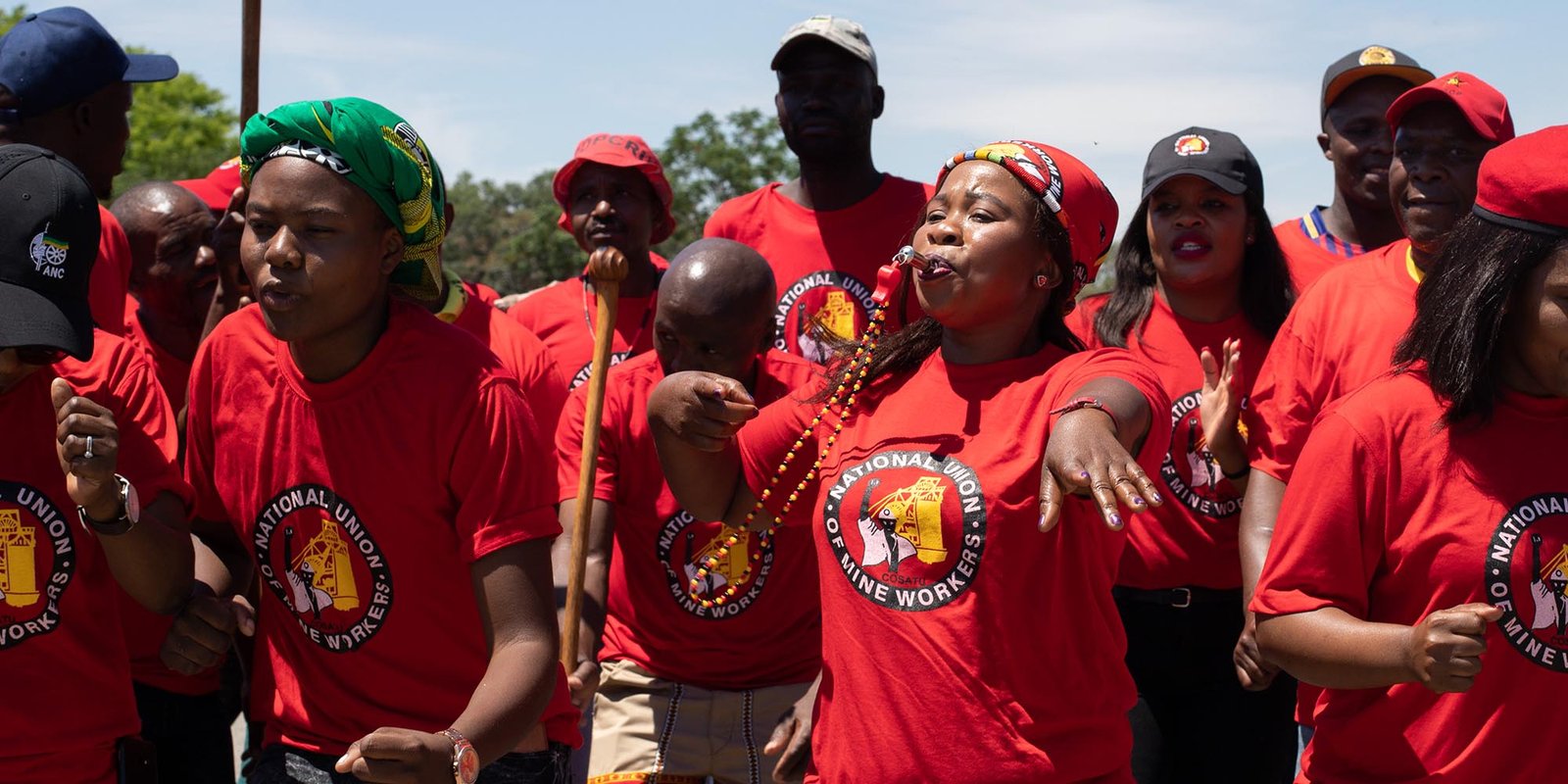
The union’s message was broader than any single incident. In its statement, as reported by The Guardian, NUMW National President Hamza Muhammad commended the federal government’s efforts to expand financing and investment in the sector, specifically praising the Solid Minerals Development Fund’s EMERGE programme. That scheme funds private-sector mineral exploration projects and mining-related academic research at institutions. Muhammad called it a significant step toward solving one of the sector’s long-standing problems, which is access to money for exploration, and said it could help Nigerian-owned firms grow into world-class companies on the model of Segilola Resources Limited.
At the same time, the union said workers must benefit directly from the growth of the industry and asked for greater attention to their welfare, safety and pay. It is worth being clear about how the report links the two stories. The union’s demands are presented alongside the Plateau attack, but the published account does not say that NUMW issued them in direct response to the killings, and it does not set out specific measures such as protective equipment, site security or insurance. Readers should therefore take the union’s call as a general statement of priorities for the sector rather than a detailed list tied to one event.
The Kuru Jenta killings are the latest in a run of attacks. A tally published by Parrot Nigeria lists a series of incidents in Barkin Ladi since late September: two miners killed at Gangare on September 23, five miners killed and two injured in an ambush at Marit on September 26, three women working at a mining site in Rakum killed on September 28, and the Kuru Jenta attack on October 3. The same outlet counted 28 people killed in the area despite the curfew and security assurances. Different outlets give slightly different dates and details for some of these incidents, and the numbers come from news reports and local associations rather than from an official government count.
The pattern predates this month. Vanguard reported in July that gunmen had attacked a mining site in Gero village in Gyel District in mid-June and killed five miners, and that other attacks had followed. Residents told the paper that insecurity had become part of daily life, that many miners now work in fear, and that some have cut back or stopped mining altogether. The attacks, the paper noted, have disrupted economic activity and discouraged legitimate operations. After the Marit attack, women and youths blocked the Jos-Barkin Ladi-Mangu highway to demand better security and an end to the killings, according to one report.
Mining in this part of the Plateau has deep roots, going back to the tin era, and many families still depend on artisanal and small-scale digging for income. That matters for the safety debate because workers on informal sites often have little protection of any kind. They may lack formal contracts, equipment, medical cover or a clear employer to hold accountable. Blueprint noted that the recent attacks came soon after a mining pit collapse in Bokkos and amid the deaths of suspected illegal miners in Niger State, so the risks facing people in the sector are not limited to gunfire. Collapses, poor ventilation, flooding and unsafe digging are everyday hazards in mines everywhere, and they tend to be worse where oversight is weak.
The attacks also raise a question for the federal government’s larger plans. Abuja has been courting investors for the solid minerals sector, including through a framework agreement with the United States signed last month, and the minister in charge has said the country wants to capture more of the value of its minerals. Investors generally look at security and labor conditions before putting money into a mine. If workers are being killed at sites and communities are living under curfew, the cost of doing business rises and the pool of willing partners shrinks. The union’s emphasis on welfare and safety is a reminder that a growing industry will be judged by how it treats the people doing the work.
What would real safety upgrades look like? Industry practice in many countries includes a mix of site-level and system-level measures. At the site, that means proper licensing and registration of operators, basic protective gear, first aid and emergency plans, and secure working hours that reflect local conditions. At the system level, it means labor inspections, accident reporting, insurance schemes and a clear agency responsible for enforcement. In conflict-affected areas, it also means coordination between security agencies and local communities, so that response times are short and warnings reach people quickly. None of this is cheap, and for small operators it often requires outside support, which is one reason unions and community groups press governments to act.
The immediate demands from Plateau are simpler. Local associations want arrests, a visible security presence near mining sites and a curfew that is backed by enough personnel to enforce it. They also want the authorities to say who is behind the attacks, because uncertainty feeds fear and makes it harder to prevent the next one. Until the police or the state government provide that information, residents are left relying on community statements and news reports.
For the sector, the next steps to watch are clear. Will the state and federal governments announce additional security deployments around mining sites, and will arrests follow? Will the SMDF-EMERGE programme and other funding schemes include provisions for worker safety and local employment? And will NUMW turn its general call for better pay and welfare into specific proposals, such as minimum safety standards for licensed operators? The answers will say a lot about whether the push for a bigger mining industry also delivers protection for the miners who make it possible.
Readers who follow Nigeria’s mining, energy and business developments can find more coverage at BusinessTech Nigeria. Further reporting on the NUMW statement and the Kuru Jenta attack is available from The Guardian Nigeria, and earlier coverage of the pattern of attacks is in Vanguard.