|
Getting your Trinity Audio player ready...
|
Ogun State and NNPC Move to Revive Long-Stalled OKLNG Project as $7bn Coastal Hub Takes Shape
Ogun State’s long-dormant Olokola Liquefied Natural Gas project is getting a fresh push back to life, after Governor Dapo Abiodun held talks with senior officials from the Nigerian National Petroleum Company Limited in Abeokuta this week aimed at finally getting the project off the ground.
Receiving the NNPC delegation at the Governor’s office, Abiodun tied the meeting directly to a separate milestone reached just days earlier, saying the state had signed a memorandum of understanding on a deep sea port the previous Wednesday, and was now sitting down with the NNPC team to discuss activating the long-stalled LNG plant. Now, he said, they have brought the project back to life, a comment that reflects just how long OKLNG has sat on the shelf without meaningful progress despite having been on Nigeria’s energy agenda for years.
The renewed talks aren’t happening in isolation. They form part of a much larger coastal development plan taking shape along Ogun’s Atlantic waterfront in Ogun Waterside Local Government Area, anchored by agreements already signed with global ports operator DP World covering the Gateway Deep Sea Port and the 10,000-hectare Blue Marine Special Economic Zone. Together, that port and economic zone package is expected to draw more than $7 billion in initial investment and create upwards of 50,000 direct jobs once fully operational. Reviving the LNG project would add a significant energy component to that broader industrial corridor, giving the port and economic zone a built-in source of gas supply rather than leaving them dependent entirely on energy brought in from elsewhere.
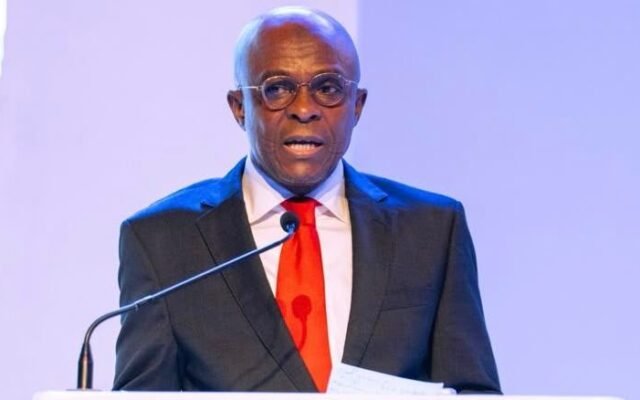
NNPC Group Chief Financial Officer Adedapo Segun, part of the delegation that traveled to Abeokuta, said the company’s team had come specifically to engage with Ogun State’s government on the project it intends to site along the state’s coastline. He said NNPC is currently working through a comprehensive review of the problems that stalled OKLNG in the past, with the explicit goal of finding lasting solutions this time rather than repeating whatever led to the project’s earlier collapse.
The scale of what’s being planned gives some sense of why land and location matter so much to the discussion. NNPC Executive Vice President for Gas, Power and New Energy, Lekan Ogunleye, told the meeting that the project would require roughly 1,728 hectares of land to accommodate the LNG plants themselves, along with associated utilities, storage facilities and supporting infrastructure. Beyond the land footprint, the project also needs about 2.5 kilometres of dedicated Atlantic coastline frontage, space required to meet marine traffic and safety standards for what could eventually be up to three separate LNG jetties handling shipping traffic in and out of the facility.
For Abiodun, the appeal of the project goes well beyond the energy supply it would bring to the broader economic zone. He pointed to NNPC’s existing LNG operations in Bonny, Rivers State, where he said roughly 14,000 people are currently employed, as a direct illustration of the kind of job creation Ogun could expect if its own project reaches a similar scale. He emphasized that the benefits wouldn’t be confined to the immediate economic zone and its surrounding industries either, arguing that gas supply from the facility could extend across the entire state and into the wider South West region, giving the project a reach well beyond Ogun Waterside itself.
On the practical side, discussions between the state and NNPC have centered on the specific conditions needed to actually move the project forward: securing the land required, agreeing on investment incentives, and working through whatever other regulatory or logistical requirements stand between the current talks and an actual construction timeline. Abiodun committed the state government to providing full cooperation on those fronts, including the land access, incentive structures and formal guarantees NNPC would need to commit real capital to a project that has already failed to launch once before.
The governor also pointed to DP World’s broader track record as a reason for confidence in how the coastal corridor as a whole will come together. Given the company’s experience building and operating major port and logistics facilities in multiple countries, Abiodun said that expertise would prove valuable in bringing the full vision together, port, special economic zone, and now potentially the revived LNG facility, into a single, integrated development rather than a set of disconnected projects sharing the same stretch of coastline.
President Bola Tinubu has separately described the broader integration of the port with the economic zone as an industrial ecosystem, noting that the emerging corridor is designed to connect directly with the OKLNG project and other strategic infrastructure planned for the area, a framing that positions Ogun’s coastal development as a coordinated, multi-part strategy rather than a series of standalone announcements.
Ogunleye closed out NNPC’s side of the discussion by congratulating the people of Ogun State on the proposed project, saying its successful implementation would carry a meaningful impact on the state’s broader economic fortunes. Whether that optimism translates into an actual construction timeline will depend heavily on how quickly the land acquisition, incentive negotiations and other requirements Abiodun described can be worked through, particularly given how long OKLNG has already sat stalled before this week’s renewed engagement between the state and NNPC.