|
Getting your Trinity Audio player ready...
|
One Regulator or Many? Inside the Bill That Could Rewrite How Nigeria Licenses Its 430 Fintechs
Every fintech founder in Nigeria knows the feeling: you build a product that moves money, lends it or invests it, and then discover that three or four agencies each want a say in how it works. A bill moving through the House of Representatives promises to end that by creating a single regulator for the industry. Whether it solves the problem or adds a new layer to it is the argument now dividing the sector.
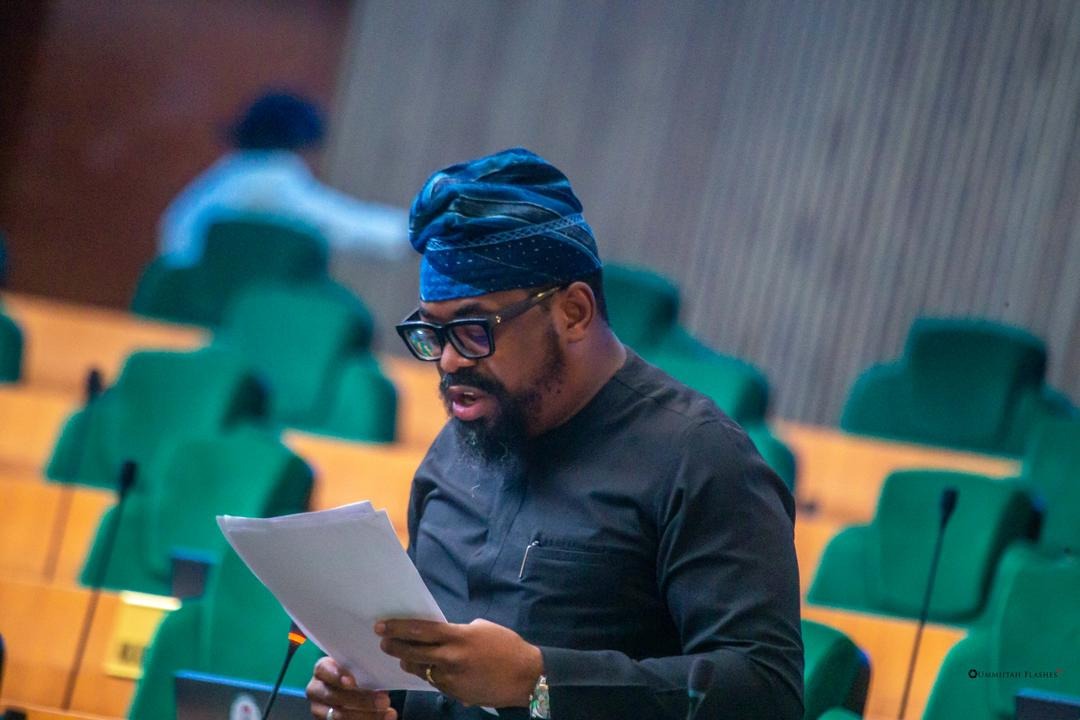
The legislation is the Nigerian Fintech Regulatory Commission Bill 2025, also tracked as HB.2389 and sponsored by Fuad Kayode Laguda, an All Progressives Congress lawmaker representing Surulere I in Lagos. It passed second reading on October 28, 2025, and was then sent to a public hearing held on March 2, 2026 by a joint panel of House committees covering digital and electronic banking, banking regulations, communications, science and technology, and capital market institutions. As far as the public record shows, that hearing is the most recent confirmed milestone. Reports reviewed for this article did not confirm final passage in the House, Senate concurrence or presidential assent, so the bill should still be treated as pending.
What the bill would do is substantial. It would establish a Nigerian Fintech Regulatory Commission with authority to license, supervise and enforce compliance across what it calls all fintech services, facilities and equipment. Today those functions are split. The Central Bank of Nigeria oversees payments, mobile money and digital banking, the Securities and Exchange Commission handles capital markets and securities-type digital assets, the Nigeria Data Protection Commission and the National Information Technology Development Agency cover data and digital governance, and the Federal Competition and Consumer Protection Commission polices consumer conduct in areas like digital lending. The new commission would act as a single gateway for authorisation.
The draft gives the commission strong tools. It could conduct public and private inquiries, compel information, publish compliance findings, and keep registers of every licence issued, suspended, revoked, surrendered or amended. It would have departments and a regional office in each geopolitical zone, with board members appointed by the president and subject to National Assembly confirmation. A National Fintech Management Council, chaired by the Minister of Finance and bringing in regulators such as the NCC, NITDA and the data protection commission, would provide coordination and advisory input. Funding would come from National Assembly appropriations plus fees, charges, fines and gifts. Consumer protection is a selling point: the bill calls for consumer codes and complaint-resolution procedures, which supporters say could rein in digital lenders accused of aggressive recovery tactics.
The March hearing exposed a clear split. Telecom-linked and agent groups backed a single regulator, including the Association of Telecommunications, Information, Technology, Cable Satellite Network Operators and Allied Services Employers of Nigeria and the Association of Mobile Money and Bank Agents in Nigeria, which also asked that registered POS agents be formally brought into the framework. They argued that fragmented supervision has left gaps and confusion. Major fintech operators, including OPay, warned of duplication and higher compliance costs, noting that the CBN already licenses mobile money operators, payment service providers and digital banks. One concern raised was dual oversight for digital lenders, with the CBN keeping prudential control while the new body supervises conduct. A participant suggested a Fintech Regulatory Appeals Tribunal to give licensed firms a route to challenge decisions and boost investor confidence. The CBN itself had not publicly commented as of early March, according to reporting from that week.
Legal commentators have been sharper. One analysis argued the bill is well-intentioned but structurally flawed, because it creates three layers of oversight, the Finance Minister, the management council and the commission, while overlapping with existing agencies without amending or repealing their founding laws. That could leave companies facing competing claims of authority instead of one clear rulebook.
Meanwhile, the existing system keeps tightening. The Senate has considered amendments to the Banks and Other Financial Institutions Act that would strengthen the CBN’s oversight of fintech activity, alongside tougher measures against Ponzi schemes. The CBN issued a June 15 circular requiring payment data to be stored locally, with a compliance deadline of December 31, 2026. And for crypto and stablecoins, Nigeria has moved toward a coordinated structure under a July executive order, with the CBN and the SEC each running their own sandbox programs. Those developments show that regulators are building rules fast, which feeds the question of whether a new super-regulator would simplify matters or interrupt work already underway.
For founders, the practical advice is to track the bill but keep complying with existing licences, since nothing in the record shows it has become law. For consumers, the promise is easier complaints and one place to report abuse, though that depends on the final text. For lawmakers, the harder task is deciding which powers move to the new commission and which stay with the CBN and SEC. The next signal to watch is whether the House committee reports back and whether the Senate takes up a companion bill.
: